Hunter with his Gun and Dog. (Allegory of "Air") by Bernhard Keil
Bernhard Keil's 'Hunter with his Gun and Dog (Allegory of 'Air')', painted around 1650 and held at the Statens Museum for Kunst, is more than a simple portrait; it's a coded message.
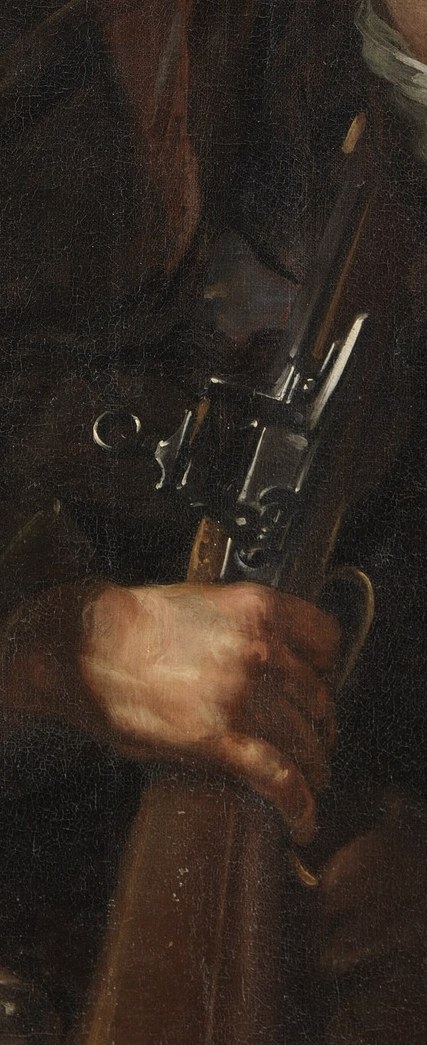
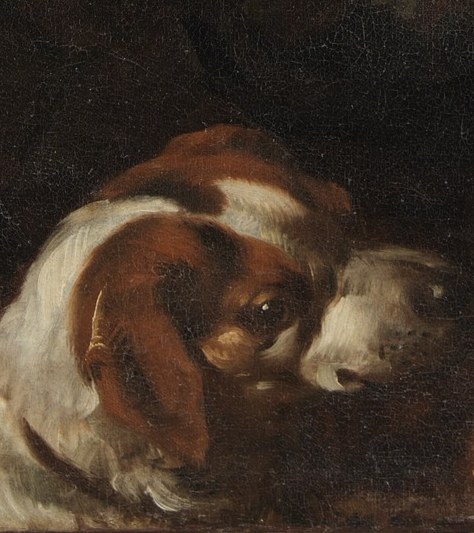
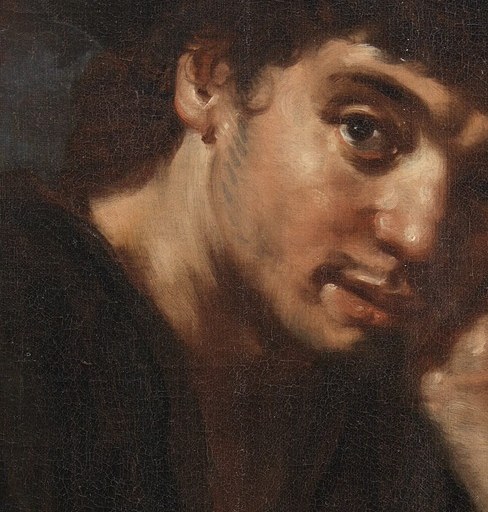
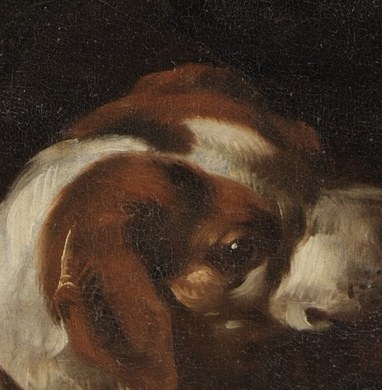
Look closely at the elements within the painting. The hunter's shotgun and his attentive dog are not merely props but symbols, pointing to the act of hunting, a primary human interaction with the element of air. Even the pensive expression on the hunter's face suggests the contemplation or exertion associated with such pursuits.
Keil, born in Helsingør, used dramatic chiaroscuro to highlight these figures against a dark background, drawing the viewer's eye to the subtle storytelling. This painting is part of a series, each work representing one of the four classical elements.
What other allegorical details do you notice in the painting?
Details
Transcript
This hunter and his dog are not just a portrait. It is an allegory, one of four paintings representing 'Air'. His shotgun points to the 'air' of hunting birds. His loyal dog, ever ready, reinforces this theme. Even his weary face suggests the effort of the chase. Bernhard Keil painted this subtle code in 1650.