清 佚名 傳王文治 蘭亭修禊圖 軸|Spring Ablutions at the Orchid Pavilion by Wang Wenzhi
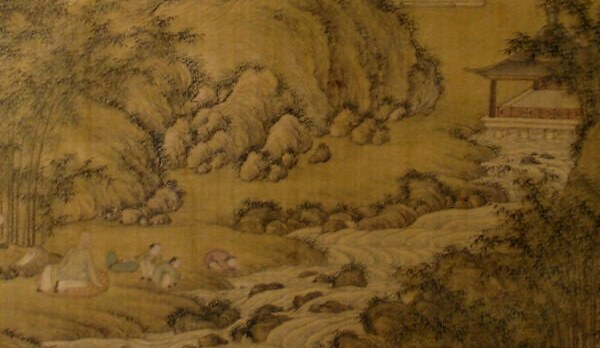
Spring Ablutions at the Orchid Pavilion, attributed to Wang Wenzhi and dated 1777, depicts an event that happened 1400 years earlier: the celebrated Orchid Pavilion Gathering of 353 CE. The legendary calligrapher Wang Xizhi invited scholars to a streamside party where wine cups were floated downstream. Anyone who failed to compose a poem before a cup reached them had to drink. Wang Xizhi's preface to the resulting poems became a cornerstone of Chinese art and literature, endlessly reinterpreted across dynasties. This Qing-dynasty version hangs as an ink and color scroll on silk.
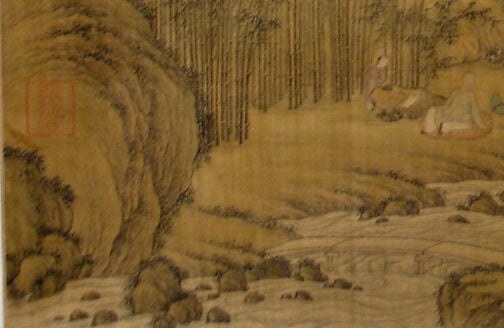
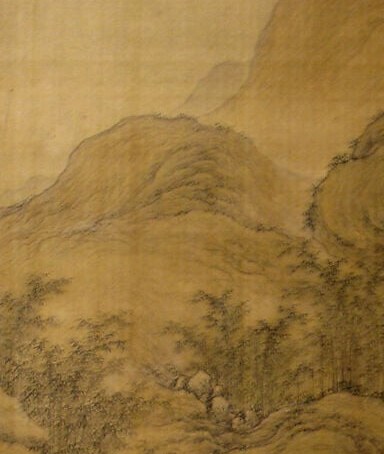
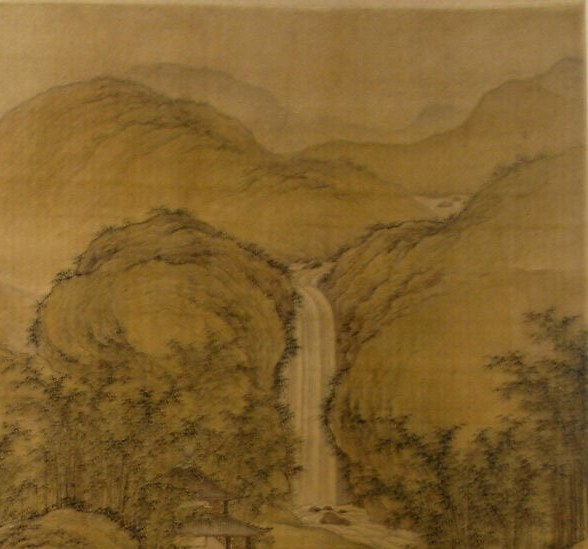
Two things to notice. First, the blank silk. The pale void between foreground and background is liubai, deliberately left empty to create atmosphere and spiritual depth. That emptiness is as composed as the painted ink around it. Second, the rocks. Look at the boulders in the lower left. The texture is built from countless fine, criss-crossed brush lines, a technique that makes the surface resemble embroidery.
That embroidery-like precision caused real trouble. The artist, Wang Wenzhi (1730-1802), worked within a scholarly tradition that valued the expressive, restrained line. Critics condemned his meticulous brushwork as overly ornamental. For painting that was too painstaking, too pretty, he lost his standing. The gathering itself was legendary for its effortless spontaneity; here, a painter who made discipline visible was punished for that very care.
What looks to us like beautiful control once read as scandal. Is there a line you have crossed from careful to constrained?
Details

Transcript
In 353 CE, China's greatest calligrapher gathered friends by a stream. They floated cups of wine. If a cup reached you, you had to compose a poem. It became the most mythologized party in Chinese history. Now look at the rocks. Built from fine, criss-crossed lines. Critics called this brushwork a scandal. Too meticulous, too pretty. The artist, Wang Wenzhi, lost his reputation for painting like an embroiderer. Pure form and restraint, as old as the gathering itself, had become an offense.