Soldiers Bivouacking by Peter Snayers
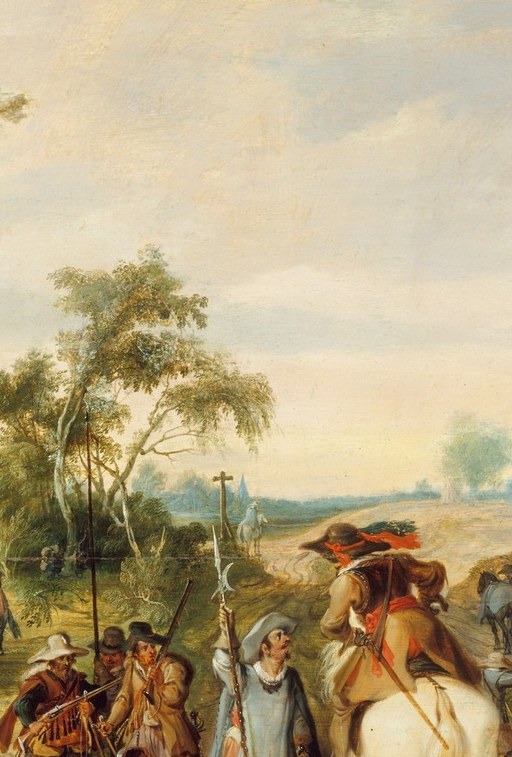
This is Peter Snayers' Soldiers Bivouacking, painted in 1639 and housed at the Kunsthistorisches Museum in Vienna. Snayers made his name painting panoramic battles, but his real subject was the life of soldiers between them. He was a court painter in Brussels with the actual rank of lieutenant-colonel, so he knew the men he painted from inside the army.
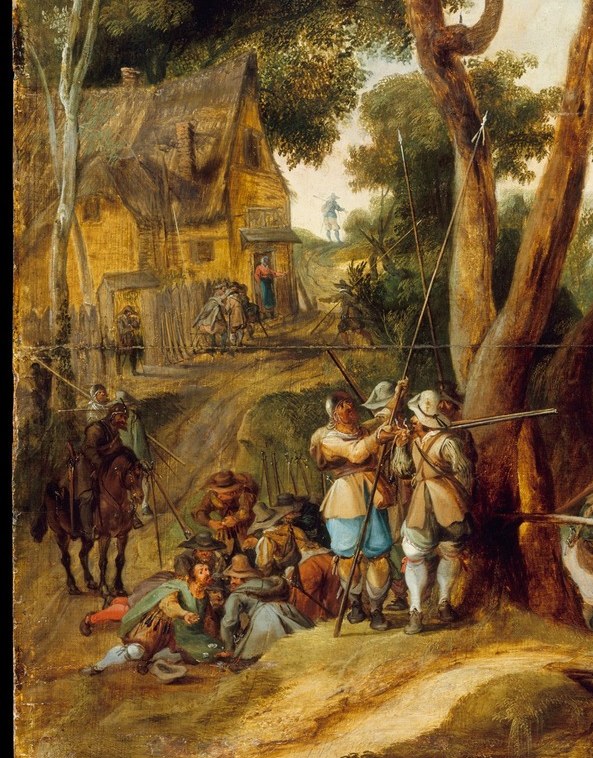
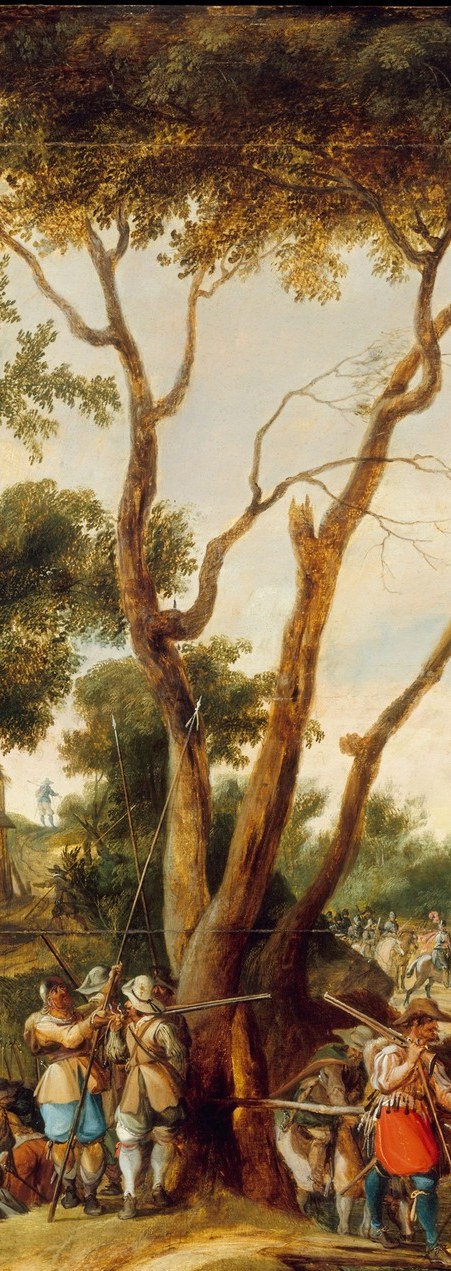
Let your eye settle on the figures clustered under the large tree on the left. Their postures are unheroic, slumped and talking, some faces turned away. Snayers is not staging a drama. He is recording the texture of tired men killing time. The stacked pikes and muskets leaning against the trunk tell you this is a bivouac, not a battle line.
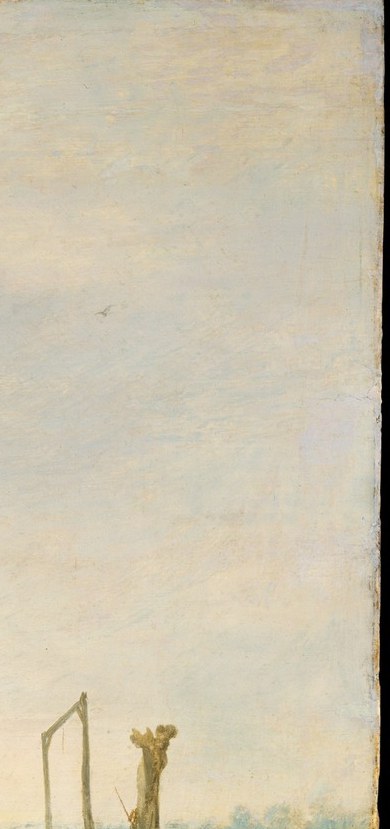
The detail that changes the painting is at the far right margin: two dead, bare trees silhoutted against the sky. In the Thirty Years' War, blasted trees were a common motif for scorched terrain and death. Snayers buried this memento mori at the edge of a scene of rest, where you might miss it.
He spent a career painting armies. In this quiet pause, he put everything he knew into the faces under the tree and the dead trees at the margin. The campaign waits, and so does the war.
Details
Transcript
War painting usually shows the charge, the clash, the chaos. Peter Snayers painted what happened in between. Under a bare tree, soldiers sit on the cold ground. Some talk. Others just wait. The artist was a court painter, ranked lieutenant-colonel. He spent thirty years looking at men like these. The dead trees at the edge are the one thing he never painted over.