Paul and Barnabas at Lystra by Jacob Pynas
Jacob Pynas painted Paul and Barnabas at Lystra in 1627, and the whole scene is a theological argument in objects. The story comes from Acts 14: after Paul heals a man who could not walk, the people of Lystra decide the apostles must be the gods Zeus and Hermes in human form. A priest prepares to offer a public sacrifice. The painting freezes the instant everything goes wrong.
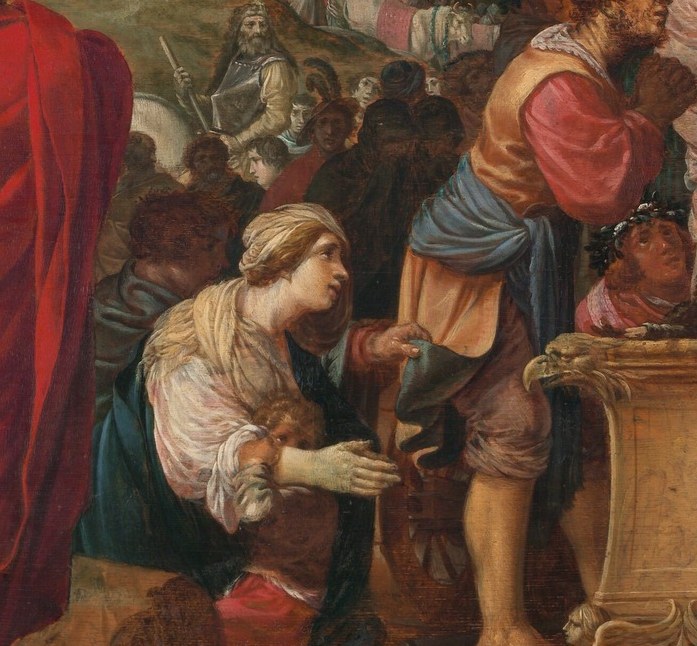
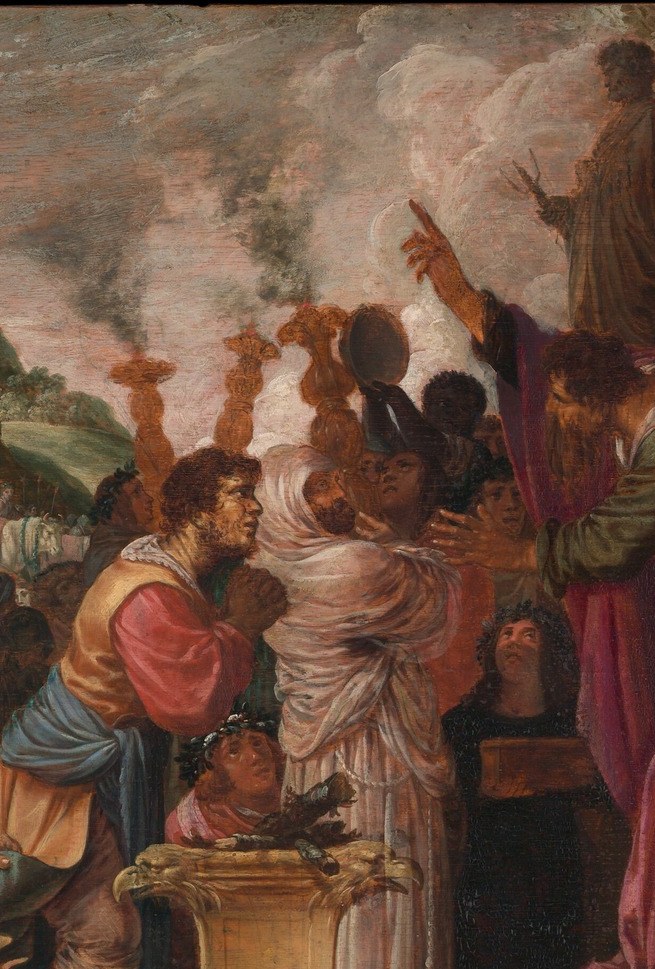
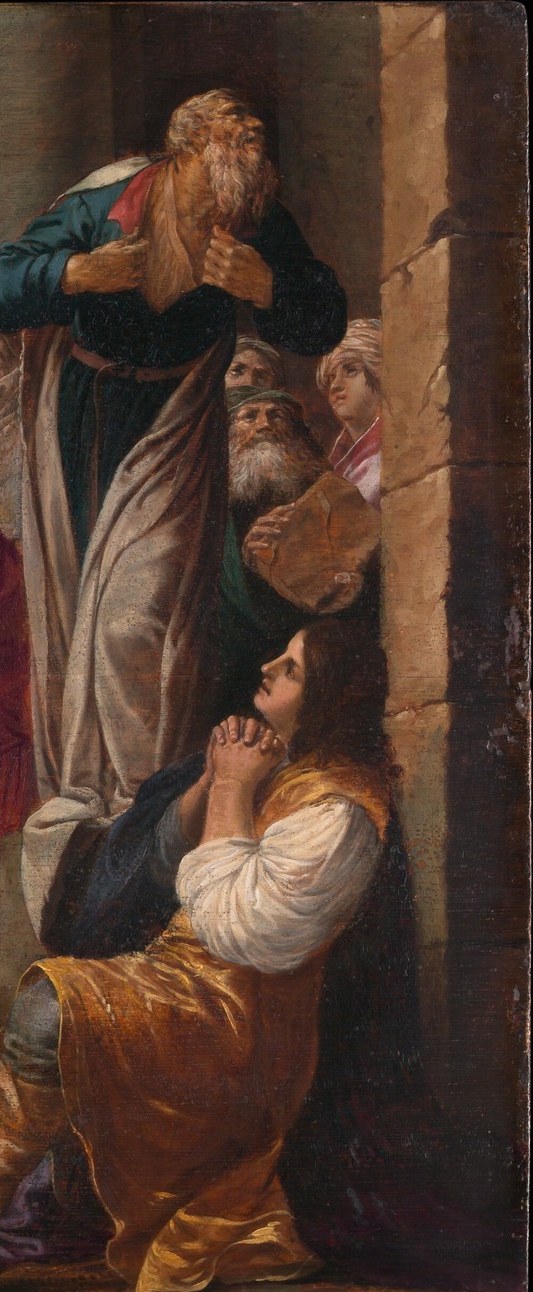
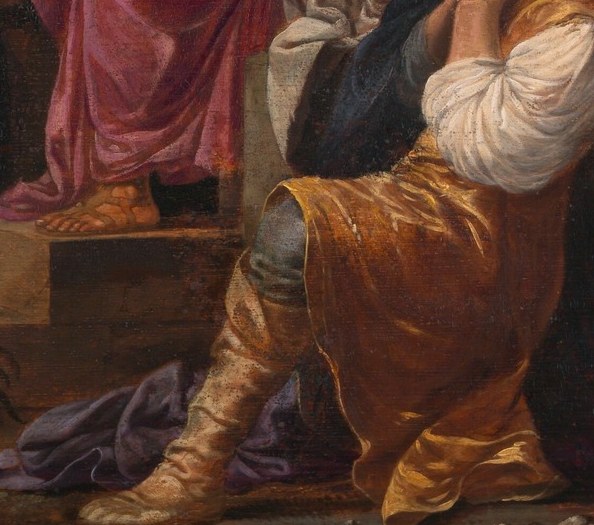
The crowd surges around a stone altar where a priest bends over a rooster, the animal offering. A figure in the center raises both arms high to invoke the ritual. On the right, an apostle tears his robe in distress and points upward, not to the sky, but to the real God, refusing the worship aimed at him. A man already kneels at the apostles' feet, locked in the very mistake the painting works to correct.
Pynas was a Dutch Golden Age painter who spent time in Italy, and the composition shows it: classical architecture, dramatic chiaroscuro, earthy tones. Two years before finishing this work, he briefly taught a young Rembrandt. The connection is a small footnote in art history, but it places Pynas in the lineage of the most famous Dutch master.
The painting sits today in the collection of The Metropolitan Museum of Art. Every figure in it is arguing about where worship belongs. The answer, the painter insists, is not here on this altar.
Details
Transcript
A priest bends over a stone altar, preparing a sacrifice. Beside him: a rooster. The literal pagan offering. A man in the crowd raises both arms high, invoking the ritual. But the apostles refuse this worship. One tears his robe. He points upward. Not to heaven, but to the real God. A man already kneels below them, mistaking man for deity. The painter who made this taught Rembrandt two years earlier.