View of Yosemite Valley by Thomas Hill
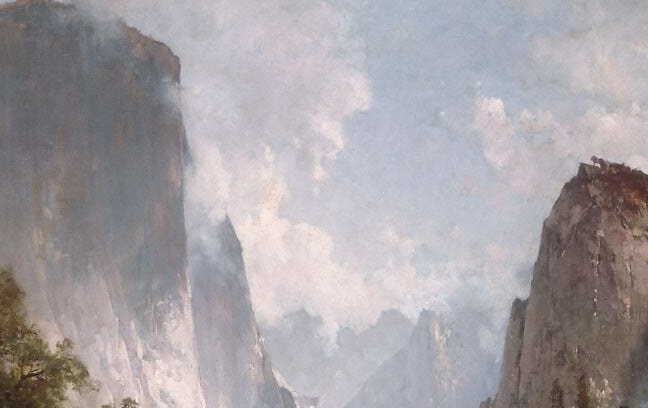
This is Thomas Hill's "View of Yosemite Valley," painted in 1885, held in the collection of the Los Angeles County Museum of Art. It shows the valley from the famous Gates of the Valley viewpoint, looking east into what was still a remote and largely inaccessible landscape. Just five years after this painting, Yosemite would become a national park.
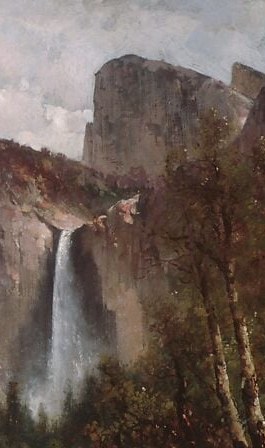
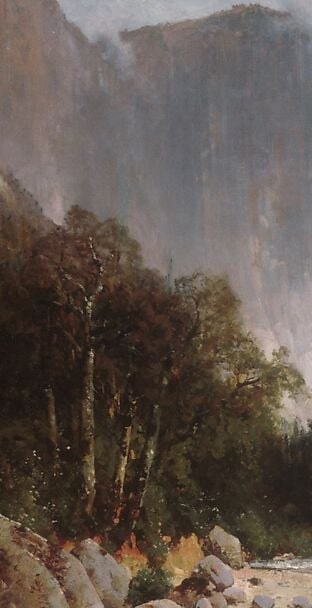
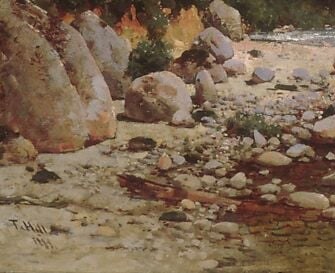
The eye travels straight through the center of the canvas, drawn by the luminous, hazy opening in the distance. Hill places the dark, detailed boulders and mossy rocks of the foreground directly against the soft golden light of the valley floor, making the deep space feel earned. Every element, from the recognizable Bridalveil Fall on the right to the monolithic face of El Capitan on the left, funnels your gaze inward.
Thomas Hill was a British-born American artist who became synonymous with Yosemite. He first visited the valley in the 1860s and eventually built a studio there at the Wawona Hotel, producing enormous canvases that introduced the American public to the grandeur of the Sierra Nevada. This 1885 view is a direct eyewitness account, painted before mass tourism would transform the valley floor. The absence of any human presence in the scene is deliberate: he wanted the raw, untouched wilderness to be the sole subject.
It is a document as much as a painting, capturing a precise moment of late-afternoon light in a place that was only beginning to be known.
Details
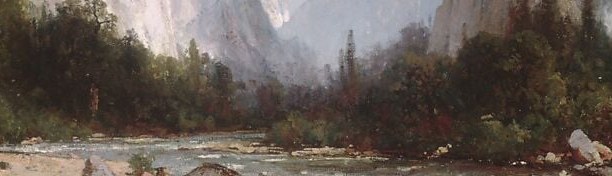
Transcript
1885. Yosemite Valley was not yet a national park. No roads, no lodges, no guardrails. Just this. Bridalveil Fall thunders down the right wall. And El Capitan looms on the left, nearly blank stone. The passable valley is a narrow slip of green. The painter, Thomas Hill, set up his easel here for years. He built a studio in the valley. He helped make it famous.