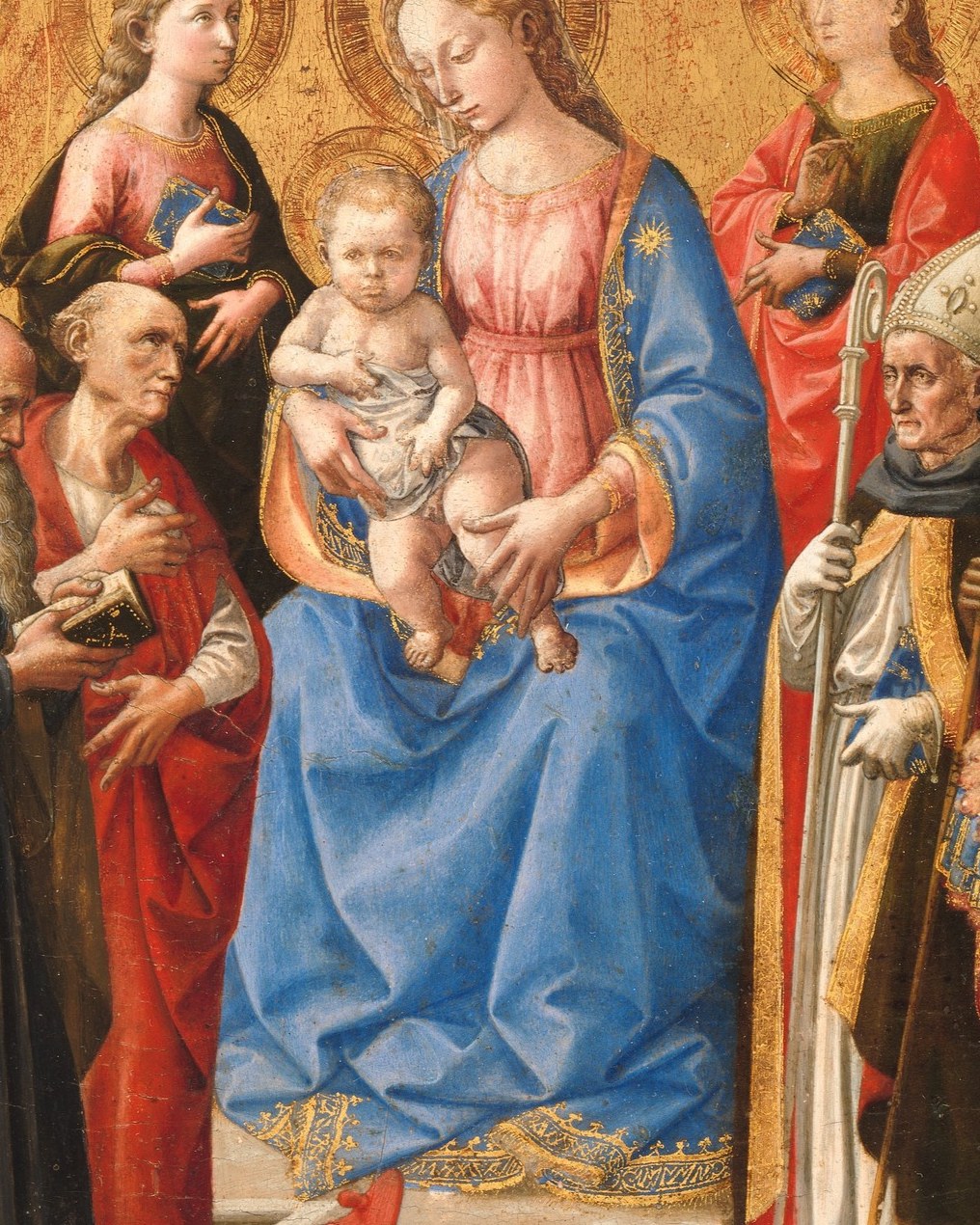
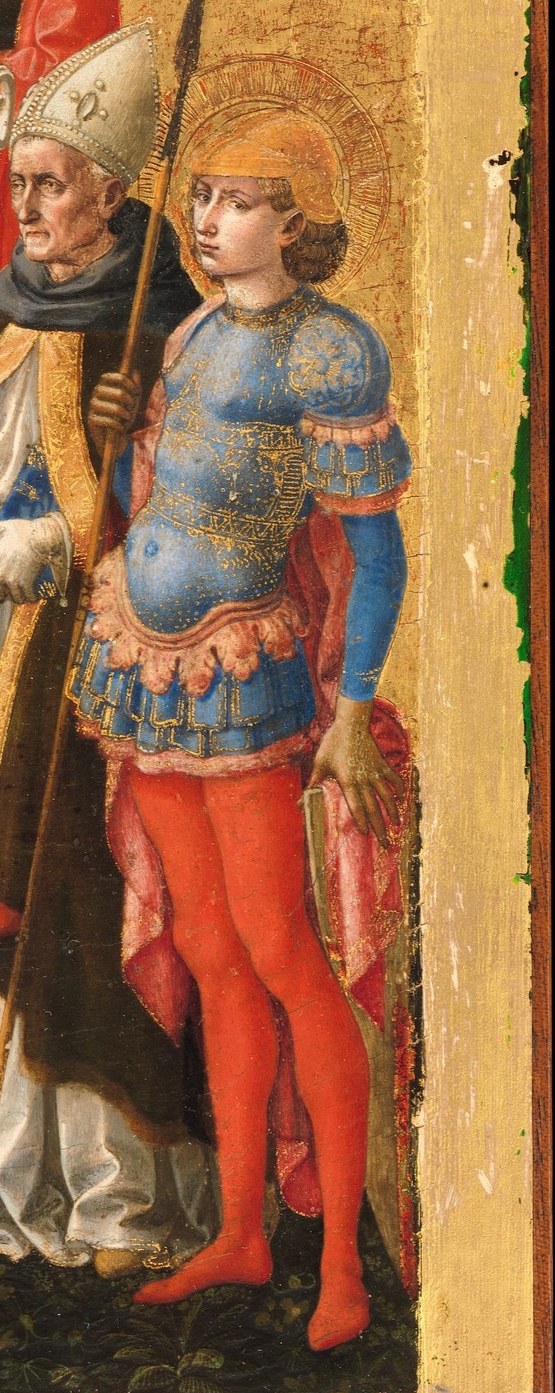
Madonna and Child with Six Saints by Francesco Pesellino
View the artwork: Madonna and Child with Six Saints →
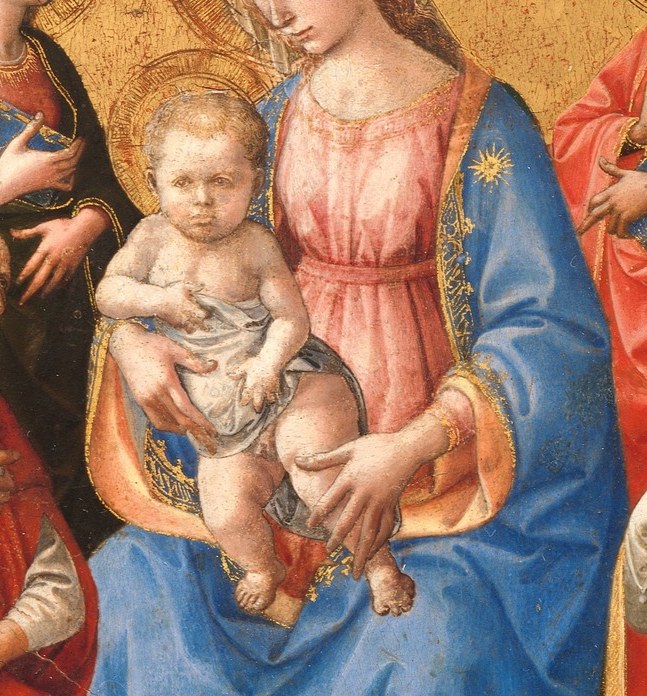
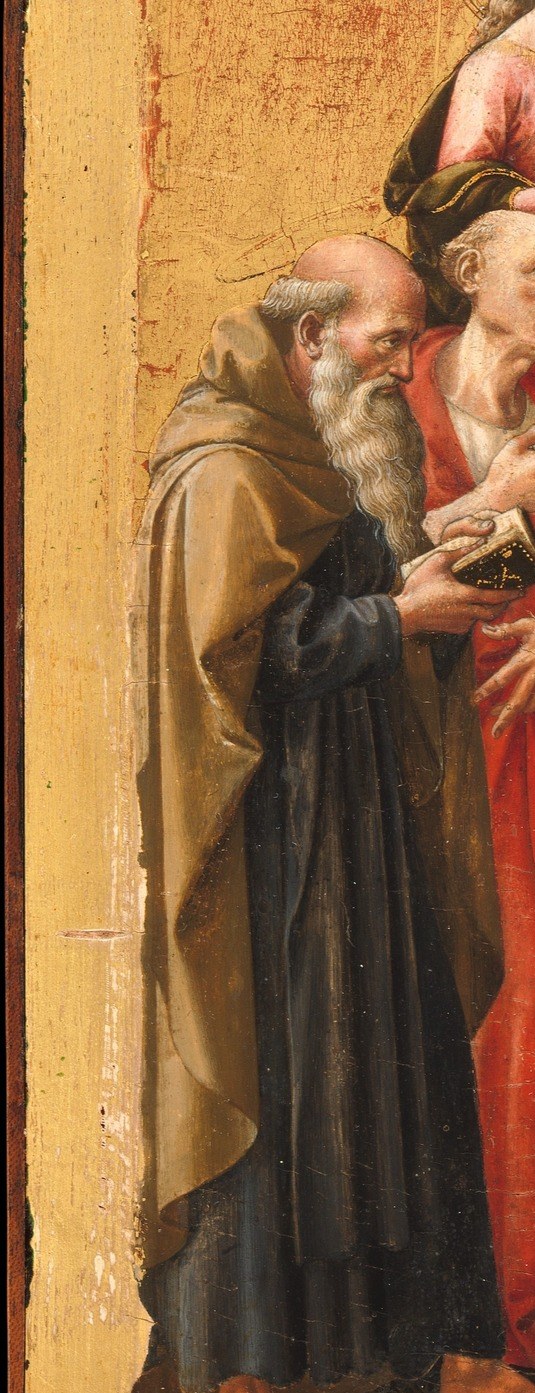
This is Francesco Pesellino's 'Madonna and Child with Six Saints,' painted in tempera on wood around 1450 and now in the Metropolitan Museum of Art. It measures just 22.5 by 20.3 centimeters. It was not made for a church. It was a private, portable object, meant for one person's hands and prayers.
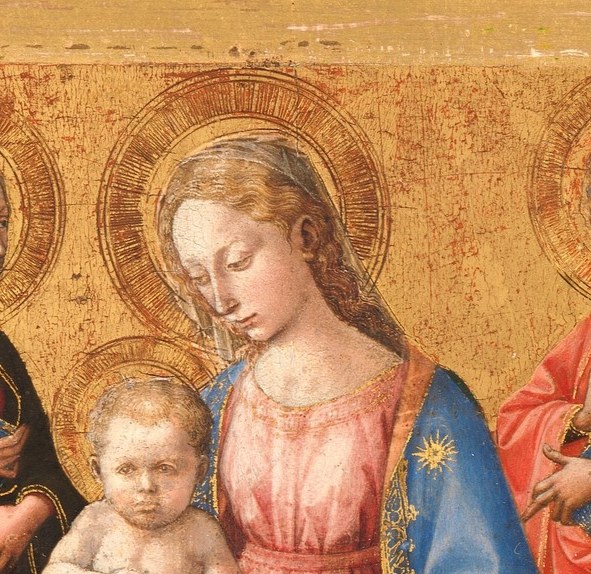
Look first at the gold ground. It is not a flat void. The surface is tooled and punched with delicate patterns that catch the light like a beaten metal sky. Then look at the faces: the Madonna's downward gaze is pure grace, but the softness around the eyes and mouth reveals the direct influence of Fra Filippo Lippi, with whom Pesellino collaborated in Florence.
Pesellino was born Francesco di Stefano around 1422. He trained under his grandfather, the painter Giuliano Pesello. His career was brief but bright: small, jewel-like devotional panels like this one earned him a steady reputation. He married in 1442 and likely joined the Florentine painters' guild in 1447. Less than a decade later, in the summer of 1457, the plague swept through Florence and killed him. He was about thirty-five.
Because Pesellino died so young, securely attributed works are rare. This tiny panel, bequeathed to the Met by Mary Stillman Harkness in 1950, is a vital key to understanding what mid-fifteenth-century Florentine painting lost when he was cut short. What did you notice first: the golden sky, or the weight of her gaze?
#arthistory #italianrenaissance #temperapainting
Details
Transcript
A panel barely bigger than your hand. Made for one person to hold, travel with, and pray over. Look at the gold behind them. It is heaven, punched into metal leaf with a tiny tool. Now her face. The painter learned this softness from Fra Filippo Lippi, a master of tenderness. He was Francesco Pesellino. The plague took him at 35. So few works survive that every one is a small miracle.