Artwork
Madonna and Child with Six Saints
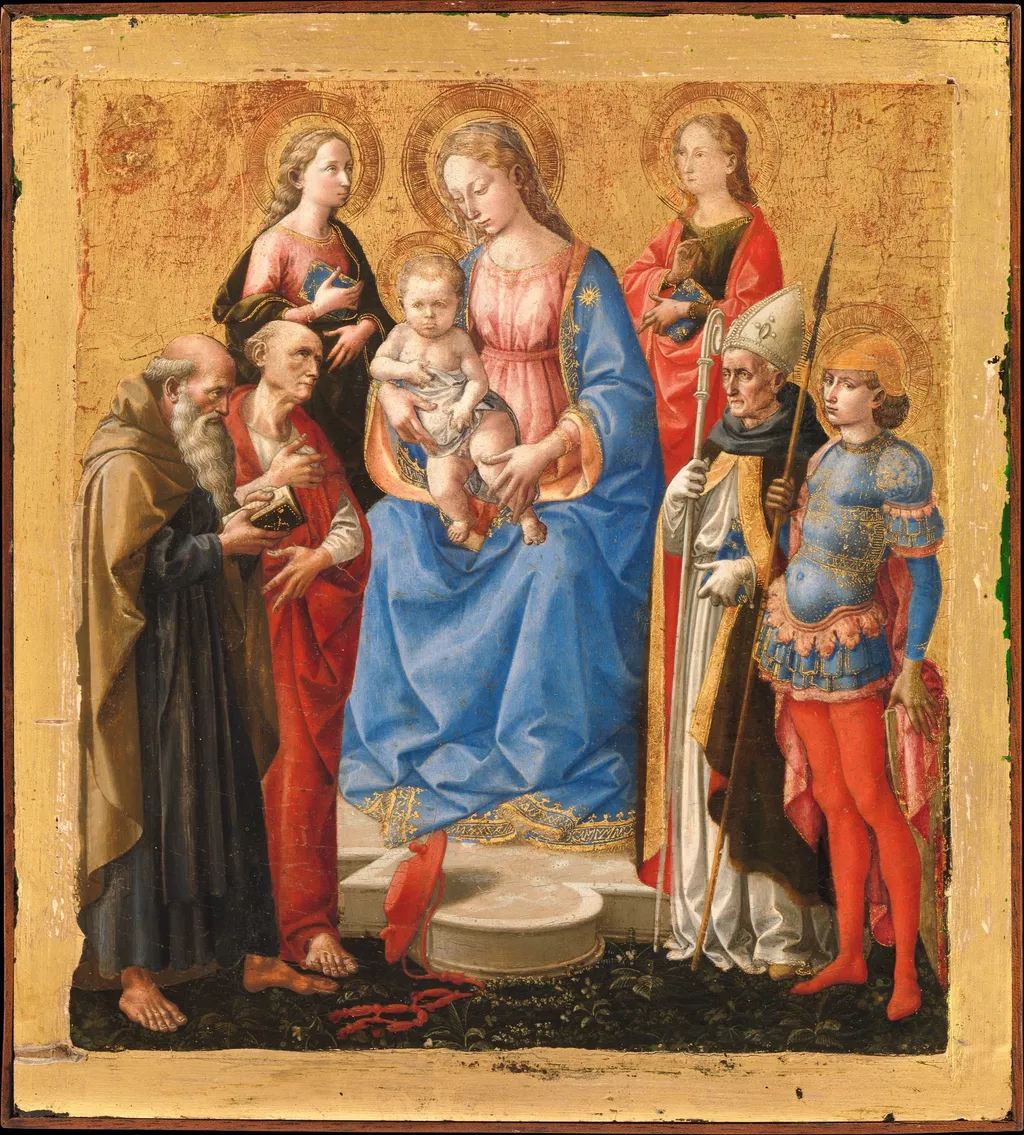
Madonna and Child with Six Saints is a color painting by Francesco Pesellino. It dates from 1450 and is held in the collection of the Metropolitan Museum of Art.
About this work
Subject & Meaning
A man and a woman appear alongside this holy gathering, likely representing donors who commission or witness the scene.
The painting depicts the Virgin Mary and the Christ Child enthroned, surrounded by six saints: George, Jerome, Anthony the Great, Cecilia, Catherine of Alexandria, and Augustine of Hippo, the latter identified by his crosier. A man and a woman appear alongside this holy gathering, likely representing donors who commission or witness the scene. As a conventional sacra conversazione, the composition brings together saints from diverse backgrounds, martyrs, Church Fathers, and ascetics, echoing the Christian doctrine of the communion of saints and their role as intercessors.
The work functions as a devotional image, inviting the viewer to contemplate the mercy of the Madonna and the protective intercession of the saints, a common meaning in Renaissance religious art.
Technique & Style
The work is executed in color on a panel support, with dimensions of 22.5 by 20.3 units (height by width), indicating a small-scale devotional painting. The composition formally depicts the Madonna and Child surrounded by six saints: George, Jerome, Anthony the Great, Cecilia, Catherine of Alexandria, and Augustine of Hippo, who holds a crosier. This grouping follows the sacra conversazione format typical of Italian altarpieces. No specific information on handling or condition is provided in the available sources.
Overview
This small panel, painted by Francesco di Stefano, known as Pesellino, in the late 1440s, depicts the Madonna and Child surrounded by six saints. Executed in tempera on wood with a luminous gold ground, the artwork measures approximately 22.5 by 20.3 cm. It served as a personal devotional object, a format the artist frequently employed. Given Pesellino's tragically brief career, this compact painting is a significant example of his distinctive style and technical skill.
History & Provenance
The painting entered the collection of the Metropolitan Museum of Art in 1950. It was a bequest from Mary Stillman Harkness, a notable collector and philanthropist. Cataloged under the accession number 50.145.30, this panel represents a key addition to the museum's holdings of early Italian Renaissance art, providing insight into the period's private devotional practices and artistic trends.
Context
Pesellino's promising career was cut short by the plague in 1457, at approximately thirty-five years old, making securely attributed works by him uncommon. This panel exemplifies his preference for small-scale, finely detailed pieces, though he also applied similar compositional principles to larger commissions. Its existence is crucial for understanding an artist known for his delicate execution and ability to create complex figure arrangements within intimate formats.
Own this work as a print
Artist & collection
Artist
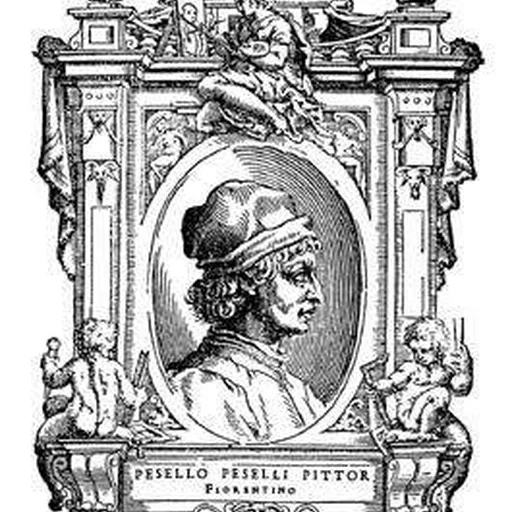
Francesco Pesellino (probably 1422 – July 29, 1457), also known as Francesco di Stefano, was an Italian Renaissance painter active in Florence.

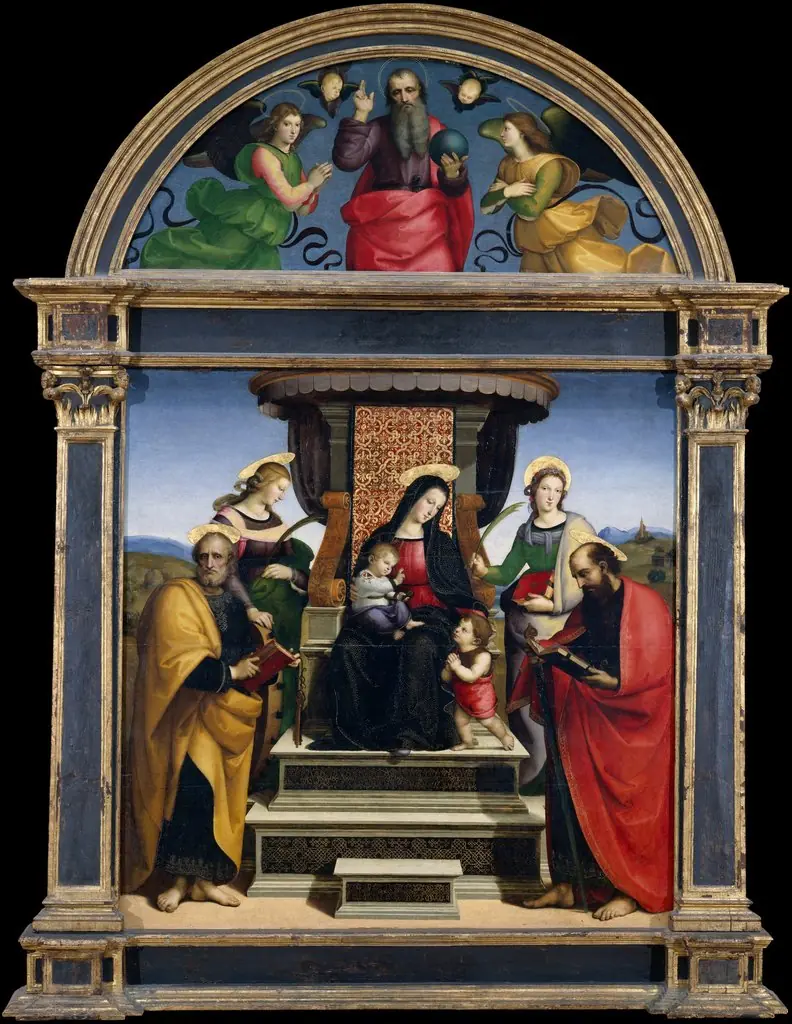
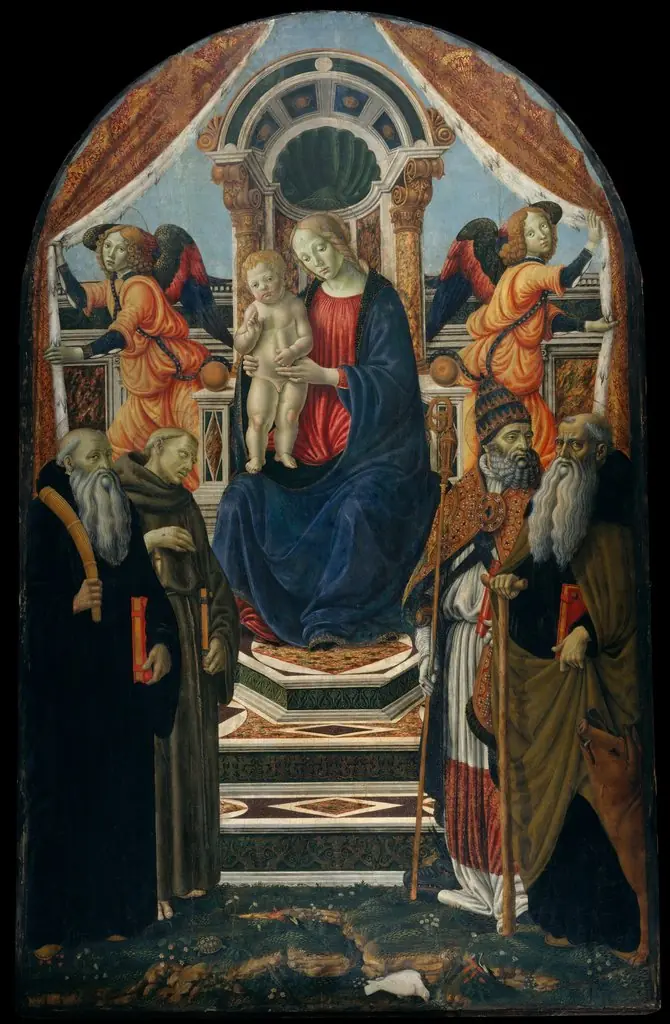
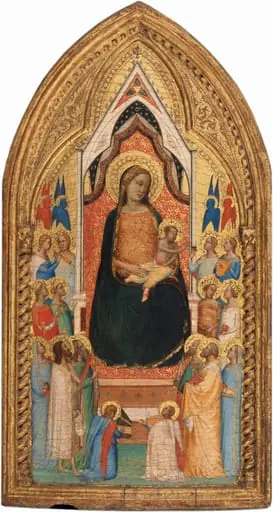
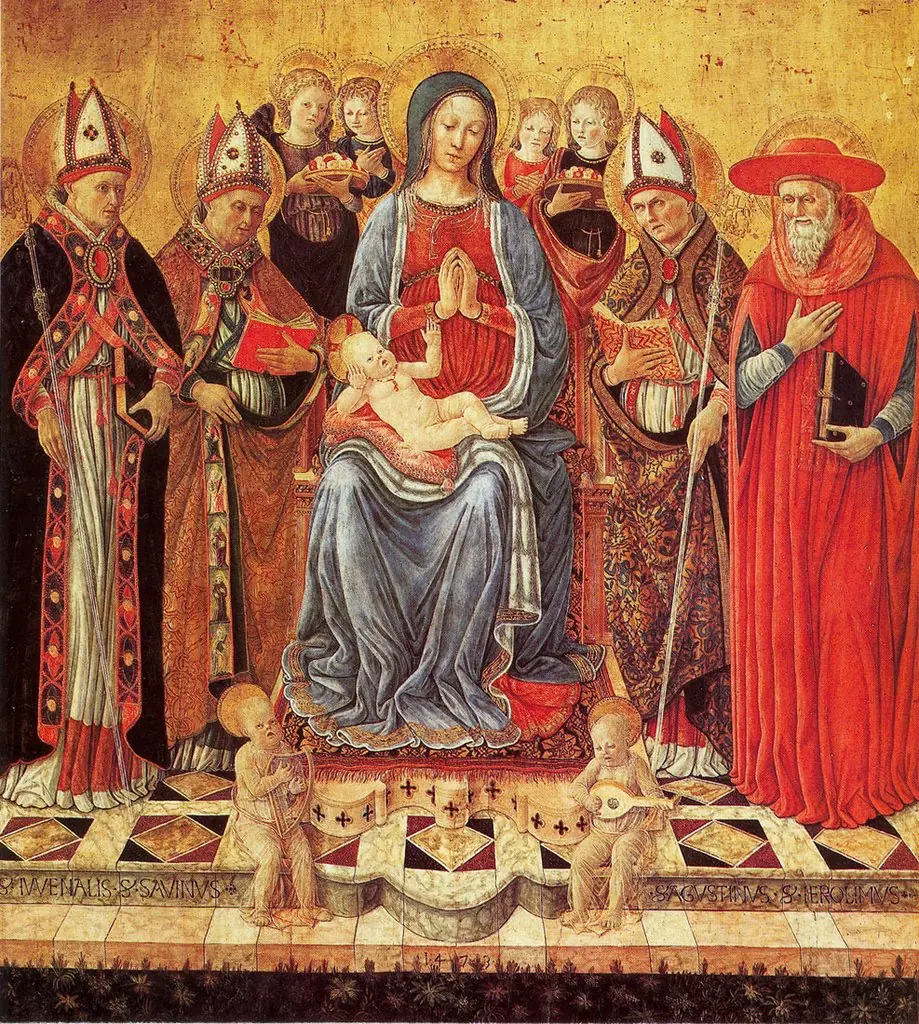
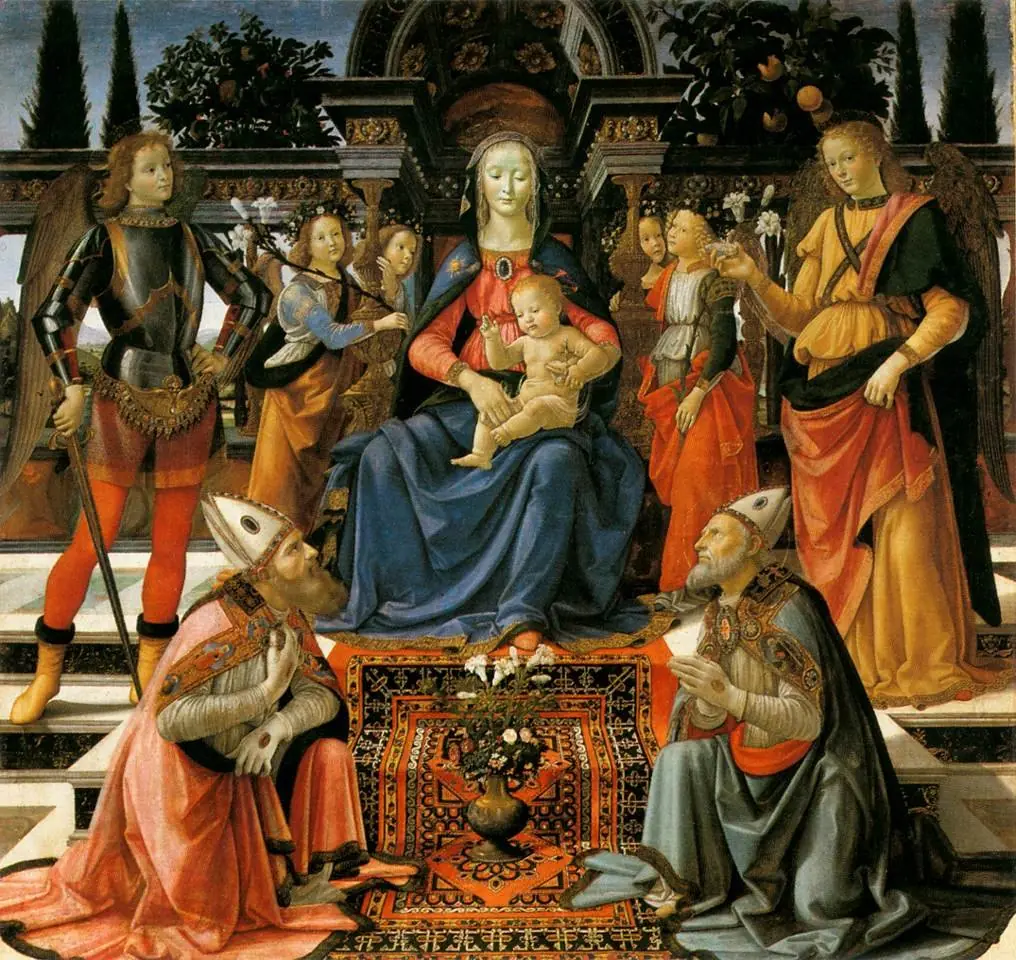
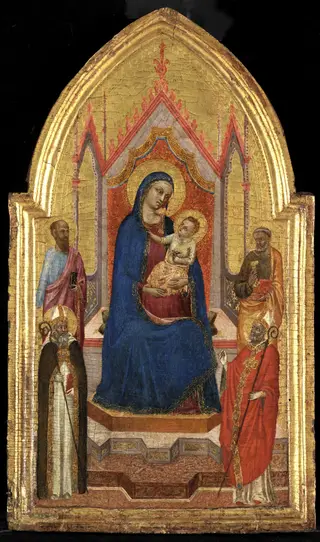 Madonna and Child Enthroned with Four Saints
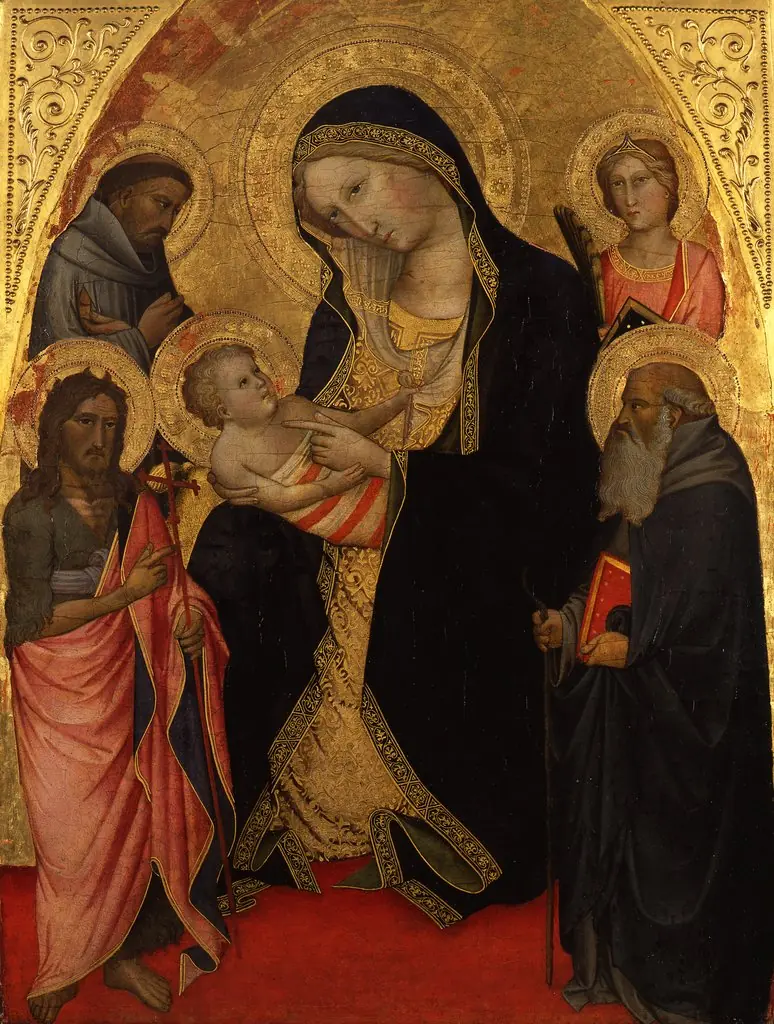 Madonna with the child, St. John the Baptist, St. Francis and St. Anthony and a martyr
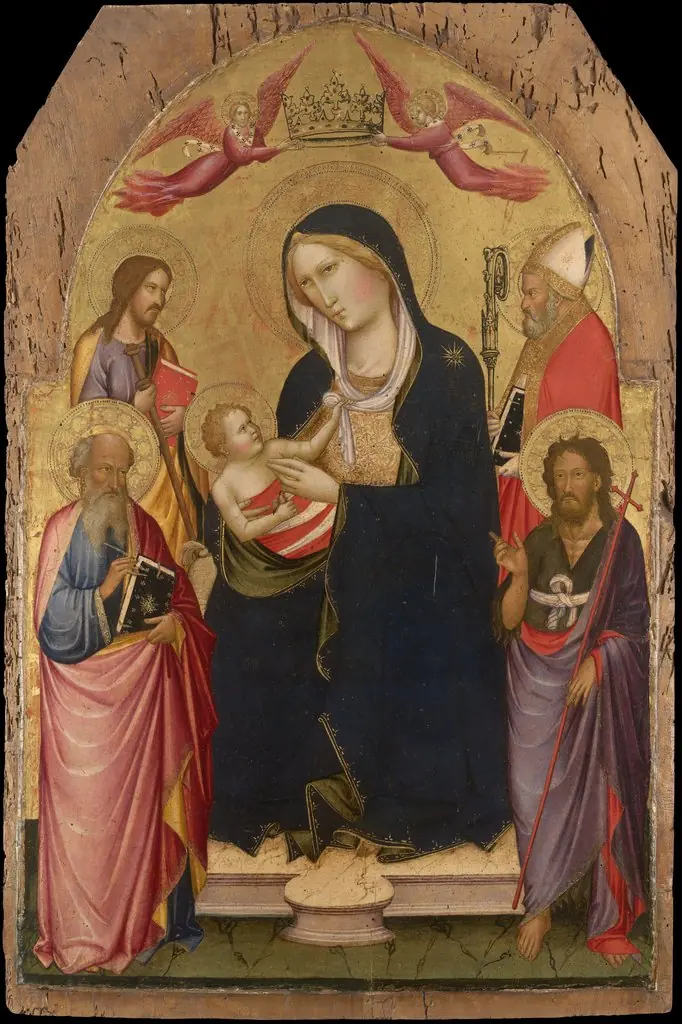 Madonna and Child with SS. John the Evangelist,John the Baptist, James of Compostela and Nicholas of Bari
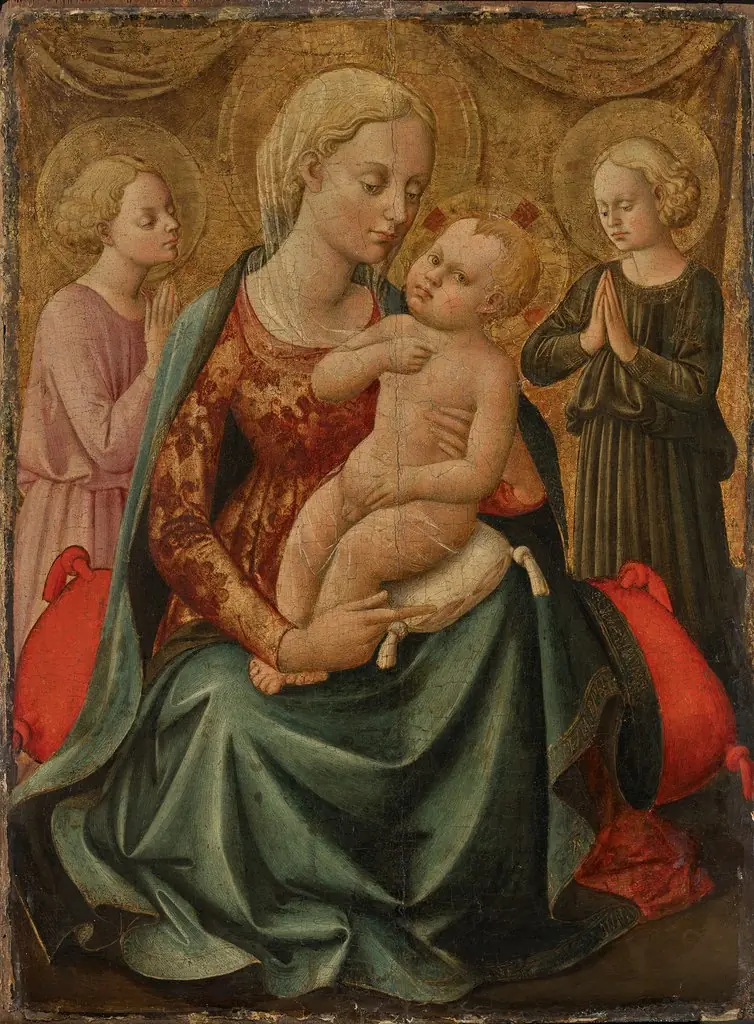 Madonna and Child
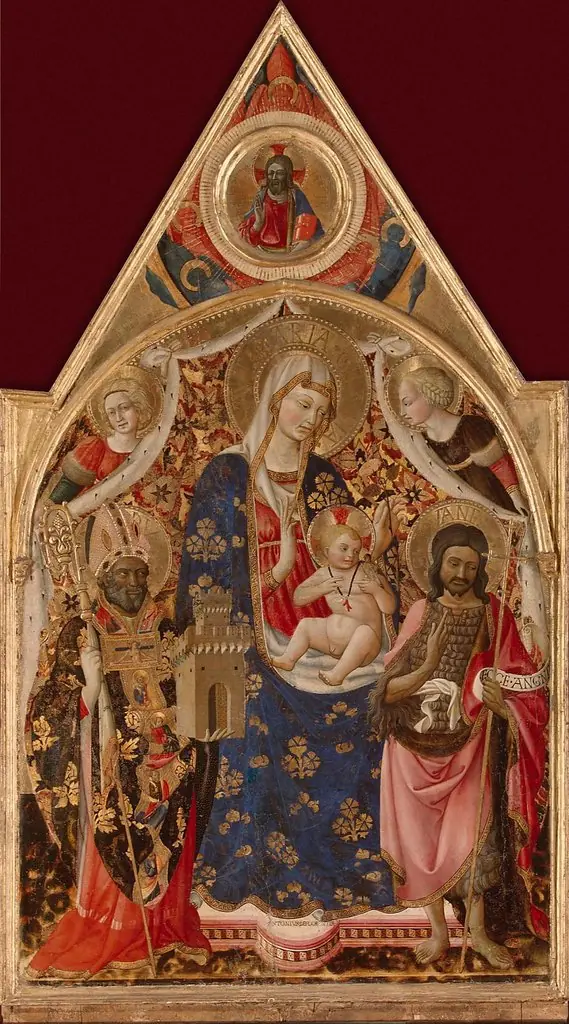 Madonna and Child, with a Bishop, St John The Baptist and Angels
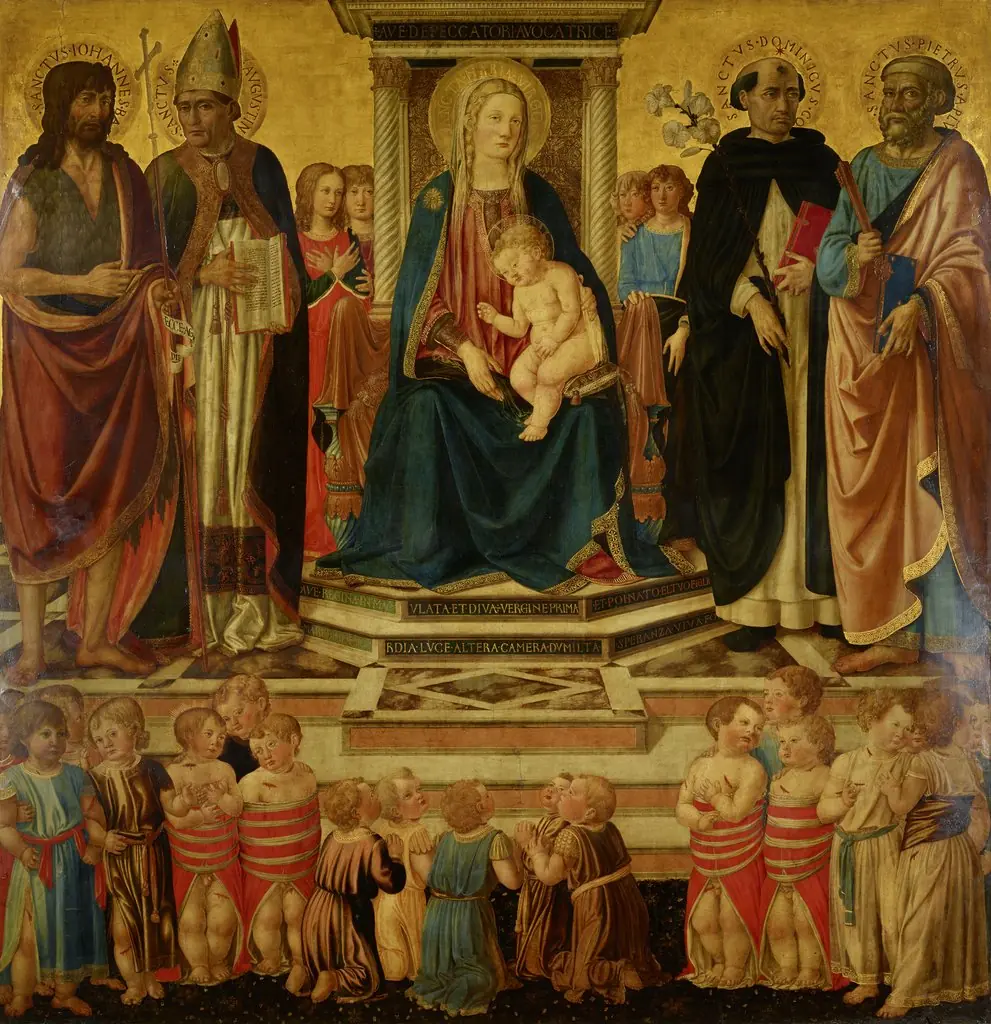 The Virgin and Blessing Child Enthroned with Sts. John, Augustine, Dominic, Peter and Victims of the bethemitic Child Murder