Untitled by After Wang Shen
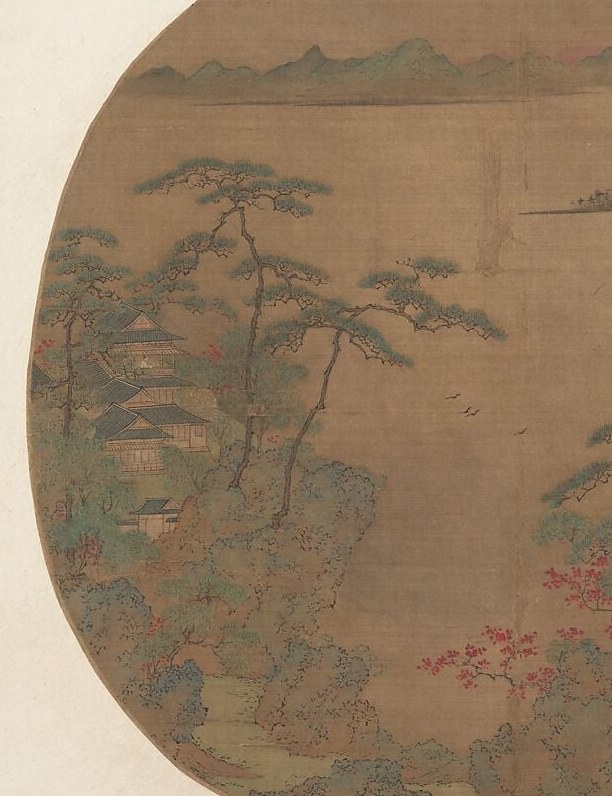
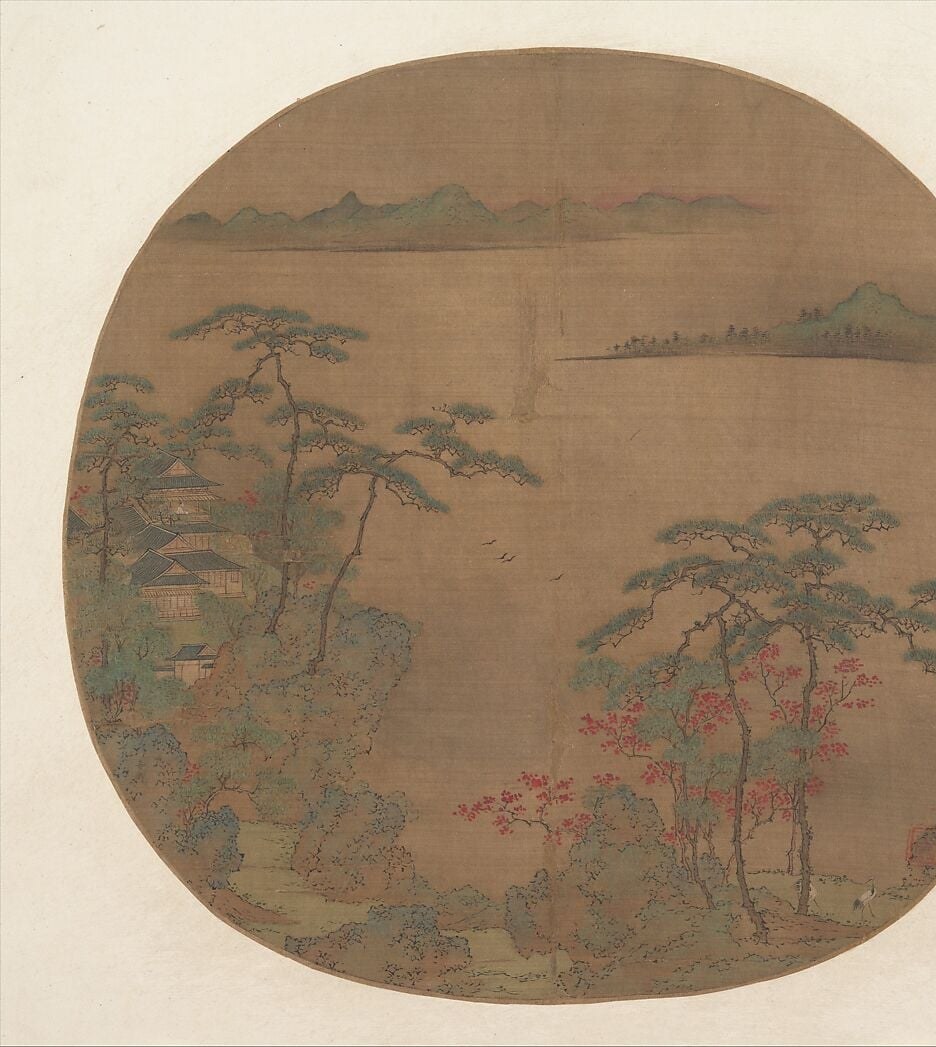
This is an untitled landscape fan painting from 1457, created on silk by an artist working in the style of Wang Shen, a master of the Northern Song dynasty who had died nearly four centuries earlier. The painting is now mounted as an album leaf, but it was originally made to be held in someone's hand, a private pocket of nature to carry through the world.
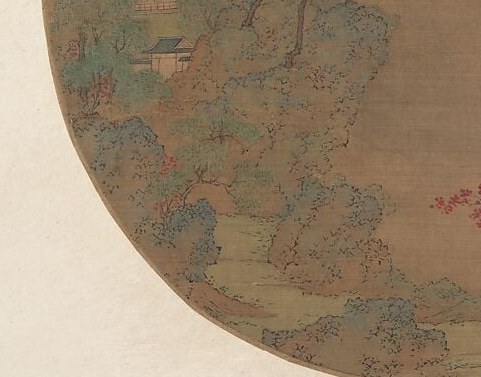
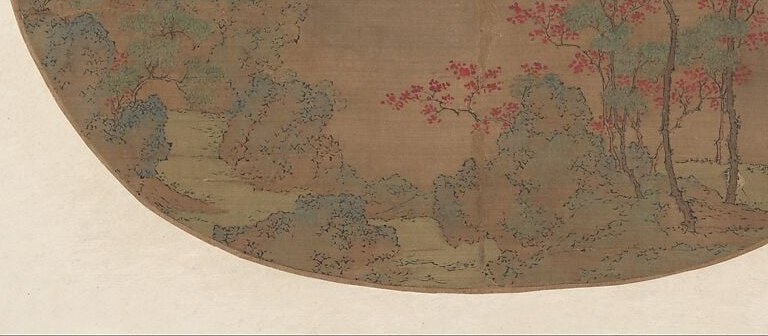
Slow your eye first on the two cranes at the rocky shore. In Chinese literati tradition, cranes are symbols of longevity and transcendence; spotting them here, tucked low, rewards a close look and anchors the painting's symbolic weight. Next, notice the river. The water is not painted, the untouched silk IS the water. This negative-space economy is a calculated act of confidence, a lesson in restraint. Finally, let your eye climb past the red-leafed shrubs, the middle-ground headland with its dot-trees, and into the distant mountains. The peaks dissolve into a horizontal wash of mist, a technique that compresses enormous depth into a tiny circular frame.
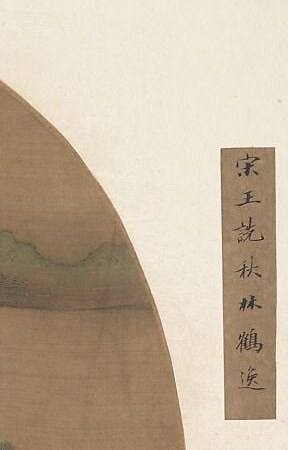
The fan format was designed for portability, not a palace wall. To paint a panoramic landscape inside a circle required the composition to curve with the boundary, a formal constraint that separates fan painting from scroll work. The artist here, working deep into the Ming period, chose to revive the misty, dilute-wash language of the 11th-century Song masters rather than chase the tastes of his own day. The inscription panel to the right suggests a later owner recognized that lineage and wanted it recorded.
A painting made to be carried privately, still intact nearly six centuries later, still doing its quiet work. What would you choose to carry in your pocket if you knew it would last that long?
Details
Transcript
1457. A quiet river scene, small enough to hold in one hand. It began as a fan, painted on silk for a single person's pocket. Look to the rocky shore. Two cranes stand at the water's edge. The cranes are symbols of longevity. In China, they promise a long life. Now look at the water. The silk itself is the river. And rise through the mist band. The mountains dissolve into air. This painter revived a style already four centuries old. He knew it would last.