Huanglong Cave (Yellow Dragon Cave) by Song Xu
Song Xu's "Huanglong Cave (Yellow Dragon Cave)", painted in 1594 and held at The Cleveland Museum of Art, offers a window into the aesthetic and philosophical ideals of Ming Dynasty China. It's more than a landscape; it's an invitation to contemplation and retreat.
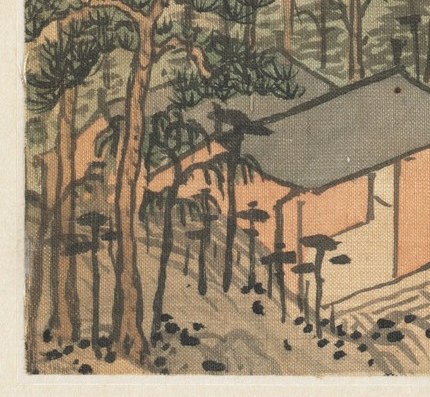
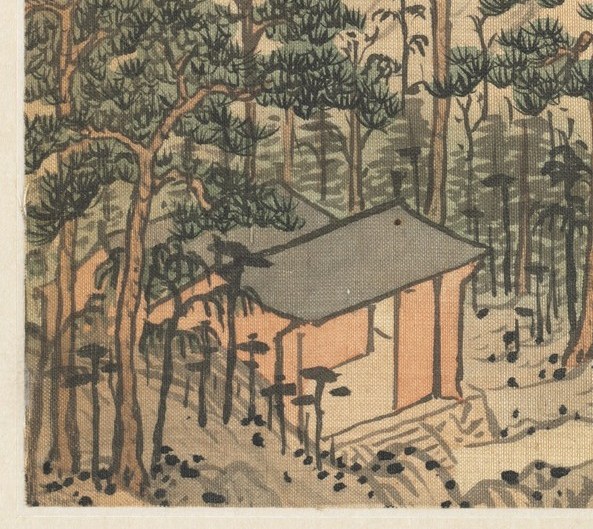
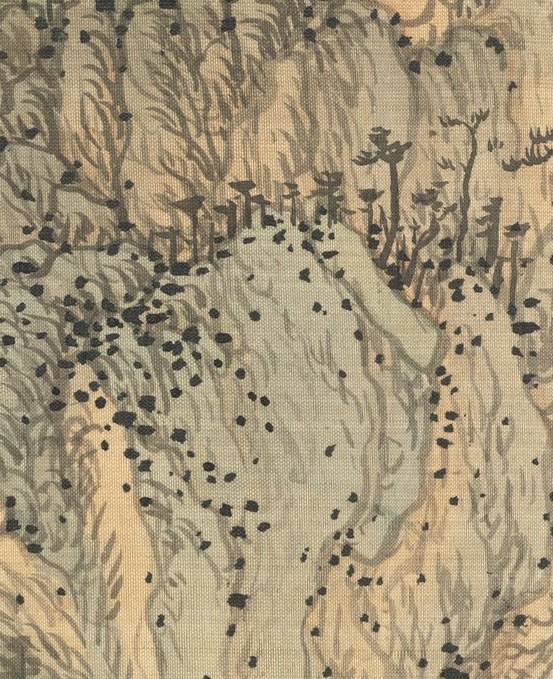
Look closely at the lower left to find a small, glowing hut, a symbol of human presence within nature's vastness. The intricate texture of the dense pine trees and rugged rocky outcrops, created with countless tiny black dots, highlights a distinctive technique common in traditional Chinese landscape painting.
This work embodies the values of its time, inviting viewers to consider humanity's place in a serene, natural world. The solitary figures on the winding path reinforce a sense of journey and reflection, a shared experience for those who once walked such paths or dreamed of doing so.
What details in this painting draw your eye the most?
Details
Transcript
In 1594, this painter captured an ideal Ming Dynasty landscape. Notice the small hut, a place for contemplation and retreat. The dense pine trees are painted with many small, dark dots. A solitary traveler journeys up the winding mountain path. His companion in orange suggests a shared, reflective journey. This art style, with rugged texture, was common in the Ming era. The calligraphy and red seal mark the artist's presence.