Mountainous landscape with the ruins of a castle by Aelbert Cuyp
Aelbert Cuyp's 'Mountainous landscape with the ruins of a castle,' painted around 1650, offers a captivating view of 17th-century Dutch scenery. Known for his luminous landscapes, Cuyp often captured the serene, golden light of morning or evening.
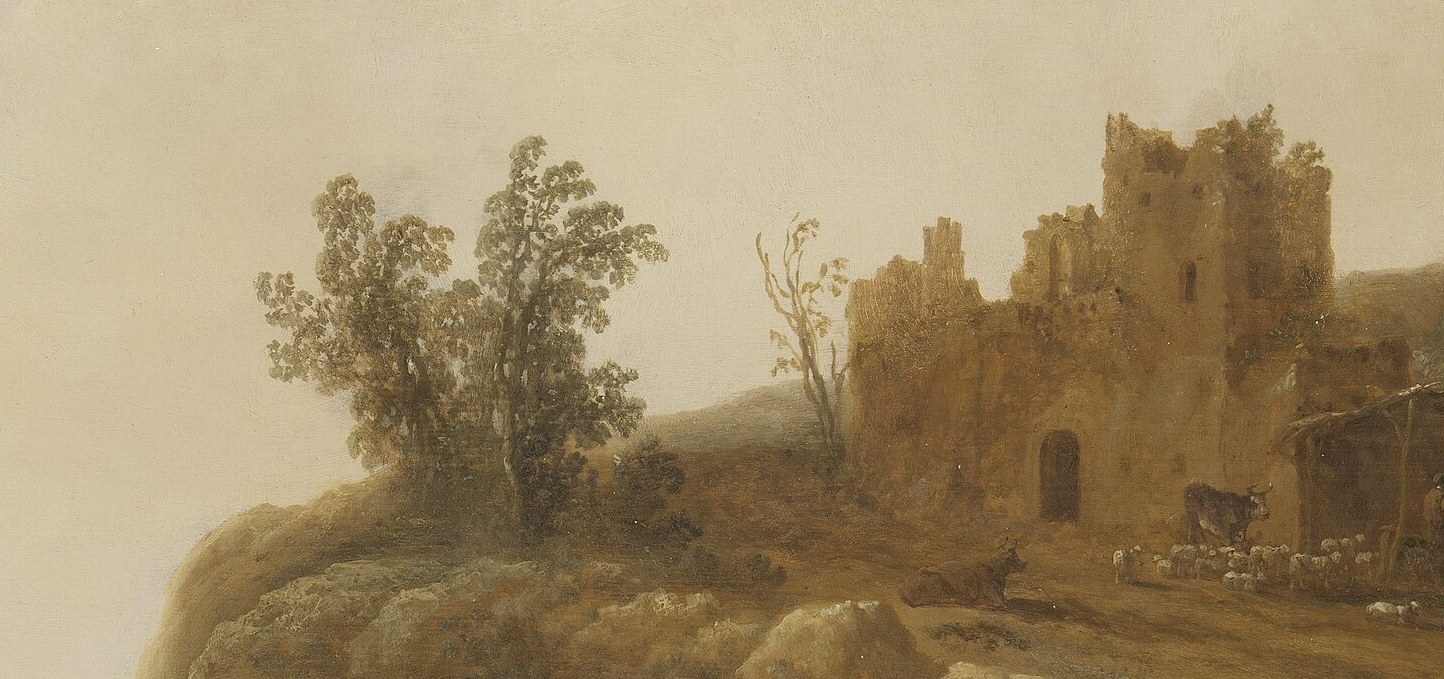
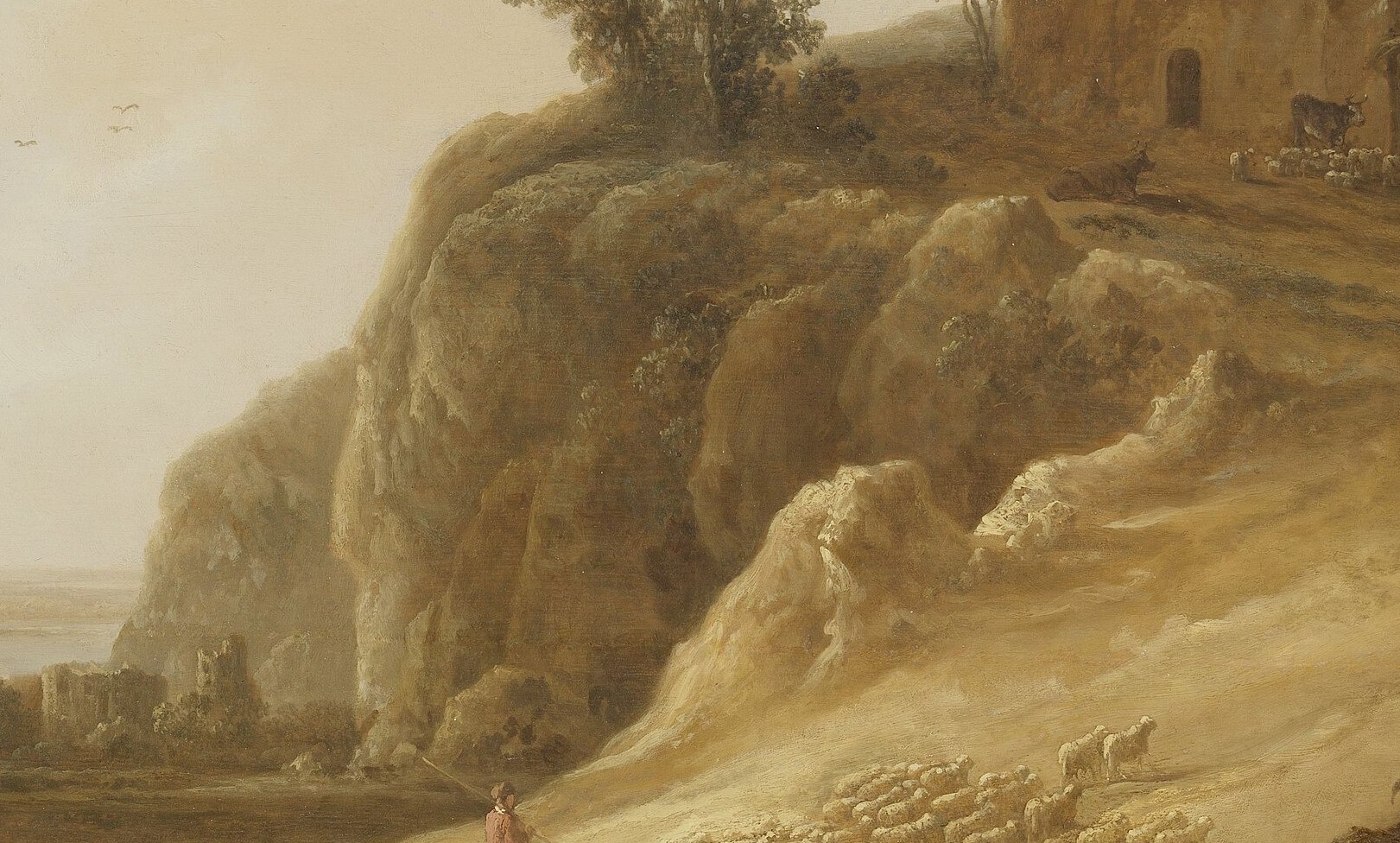
This painting, housed at the Rijksmuseum, highlights the tranquil rhythm of agrarian life. Observe the herdsmen guiding their flocks and the stately cattle, all essential to the Dutch economy of the period. The prominent castle ruins speak to a deeper history, a quiet reminder of past power integrated into the landscape.
Cuyp, a leading painter of the Dutch Golden Age, worked primarily in Dordrecht. While he is celebrated for his river scenes, this work showcases his ability to depict broader, evocative landscapes, using subtle light to create a sense of expansive space and timelessness.
What details in this painting make it feel both historical and eternally peaceful?
Details

Transcript
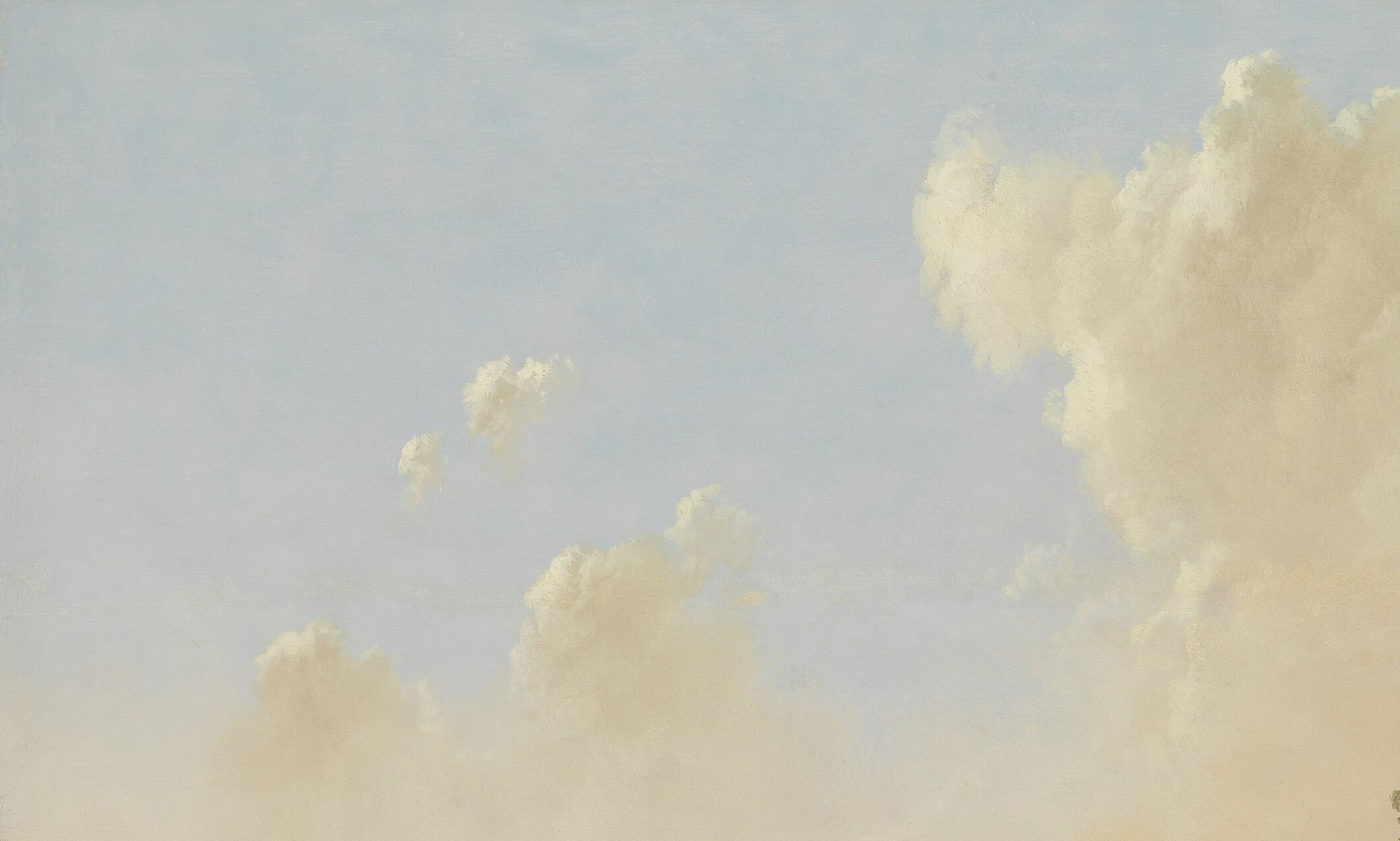
In 1650, Dutch painter Aelbert Cuyp showed his homeland. It's a serene, pastoral view, bathed in golden light. Cattle and sheep were vital to the Dutch economy. These crumbling ruins are a castle, centuries old. They hint at a past where power resided here. The sky, full of cumulus clouds, is characteristic of Holland. Two riders travel through this timeless landscape.