Mrs. Paul Smith Palmer and Her Twins by Field, Erastus Salisbury
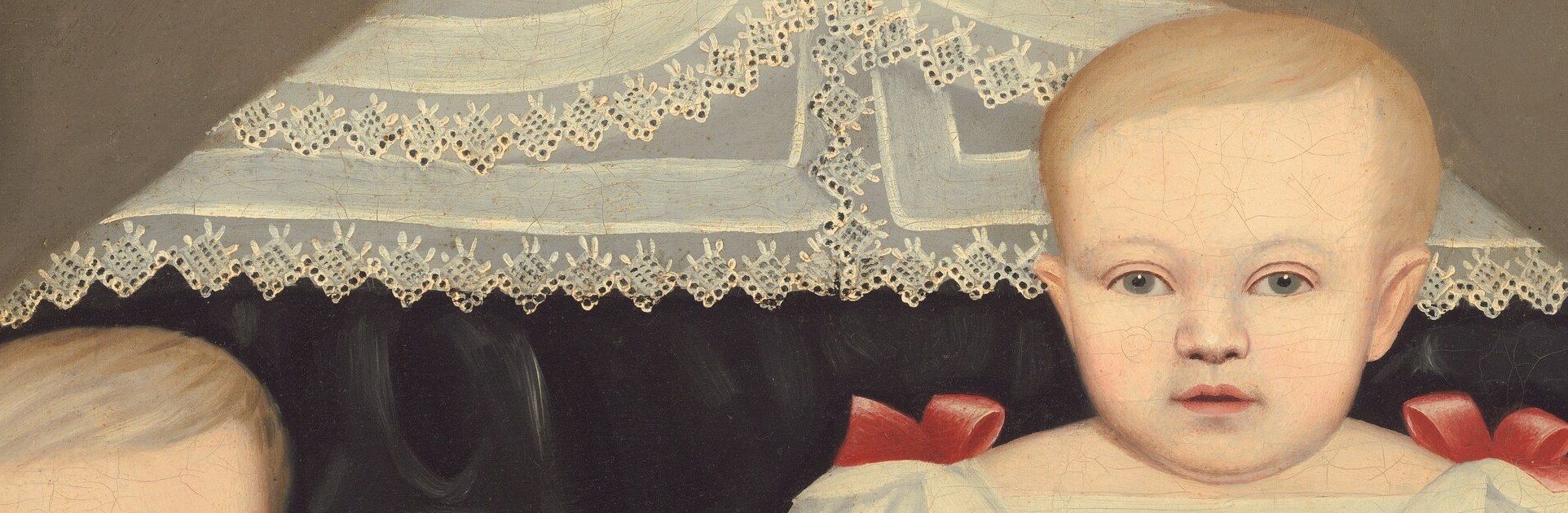
Erastus Salisbury Field's 1836 portrait, "Mrs. Paul Smith Palmer and Her Twins," at the Museum of Fine Arts, Boston, offers a rare glimpse into early American domestic life. The painting captures Mrs. Palmer with her twin infants, featuring fashionable lace and unique details.
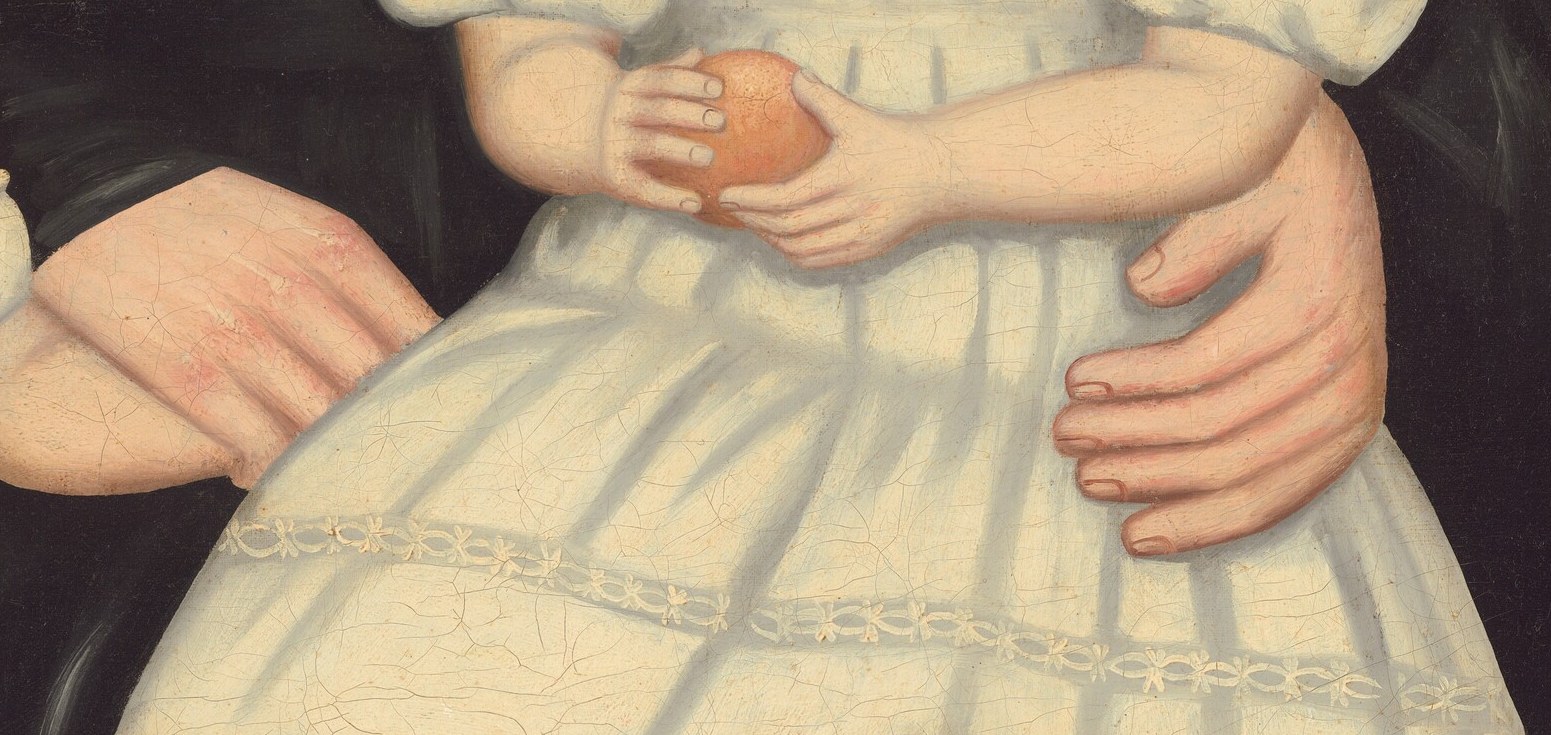
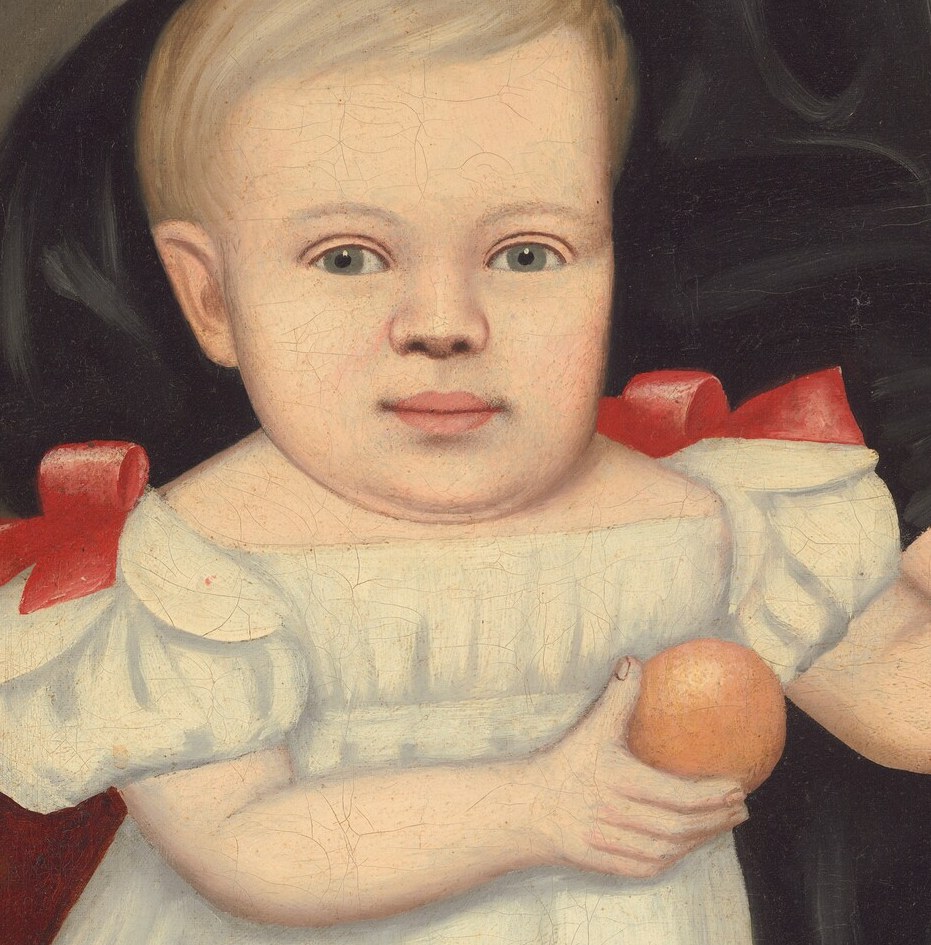
Look closely at the small, round objects held by each baby. These are early toys, and their inclusion is notable, as children in portraits from this period rarely held such items. These details might symbolize the mother's pride and the individuality of her children.
Field, a prolific American painter, often incorporated elements with personal or symbolic significance into his works. This portrait exemplifies his style, focusing on the subjects' presence and character. The use of chiaroscuro, with strong contrasts between light and dark, adds depth and three-dimensionality.
What do these tiny toys tell us about childhood in the 19th century?
Details
Transcript
This is Mrs. Paul Smith Palmer and her twins, painted 1836. Notice her lace collar. This detail was very fashionable. Each baby holds a small, round object. What are they? They are early toys. Children in portraits rarely held them. This painter often included objects with personal meaning. Perhaps the toys suggest a mother's pride in her children.