Saint Lucy by Cossa, Francesco del
View the artwork: Saint Lucy →
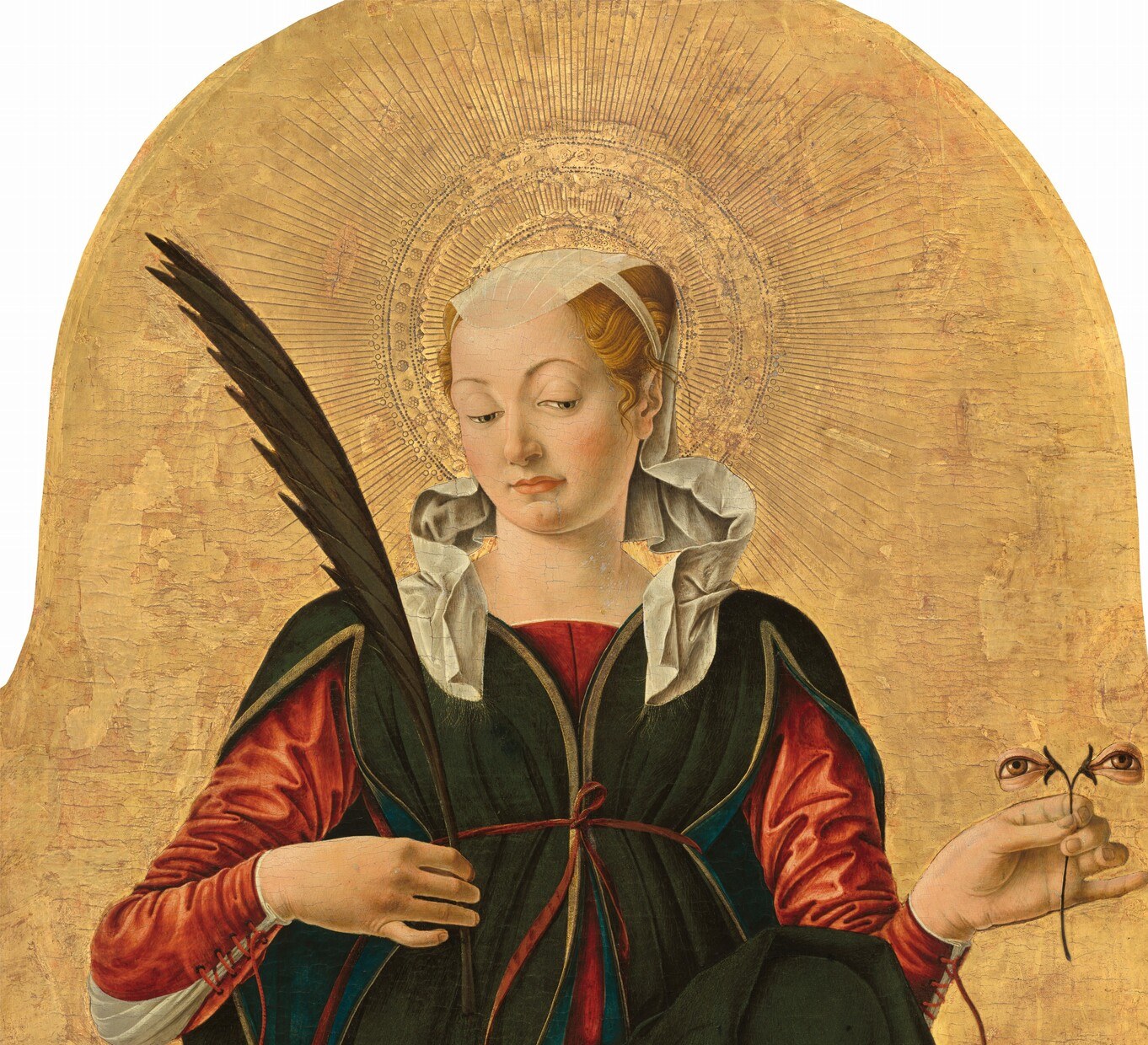
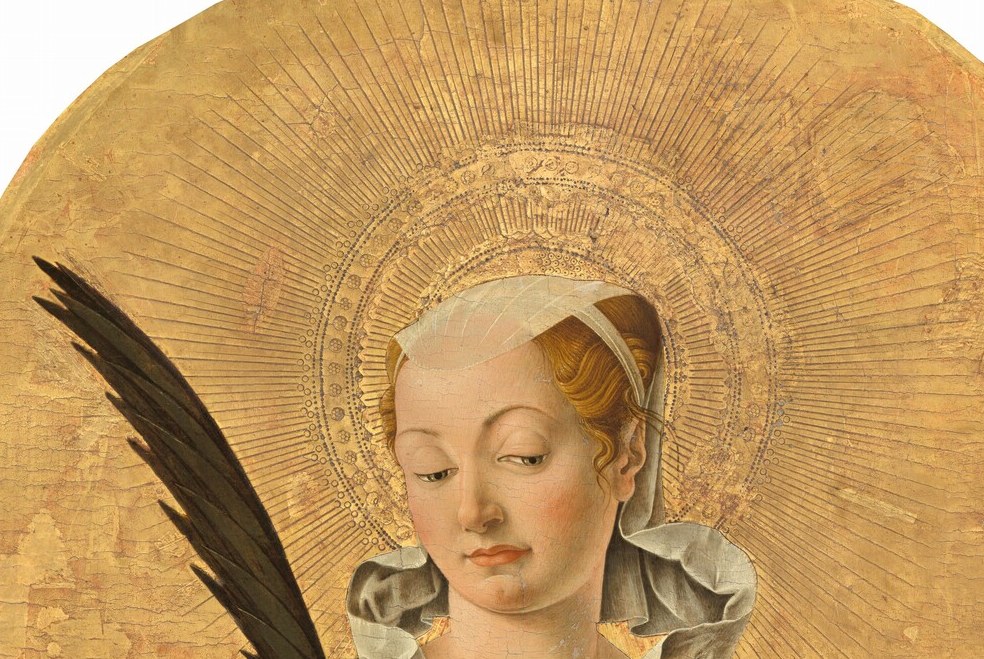
This is Saint Lucy, painted by Francesco del Cossa around 1473 or 1474. It is a fragment of a much larger altarpiece that was taken apart in the early 1700s and sold off piece by piece. The panel now lives at the National Gallery of Art in Washington, D.C.
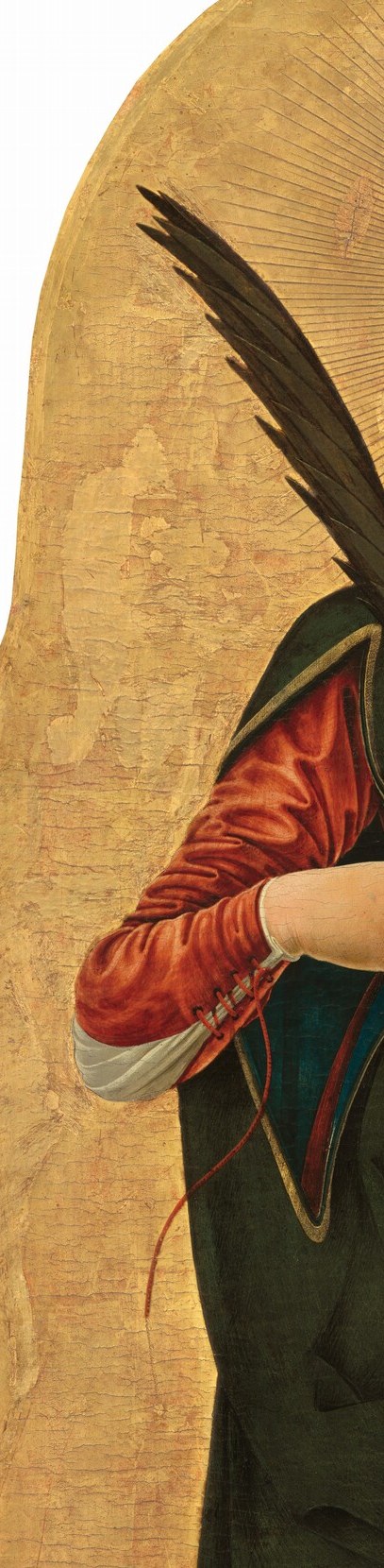
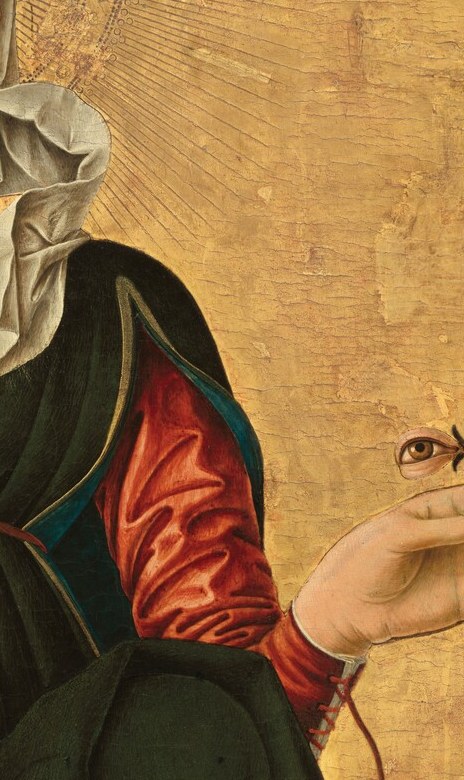
Lucy holds the standard palm frond of a martyr, but look closely at her other hand. Instead of the usual dish holding her severed eyes, Cossa painted a slender stem with two eyes blooming from it. It is a strange, delicate detail that makes this version of the saint unforgettable.
The backstory: Floriano Griffoni commissioned this polyptych for his family chapel in the church of San Petronio in Bologna. Cossa was a leading painter of the Ferrarese school, known for sculptural, almost stern figures. Around 1725 to 1731, the church dismantled the altarpiece. The panels scattered across Europe. For two centuries no one saw them together. An art historian, Roberto Longhi, finally reconstructed the original frame on paper in the twentieth century, reuniting the dispersed saints.
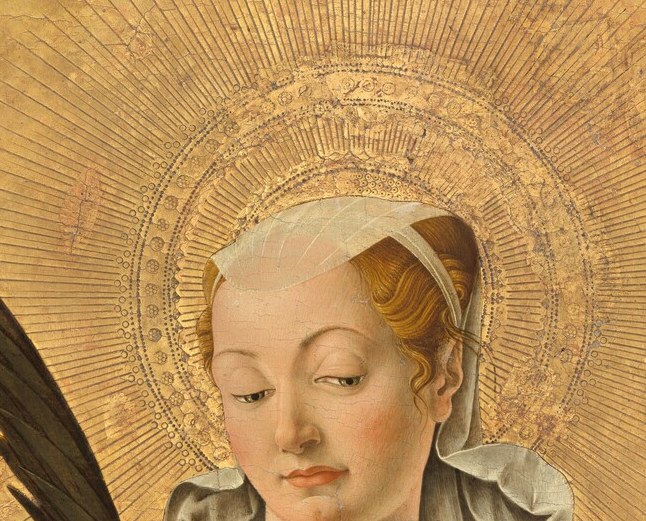
Lucy became the patron saint of eyesight because of the gruesome legend that she tore out her own eyes. Cossa gave that story an eerie grace. What do you notice first when you see her face?
#arthistory #renaissance #saintlucy
Details
Transcript
She was part of a grand altarpiece in Bologna. By 1731, the church dismantled it and sold the pieces. Now look at what she is holding. A stem bearing two human eyes. The legend says she sacrificed her eyes for her faith. Most artists painted those eyes on a dish. Cossa gave her a flower.