The Fable of the Miller, His Son, and the Donkey by Elihu Vedder
Elihu Vedder’s The Fable of the Miller, His Son, and the Donkey (1867, The Metropolitan Museum of Art) takes a story you likely heard as a child and freezes it at its most theatrical moment: the public cross-examination.
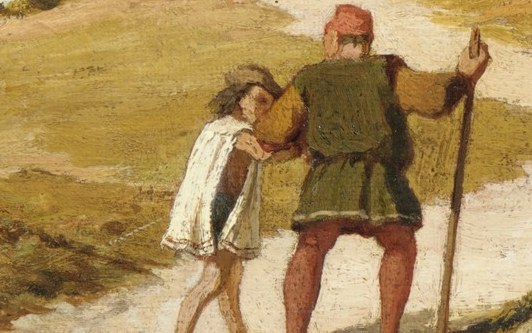
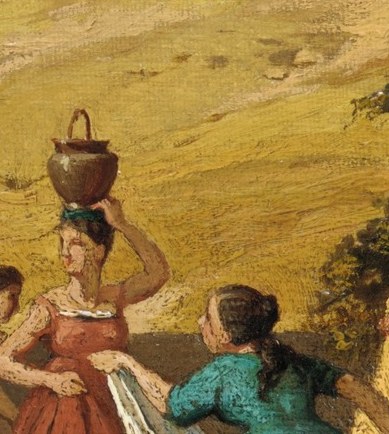
Look first at the miller’s extended hand. It bridges the composition, pulling your eye from the donkey on the winding road to the cluster of women gathered around the stone well. Their faces are not caricatures of outrage, one woman seems almost amused, another genuinely attentive. Vedder treats gossip as a complicated social ritual, not a punchline.
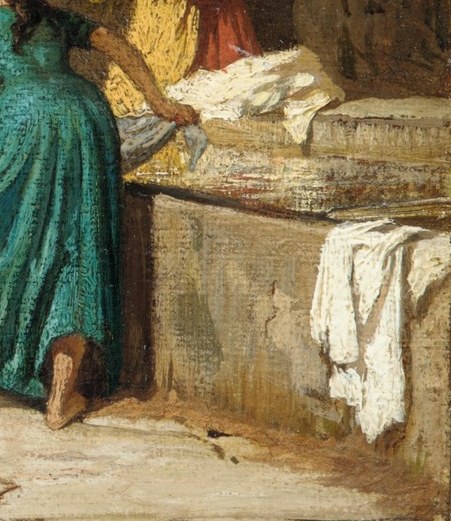
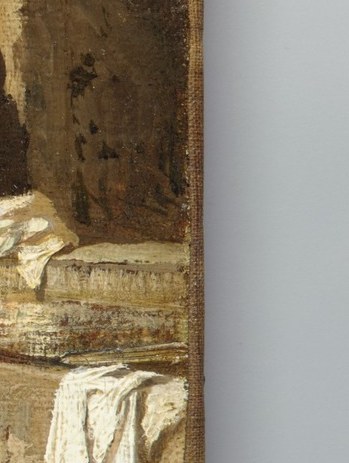
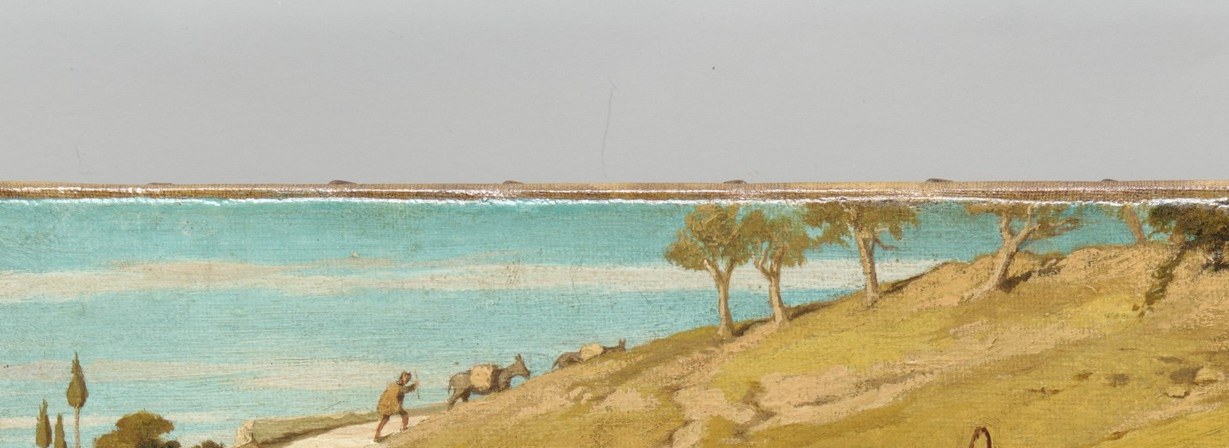
The detail most people scroll past is a small white cloth draped over the stone arch on the far right. It is not symbolic or dramatic. It is laundry. That cloth tells you a household is just behind that gate, and that what we are watching is not a staged parable but an ordinary afternoon that will repeat tomorrow by the same well. The road curves endlessly into the sun-baked Italian hills Vedder knew from his decades living abroad, and the whole ancient fable settles into a real Mediterranean village.
Vedder painted this realist work early in his career, long before he became famous for his mystical illustrations of The Rubaiyat of Omar Khayyam. Knowing his later Symbolist turn makes the directness of this painting feel almost tender, a young American artist in Italy, building a moral universe out of laundry and road dust.
Details
Transcript
A man pleads his case. The women listen, or pretend to. The miller gestures across the road. He is explaining the fable you already know. Elihu Vedder painted this in 1867, early in his career. He places the critics at a stone well, the ancient world's gossip node. The road winds endlessly behind them. The criticism will not stop. But look above the gate. A piece of laundry hangs there. A household lives behind this arch. This scene is just an ordinary afternoon.