In the Land of Promise, Castle Garden by Ulrich, Charles Frederic
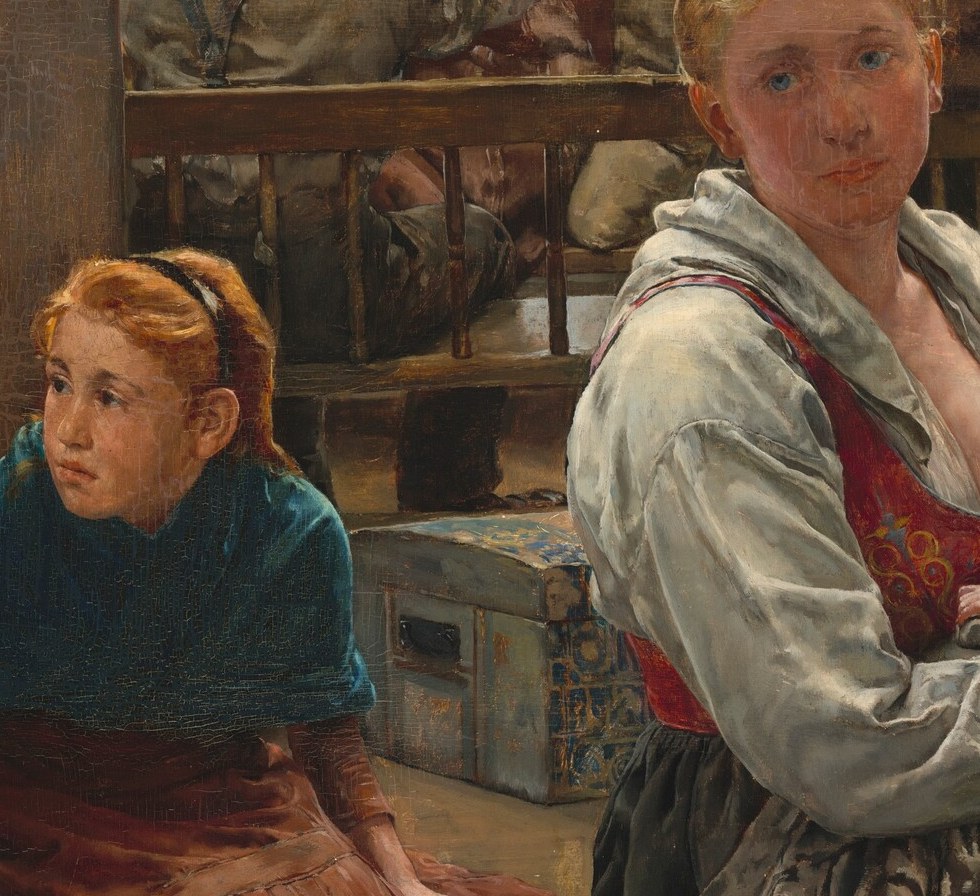
Charles Frederic Ulrich’s “In the Land of Promise, Castle Garden” (1884) is a rare oil-on-wood view of New York’s first official immigrant receiving station, decades before Ellis Island opened. The young German-born painter documented the building and the people who passed through it at a moment when eight million arrivals were reshaping the city.
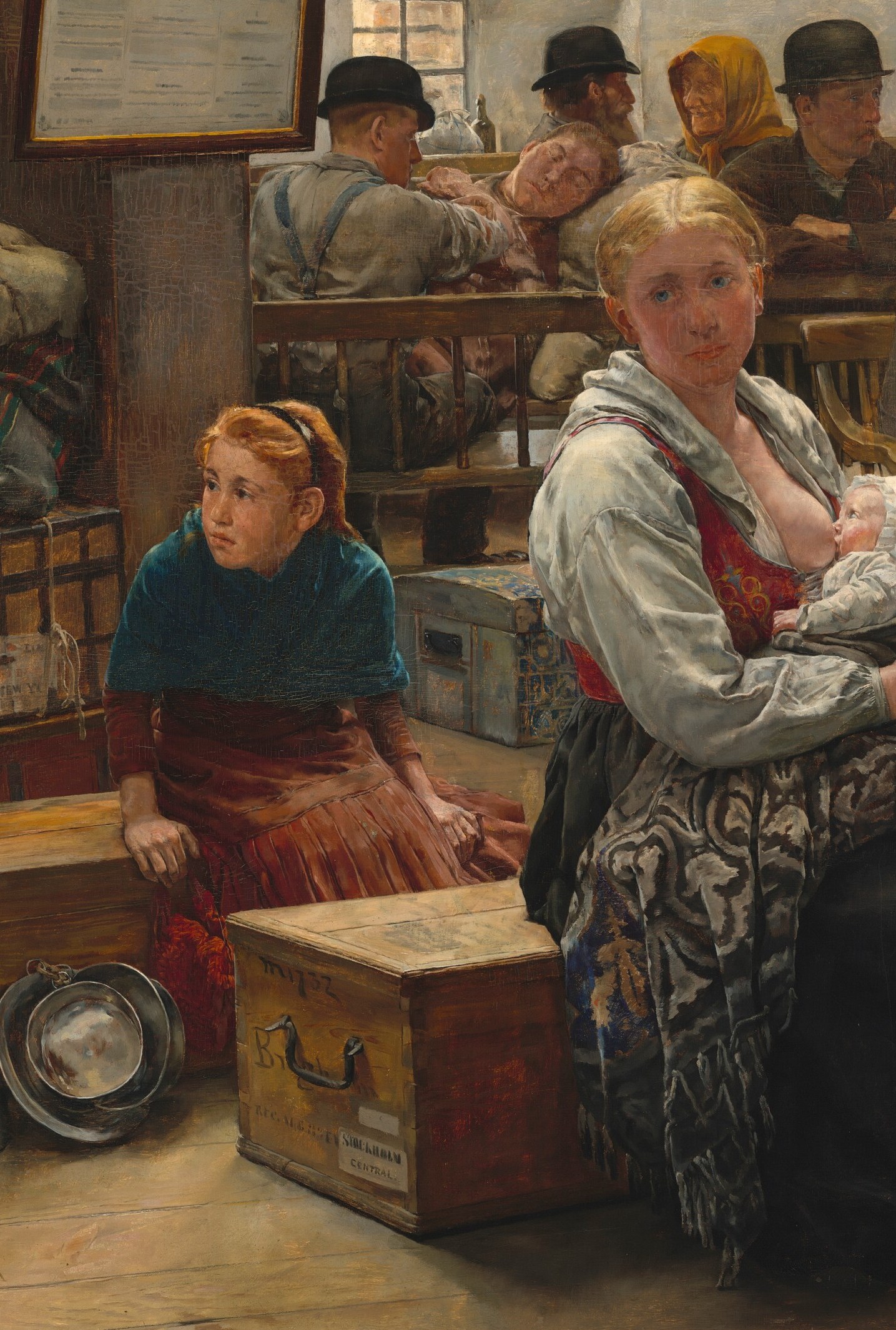
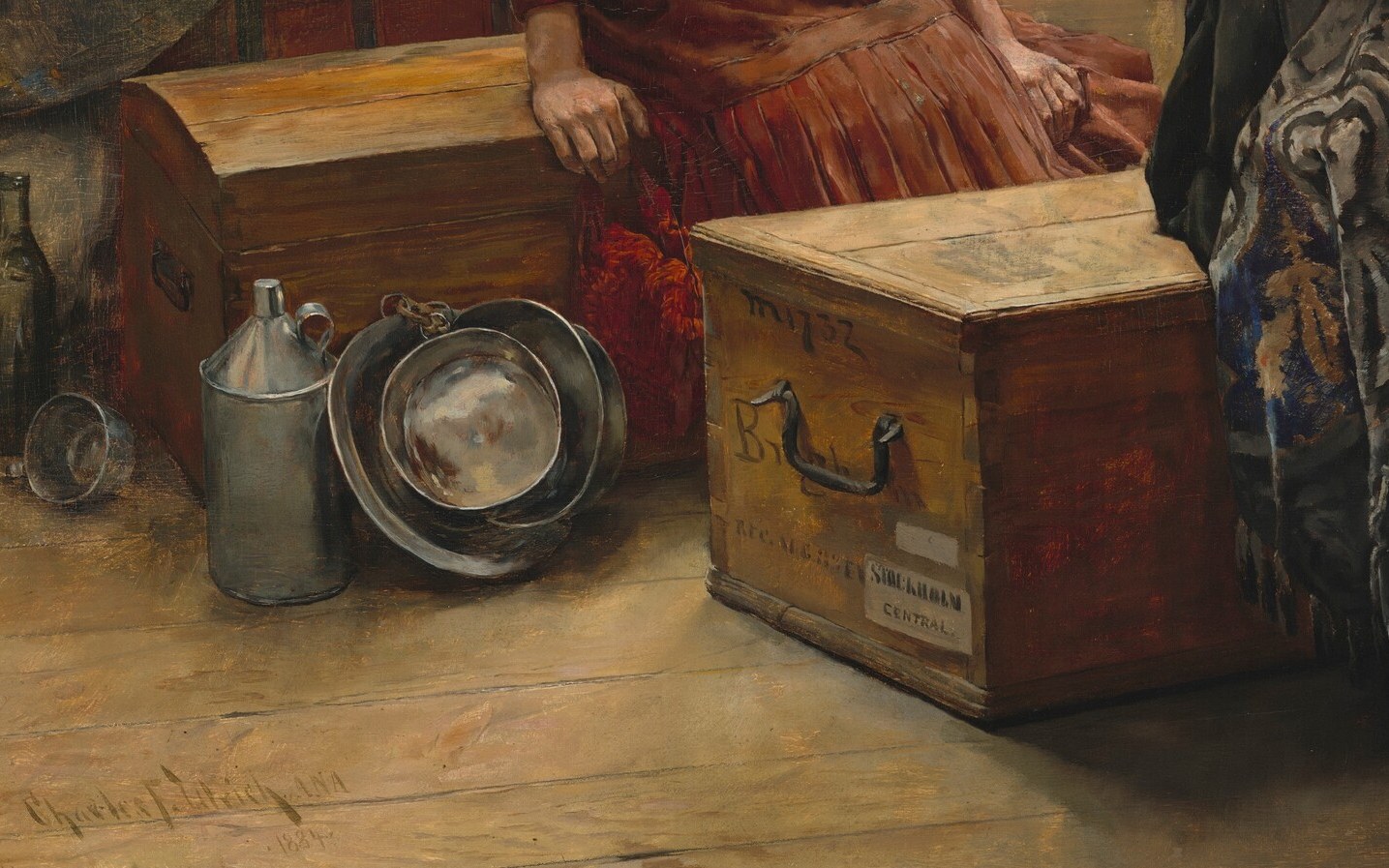
Look at the mother in red, center foreground. She is the compositional anchor, and Ulrich channels the diffuse overhead light directly onto her and the swaddled infant she holds, a painterly choice that reads almost like a secular Madonna of immigration. At her feet, a single banded trunk: the only possession visible, her temporary seat.
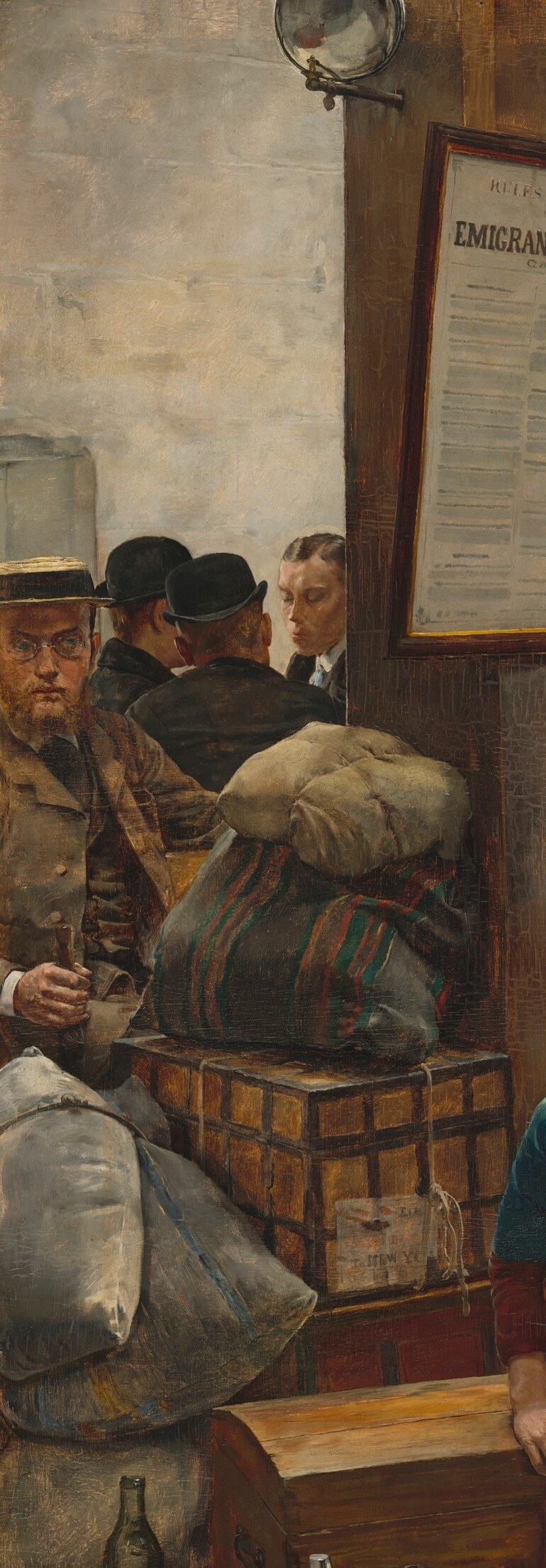
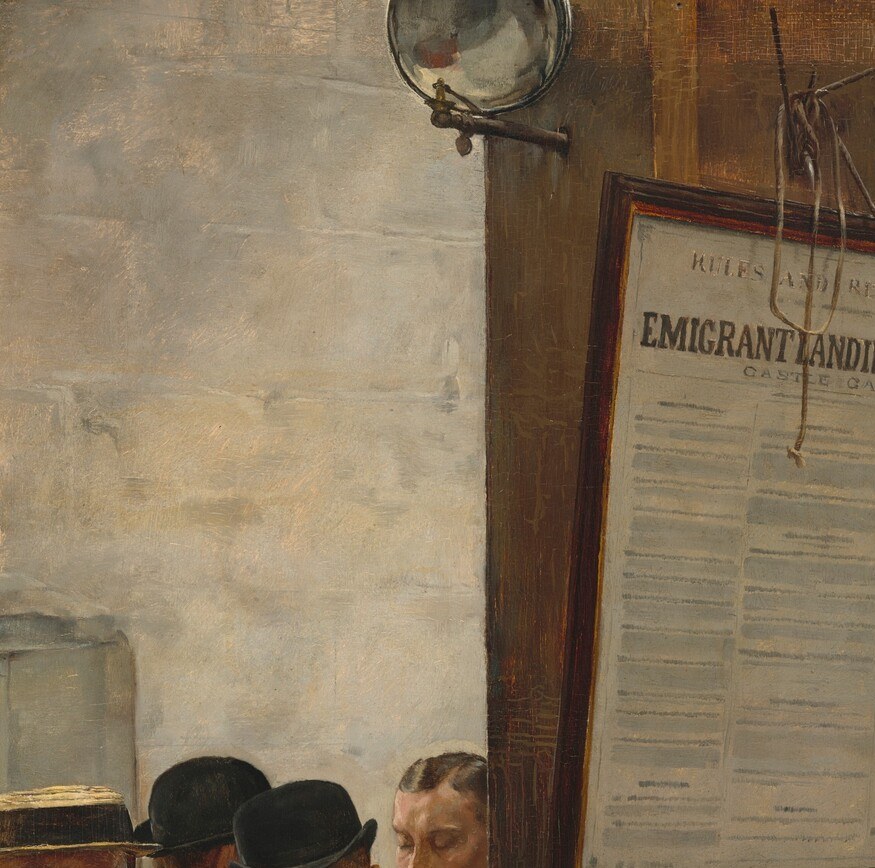
Castle Garden operated from 1855 to 1890 in what is now Battery Park. The stone pillar at left is part of the actual structure, which was originally a fort turned entertainment hall before becoming an immigrant processing center. The printed bulletin posted on that pillar is likely a language-assistance placard, a small documentary link to the administrative machinery of 1884.
The crowd dissolves on the right; Ulrich intentionally generalized faces to emphasize a shared journey rather than individual portraiture. A man in a top hat stands apart, perhaps an official, but the painting’s real subject is the collective weight of arrival, nervous, hopeful, and exhausted all at once.
What detail in this painting holds your eye the longest?
Details
Transcript
Before Ellis Island, there was Castle Garden. Eight million arrivals passed through this one stone building. The artist was young. German-born. He knew the crossing. A mother anchors the crowd. She is exhausted. Her only possession: the trunk she sits on. A posted bulletin. Likely a language placard. A system at work. The light falls on the infant like a secular Madonna. Ulrich painted faces that dissolve into a tide of humanity.