The Castle of Batavia by Andries Beeckman
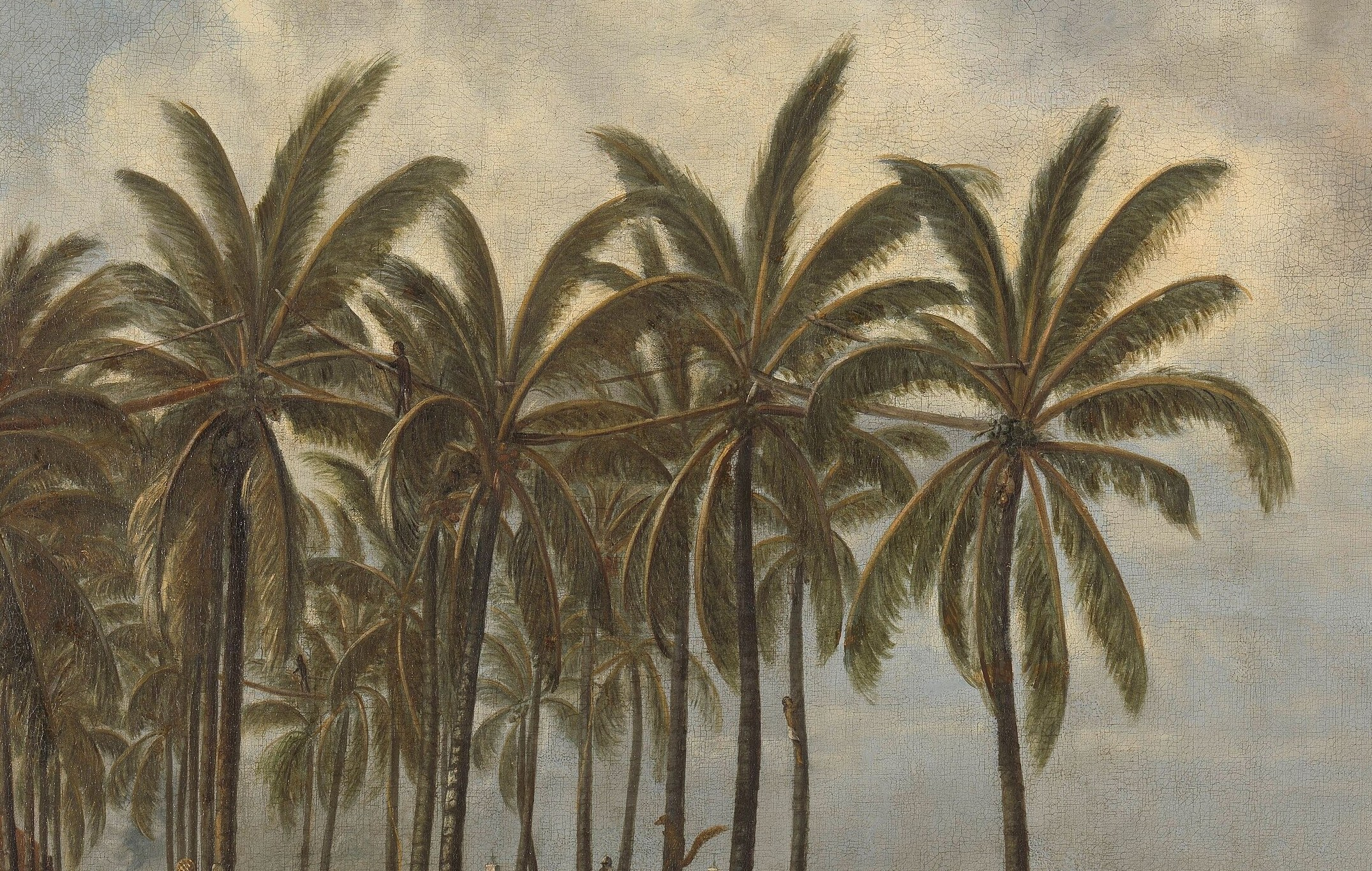
Andries Beeckman's 1662 painting, "The Castle of Batavia," at the Rijksmuseum, offers a vibrant glimpse into the heart of the Dutch East India Company's headquarters in what is now Jakarta.
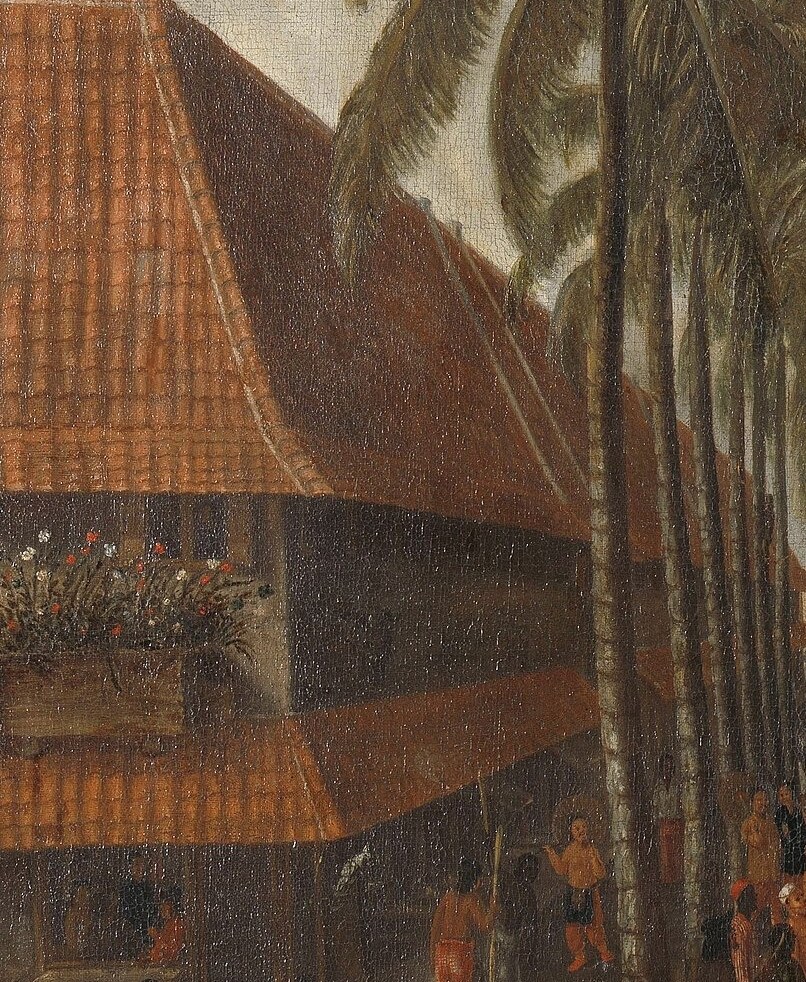
The canvas is rich with details of colonial life, from the bustling shoreline activity to the iconic red-tiled Batavia Castle itself. Look closely at the diverse figures populating the foreground: their clothing and accessories provide clues about social status and the multicultural dynamics of this vital trading post.
Beeckman, known for his depictions of Southeast Asia, captures a moment in the Dutch Golden Age when global trade was expanding rapidly. The presence of a Chinese merchant, identifiable by his distinctive yellow robe, highlights the crucial role various communities played in Batavia's economic success.
What other stories do you think these figures might tell about life in 17th-century Batavia?
Details

Transcript
This is Batavia, 1662. The heart of the Dutch East India Company. Palm trees and distant ships set a bustling, tropical scene. Europeans and locals share the space, some in elaborate dress. This man's parasol suggests his status in the colonial port. Look closely at the bright figure in the yellow robe. This distinct attire identifies him as a Chinese merchant. He represents a key part of Batavia's economic power.