Fruit and Flowers by Orsola Maddalena Caccia
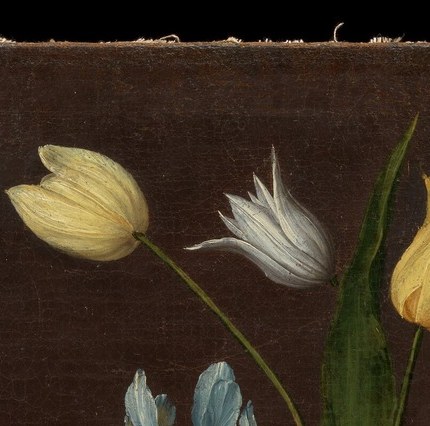
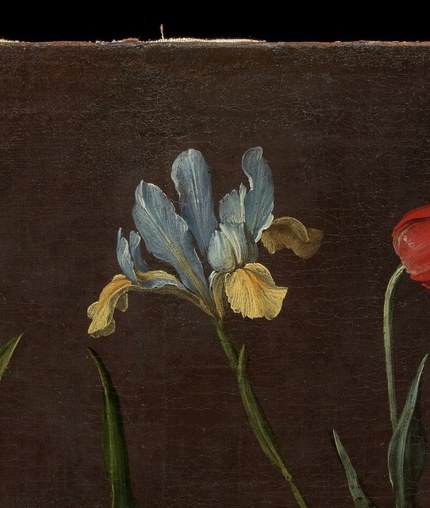
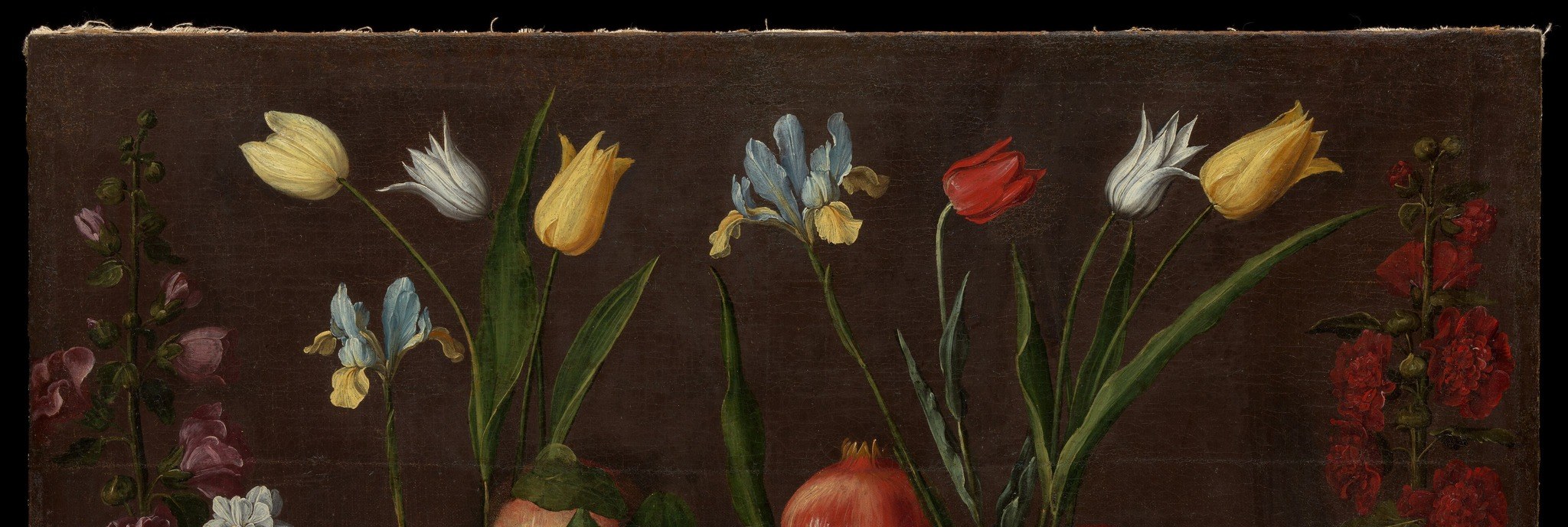
This is Orsola Maddalena Caccia's "Fruit and Flowers," painted around 1630. She was a nun, and she was running a serious business.
Caccia (born Theodora) entered the Ursuline convent at Moncalvo in her twenties, eventually bringing her artist father's workshop inside the convent walls. She produced altarpieces and religious images, but her real commercial engine was still life: big, lavish canvases of fruit and flowers commissioned by the local aristocracy. A nun selling luxury goods to the rich is not a contradiction; it was how her convent paid its bills.
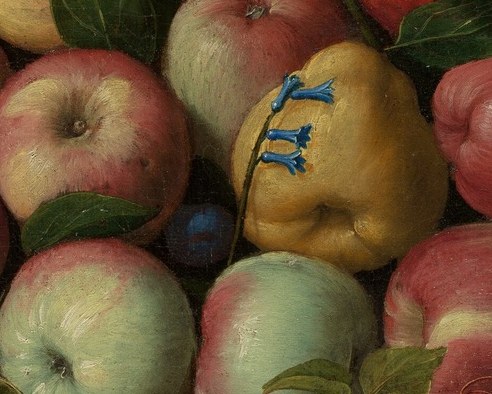
Look for the evidence she left inside the painting. On the yellow citron in the center, faint blue markings are visible in person and in high-resolution images. These are not blemishes. They appear to be a subtle signature, painted directly onto the fruit's skin, a quiet tag only a careful eye would catch.
She died in 1676, having outlived nearly every male Mannerist still-life painter of her generation. Her work hung in noble houses across Piedmont. The inscription on the fruit was not an accident. It was a receipt.
Details
Transcript
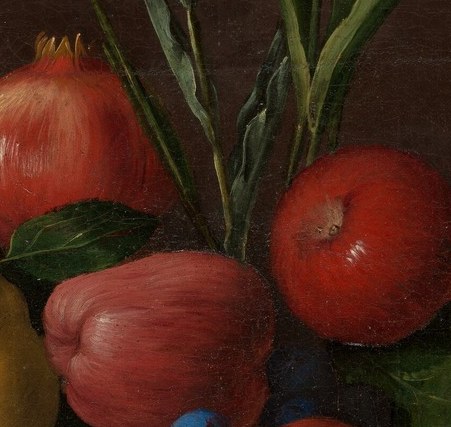
1630. A convent in northern Italy. Orsola Maddalena Caccia filled this canvas with luxury. Tulips. A speculative fever had just collapsed Europe's markets. A split pomegranate: the Counter-Reformation symbol of resurrection. Look closely at this yellow citron. The blue marks are not damage. They are her signature, painted directly on the skin. She did not need to be in the room to own the transaction.