Moonlight, Wood Island Light by Winslow Homer (American, 1836–1910)
Winslow Homer's "Moonlight, Wood Island Light," painted in 1894 and held at the Metropolitan Museum of Art, is a testament to the artist's ability to capture the raw power and subtle drama of the sea. Homer reportedly painted this entire work in less than five hours, working by the direct illumination of the moon.
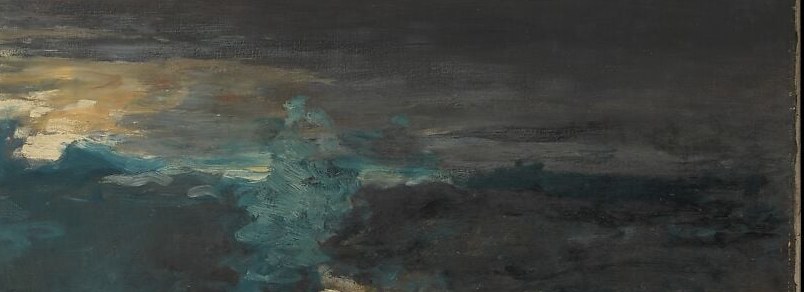
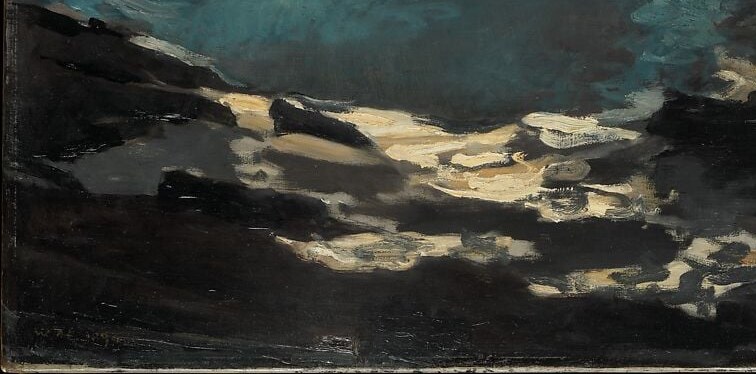
Look closely at the canvas to see the dramatic interplay of light and shadow, particularly on the turbulent waves and the moonlit sea surface. The only sign of human presence is a tiny, almost imperceptible red dot on the horizon, the Wood Island Lighthouse, located near Homer's studio in Portland, Maine.
This spontaneous creation reflects Homer's deep connection to the natural world, particularly the coast of Maine where he spent his later years. It diverges from many artistic trends of the late 19th century, emphasizing nature's solitary beauty and quiet intensity over more brightly lit or optimistic subjects.
What emotions does this moonlit seascape evoke in you?
Details


Transcript
This painter was known for capturing dramatic American seascapes. But here, in 1894, he painted this quiet night scene. He worked quickly, reportedly finishing it in under five hours. He painted it by the light of the moon itself. A tiny red dot in the distance, a lighthouse, is the only human sign. It’s Wood Island Light, near his studio in Maine.