Flower still-life with a skull and crucifix by Jan Davidsz. de Heem
Jan Davidsz. de Heem's 'Flower still-life with a skull and crucifix' from 1630 is a stunning example of Dutch Golden Age painting, held at the Alte Pinakothek. De Heem's genius lies in his ability to make painted objects feel incredibly real, especially through his masterful use of light and shadow to create texture.
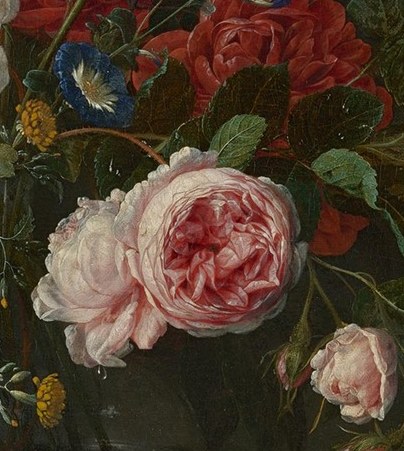
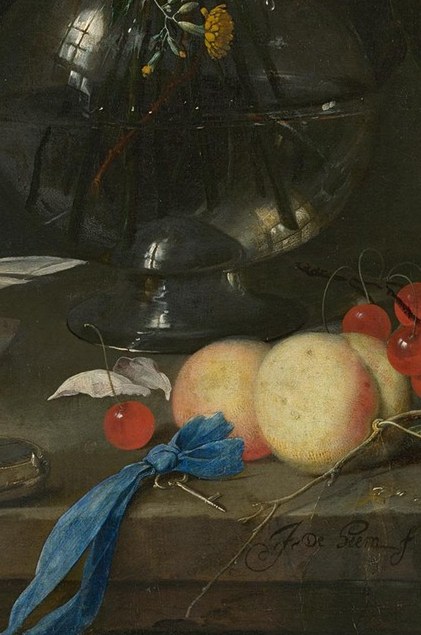
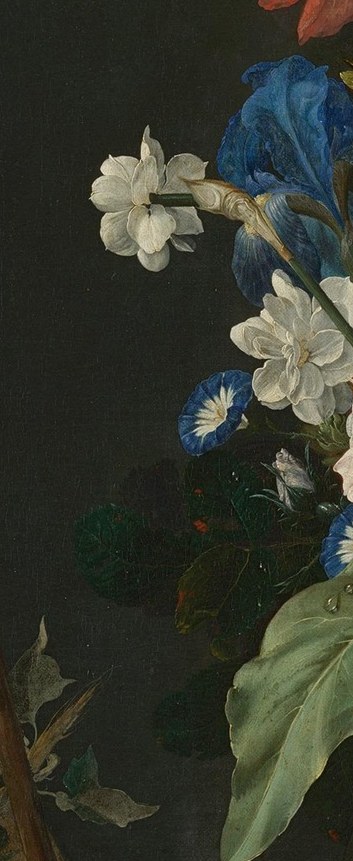
Look closely at the various elements in the painting, the delicate transparency of the glass vase, the soft, velvety petals of the pink rose, and the luxurious sheen of the blue satin ribbon. Each object is rendered with meticulous detail, inviting the viewer to appreciate the artist's skill.
This still life, characteristic of the 17th century, is more than just a beautiful arrangement. It blends opulent displays of nature with symbols of mortality, like the skull and crucifix, to reflect on the fleeting nature of life and earthly pleasures. De Heem was a leading artist in this genre, known for his intricate compositions that combine beauty with deeper philosophical narratives.
Which texture in this painting do you find most convincing?
Details
Transcript
This painter was a master of impossible textures. See how light illuminates each petal of this pink rose? Every highlight and shadow makes it feel velvety. He captures the delicate sheen of silk on this ribbon. And the subtle transparency of this glass vase. Notice the reflection, like a window into the room.