Winter in the Scheveningse bosjes. by Anton Mauve
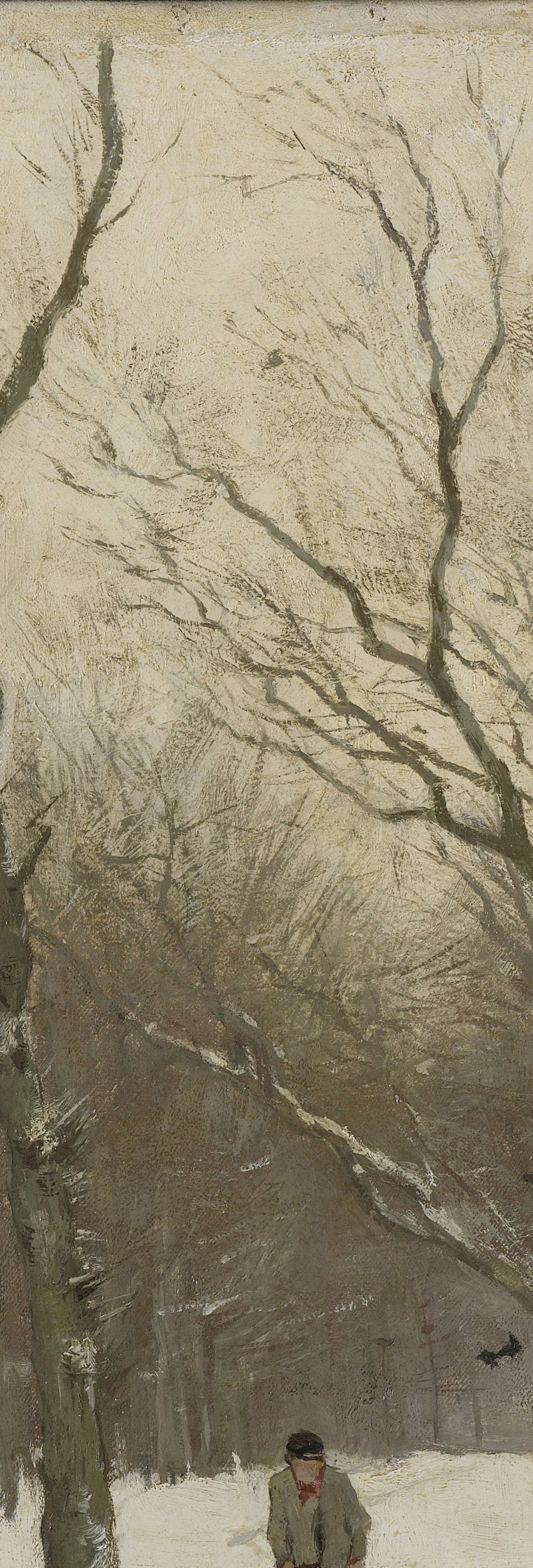
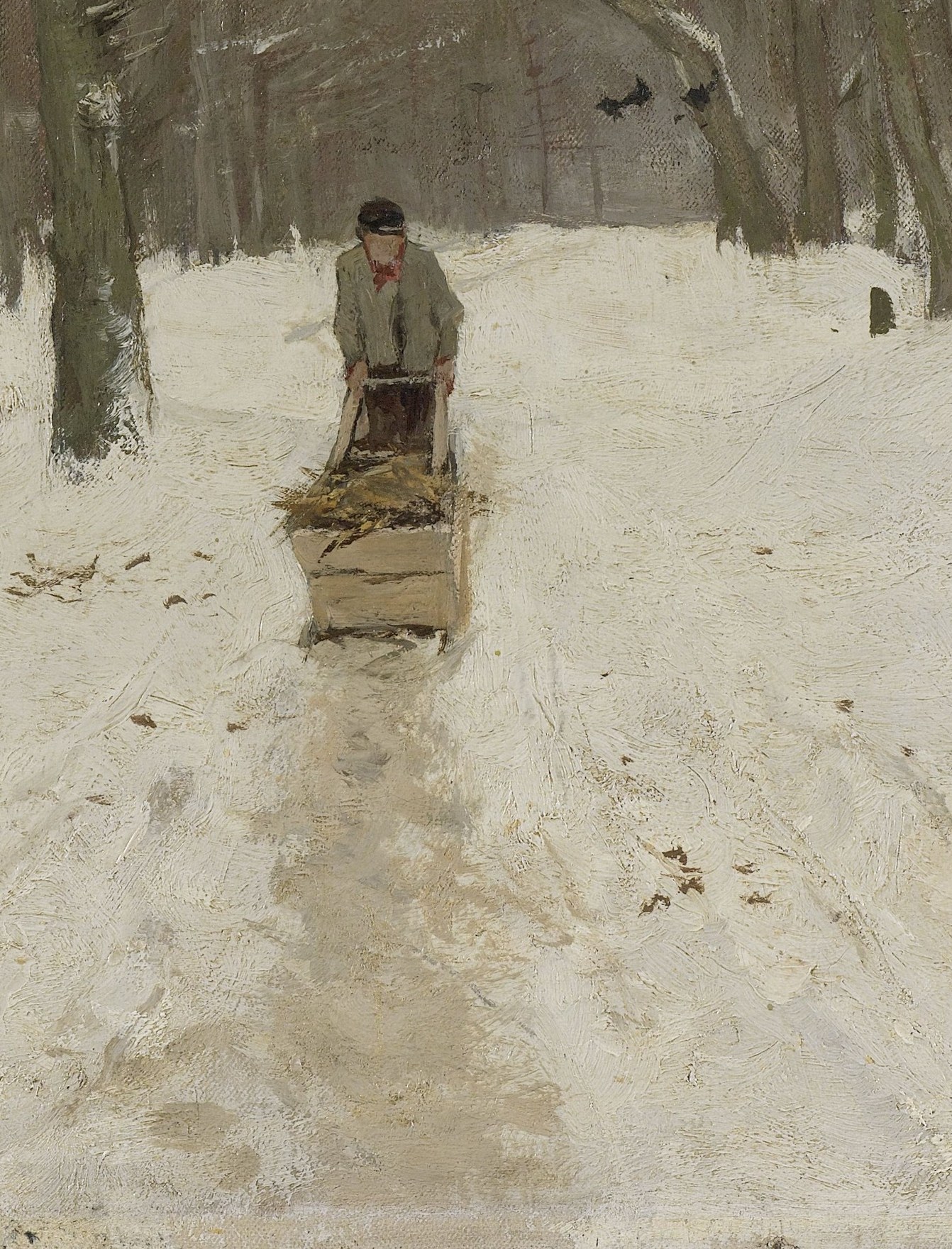
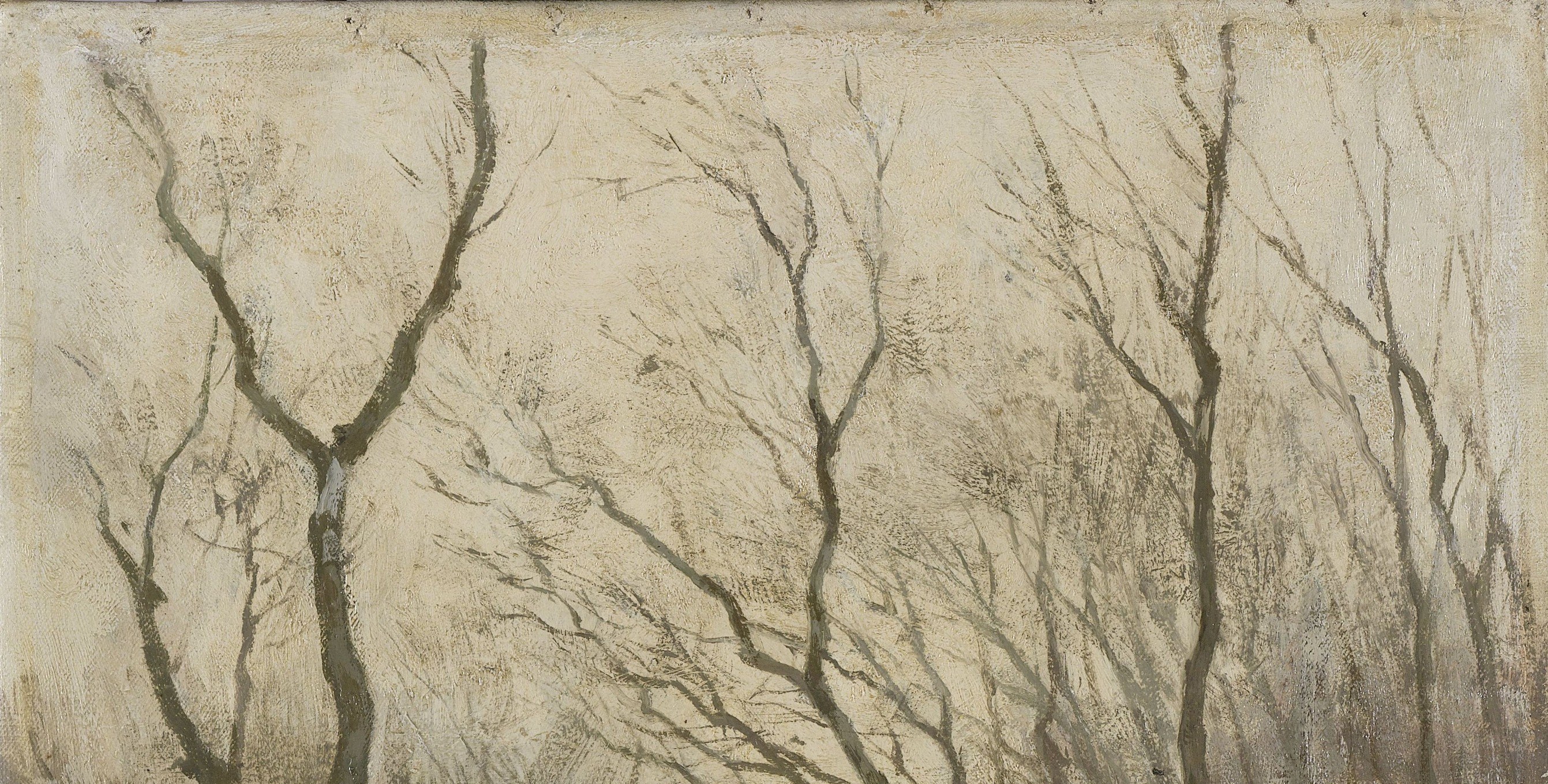
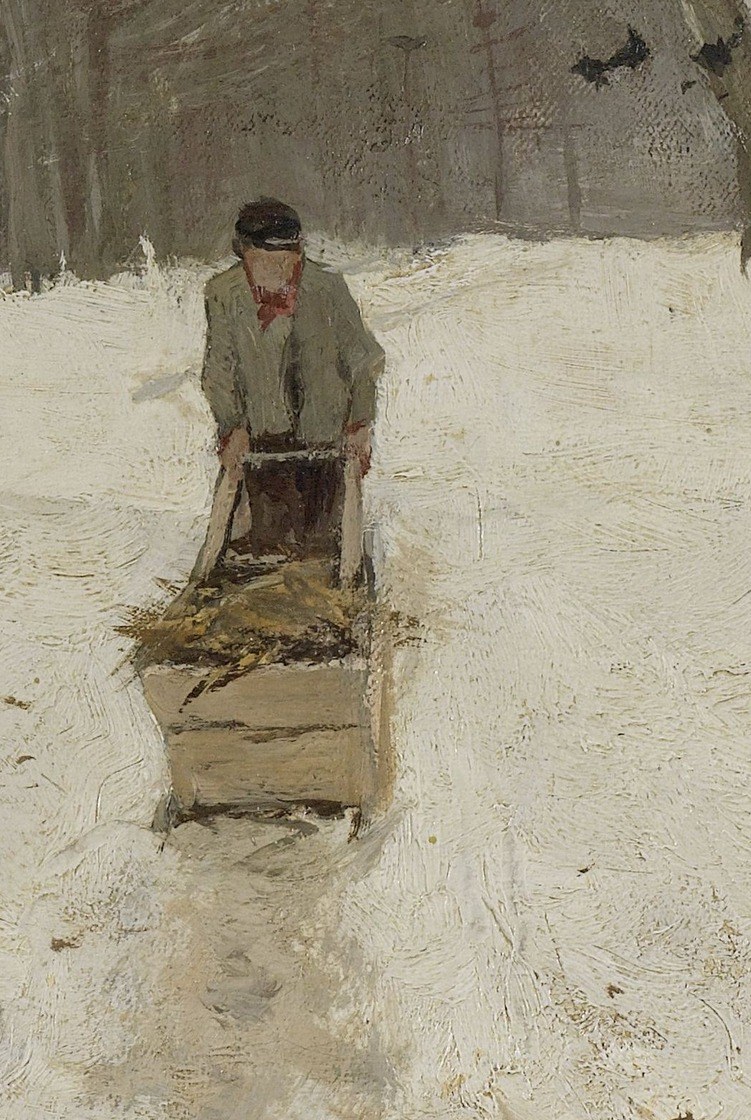
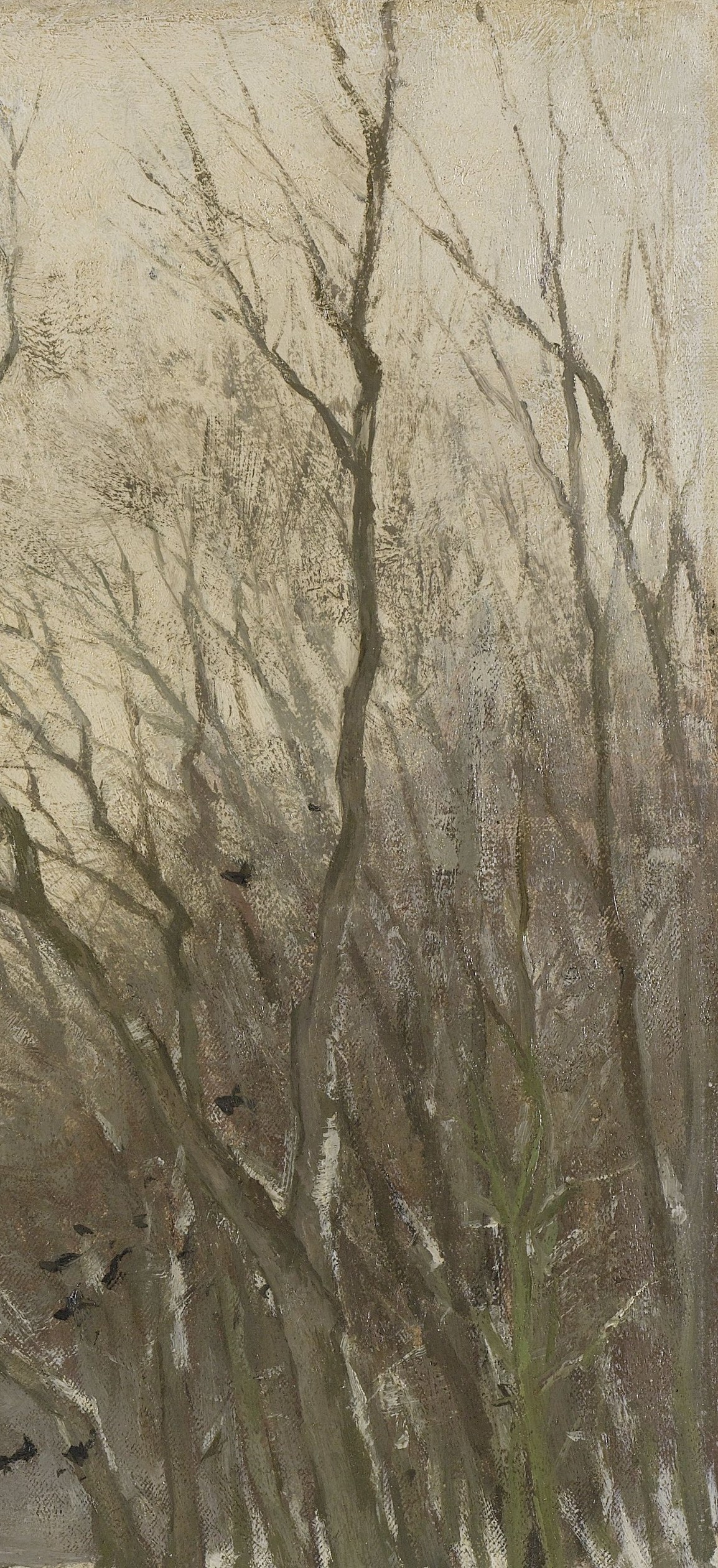
Anton Mauve was once a far bigger name than his cousin-in-law, Vincent van Gogh. This painting, Winter in the Scheveningse bosjes (1890), hangs in the Rijksmuseum, a quiet, grey winter scene that is the opposite of spectacle, and exactly what made Mauve a master.
Look first at the sky, then at the snow. They share almost the same pale grey value. That deliberate, hushed near-match is the heart of the Hague School, atmosphere built from closely related tones rather than from high contrast. The bare branches against the sky are a lesson in restrained brushwork; dozens of fine twigs painted with confident, economical marks that reward zooming in. And then there is the single figure pulling a sledge, a small dark silhouette that gives the whole scene its emotional scale.
Mauve was a leading Dutch realist and a commercial success in his own time. American collectors especially prized his paintings of sheep, so much so that a genuine price difference opened up between scenes of sheep advancing toward the viewer ("coming") and those moving away ("going"). That market quirk says something about the era's hunger for narrative optimism. Winter in the Scheveningse bosjes is something quieter, and perhaps more honest: a lone worker in a cold wood, painted by a man who, for a time, taught a genius.
Van Gogh kept a Mauve on his wall until the end. In a letter from the asylum at Saint-Rémy, he still wrote of his old teacher with reverence. How different would the story be if the pupil had burned as bright during the master's lifetime?
Details
Transcript
Anton Mauve was once more famous than his cousin-in-law. Vincent van Gogh called him a master. He hung Mauve's work on his wall. Now look at the snow, and then the sky. They share almost the same pale grey value. That hushed light is the Hague School. A single figure pulls a cart into the wood. Mauve's sheep scenes sold for fortunes. Americans paid extra if sheep were 'coming,' not 'going.' A quiet winter wood: the less commercial truth, now held by the Rijksmuseum.