Wyoming Valley, Pennsylvania by Jasper Francis Cropsey
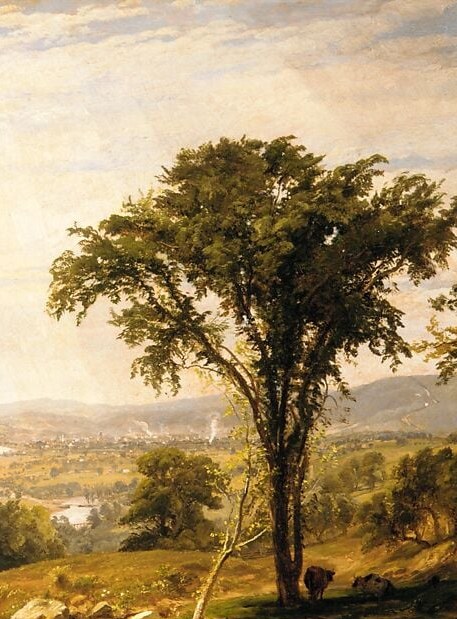
Jasper Francis Cropsey painted "Wyoming Valley, Pennsylvania" in 1864, the bloodiest year of the American Civil War. While Grant's Overland Campaign ground through Virginia, Cropsey offered Americans a vision of the pastoral peace they hoped would survive the conflict. The painting hangs today as a document of what the Hudson River School did best: making landscape carry national meaning.
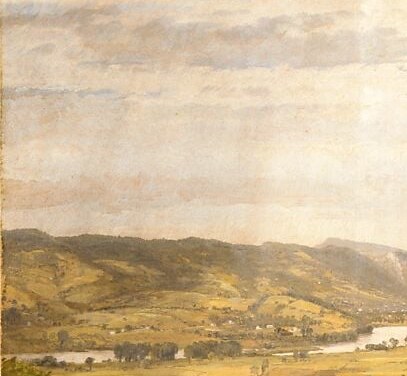
Find the river first. It is the pale silver thread winding through the valley. Then let your eye follow it toward the distant haze. There, barely visible against the glowing hillside, a tiny white vertical line rises from the settlement. That is the church steeple. Most viewers scroll right past it.
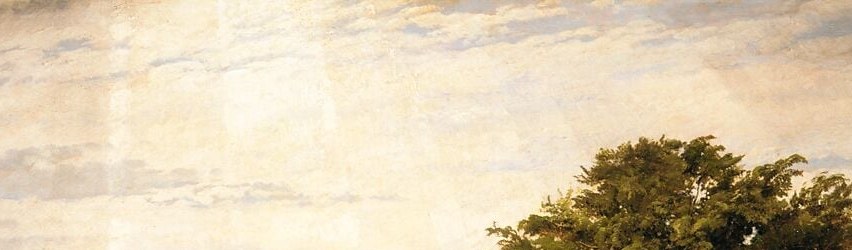
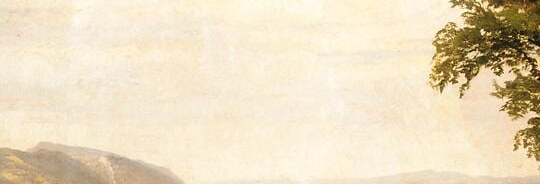
Cropsey was famous for his almost unbelievable autumn colors. Contemporaries accused him of exaggerating the reds and golds. He was also trained as an architect, and you can feel that structural discipline in how the foreground tree frames the entire valley like a window. The steeple sits at the exact point where the river, the clearing, and the light converge.
That steeple is not decoration. Painted in wartime, it is a quiet, stubborn symbol of civilization refusing to disappear into wilderness. The painting argues that the land was worth the cost.
Details
Transcript
1864. America is tearing itself apart. But this painter showed the country what it was fighting for. A valley in autumn, burning gold and orange. Critics said his colors were impossibly vivid. He painted them anyway. Follow the silver ribbon of the river. Where the haze meets the valley floor, something white stands alone. A church steeple. A sign of home planted inside vast wilderness. Painted while Grant's army marched. A promise that peace still had a shape.