Saturday Afternoon by Jervis McEntee
This is Saturday Afternoon, painted by Jervis McEntee in 1875. It hangs in the American Wing as a quiet testament to a lesser-known Hudson River School painter who preferred ordinary days over dramatic vistas.
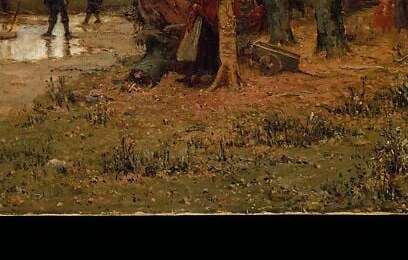
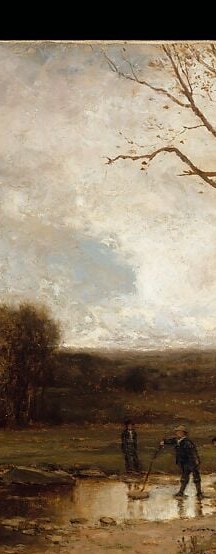
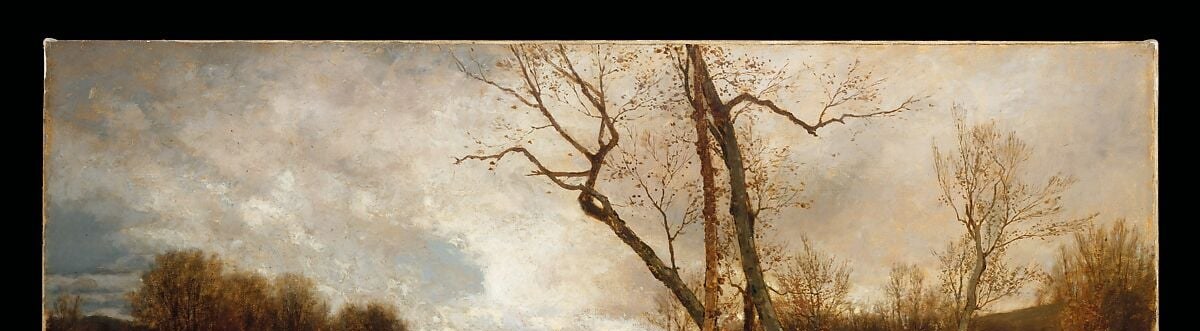
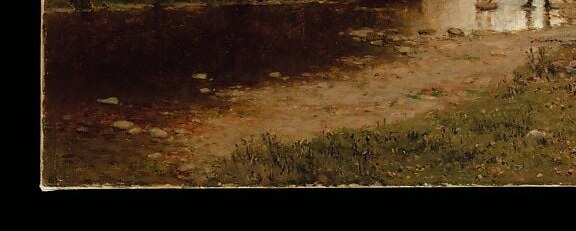
Look for the single solitary figure near the pond. McEntee uses a winding dirt path to pull your eye directly to them, making you a walker in the landscape rather than a spectator. The warm, hazy sky and the intricate lacework of bare branches reward slow inspection. Don't miss the foreground leaf litter, it is the most tactile passage in the entire painting, loose brushwork that holds the whole ground plane together.
McEntee was a close friend and traveling companion to the big names of the Hudson River School, but he never achieved their fame. What he did leave behind is extraordinary: eighteen years of unpublished journals, written from 1872 to 1890, documenting the life of a New York painter during the Gilded Age. Those diaries give us a backstage pass to a world we usually only see through finished canvases.
The painting itself is not a grand statement. It is an arrested afternoon moment. It turns out a quiet man painting a quiet scene can leave a louder legacy than he ever expected.
Details
Transcript
This is a quiet Saturday afternoon in 1875. Look closely. There's only one person in this entire landscape. The painter led you to them with a winding dirt path. His name was Jervis McEntee, a Hudson River School artist. He wasn't famous, but he kept journals for eighteen years. Those diaries outlived him, documenting the Gilded Age art world from the inside. A quiet man who painted quiet afternoons, and wrote everything down.