The Voyage of Life: Childhood by Cole, Thomas
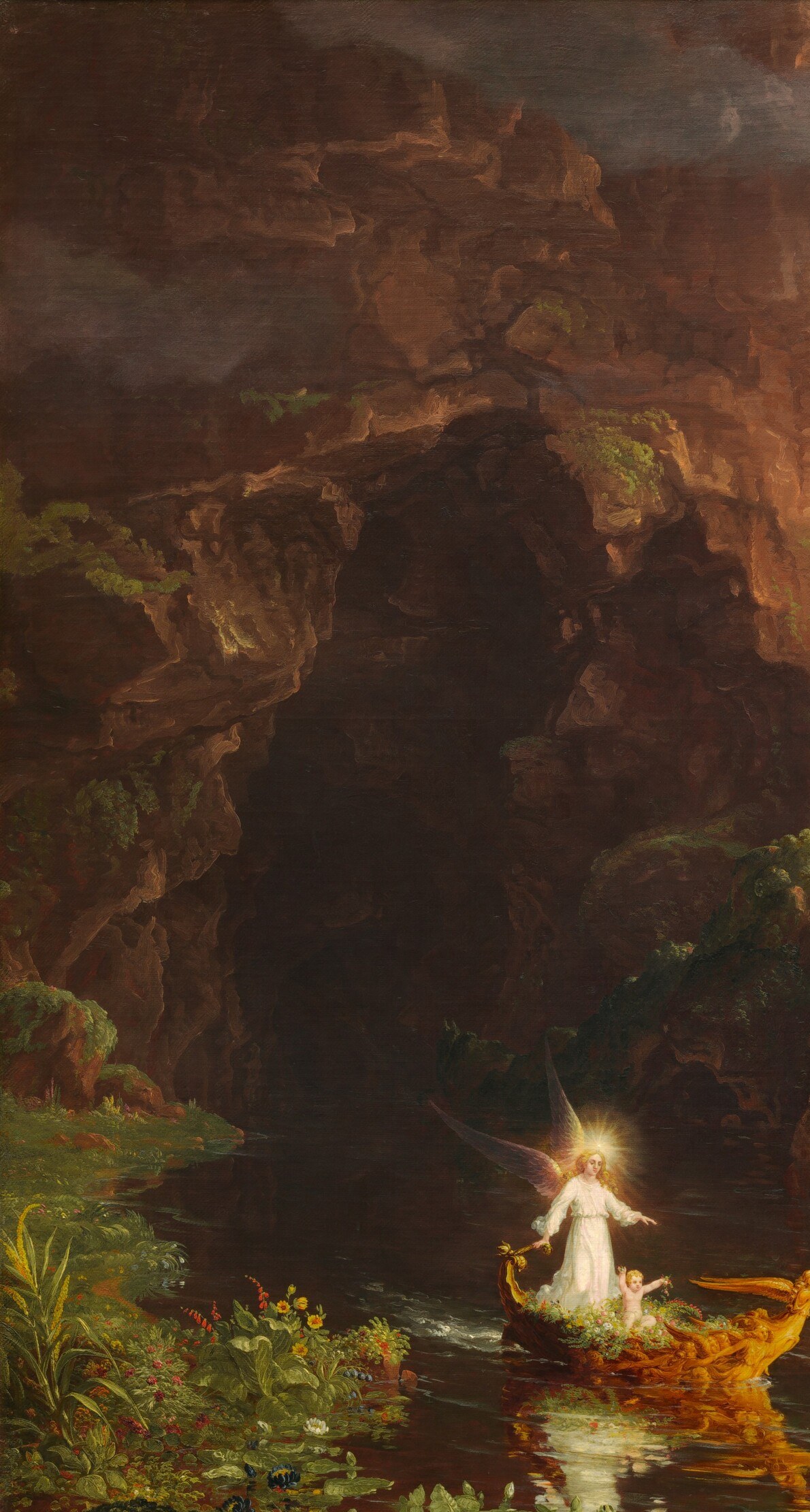
The Voyage of Life: Childhood, painted by Thomas Cole in 1842, is the opening panel of his four-part allegorical series on human existence. It hangs today at the National Gallery of Art in Washington, D.C.
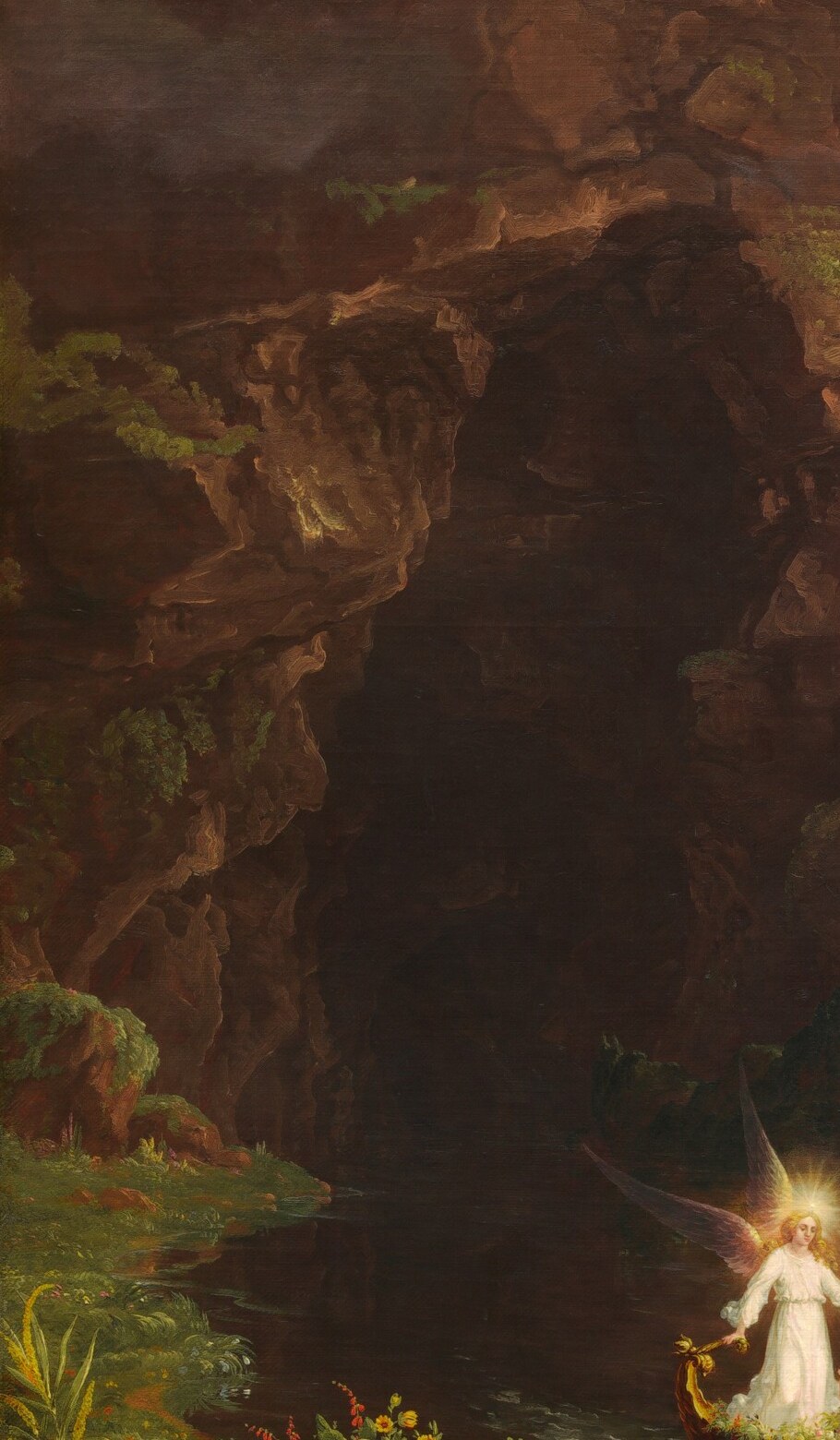
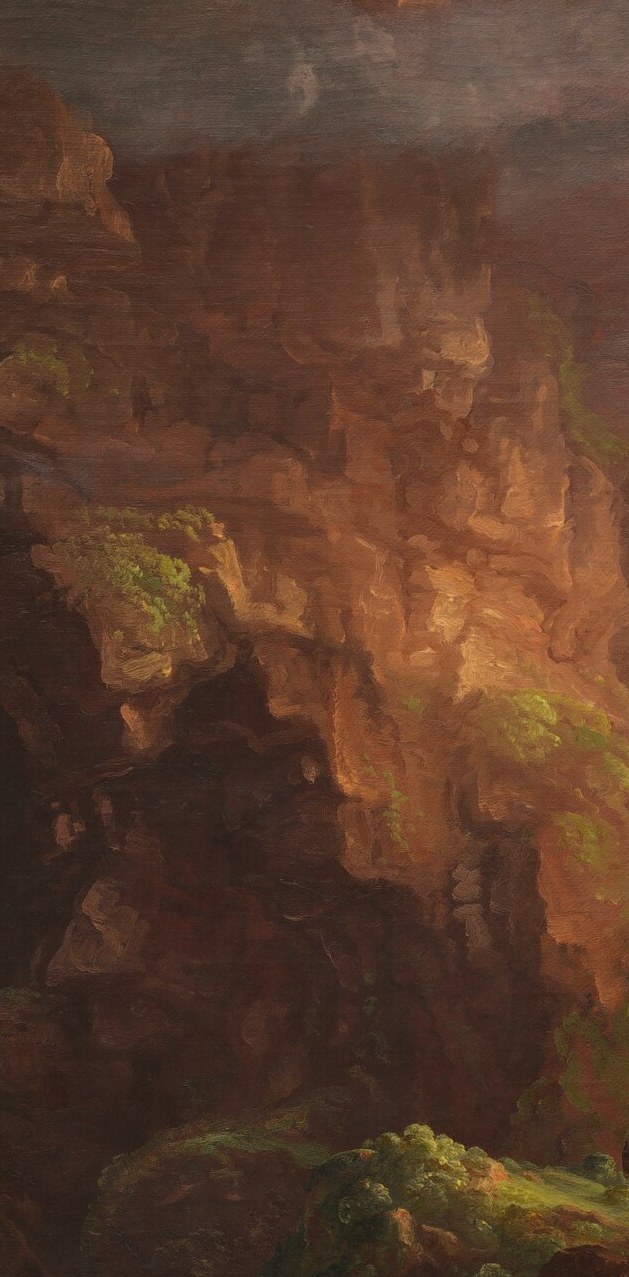
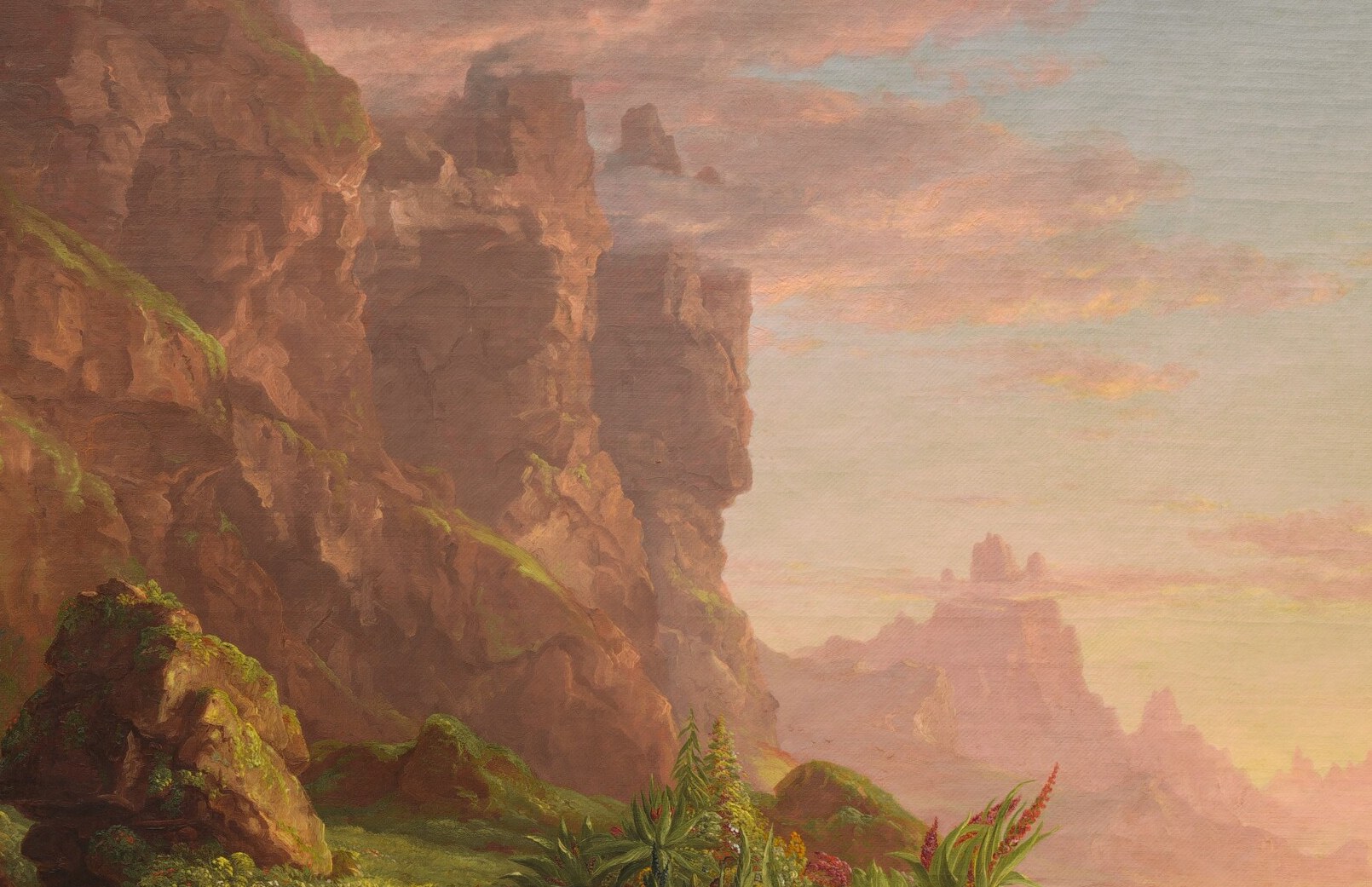
Look into the cave. Most viewers see only the radiant angel and the golden landscape ahead, scrolling right past the pitch-black mouth behind the boat. But Cole refused to paint simple nothingness. Zoom in: the cave interior holds layered rock formations, faint moss-edged surfaces, and subtle tonal shifts that give the darkness real depth and texture. The gnarled tree at the threshold stands like a silent witness exactly where shadow meets light.
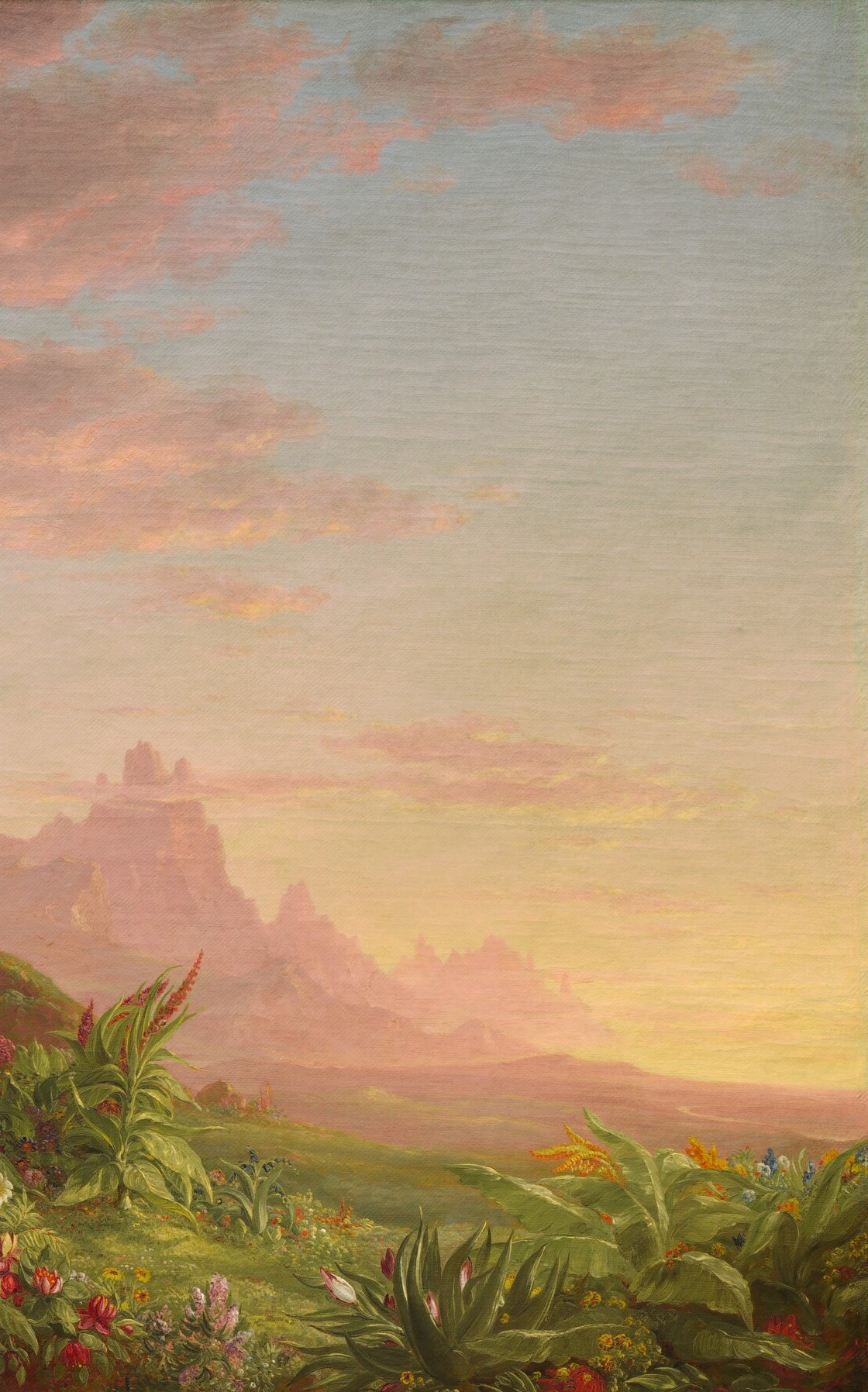
Cole was the founder of the Hudson River School, and he believed the American wilderness carried spiritual meaning. Here, the cave represents pre-existence, the mystery before birth. By making it geologically real instead of flat black, he argued that even our origins belong to a living, divinely ordered world. The guardian angel steers, the infant rests, and the entire composition funnels your eye toward the sunlit promise ahead.
Next time you see this image, pause at the cave. Cole hid his thesis there: you were never truly in an empty void. The darkness was already full of life.
Details
Transcript
You have seen this boat a thousand times. A child, an angel, a golden river ahead. But we all scroll past the cave. Cole did not just paint black emptiness back there. He gave the darkness real geology: moss, stone, depth. Even the origin, in his world, was already alive.