The Grape Harvest by Léon Augustin Lhermitte
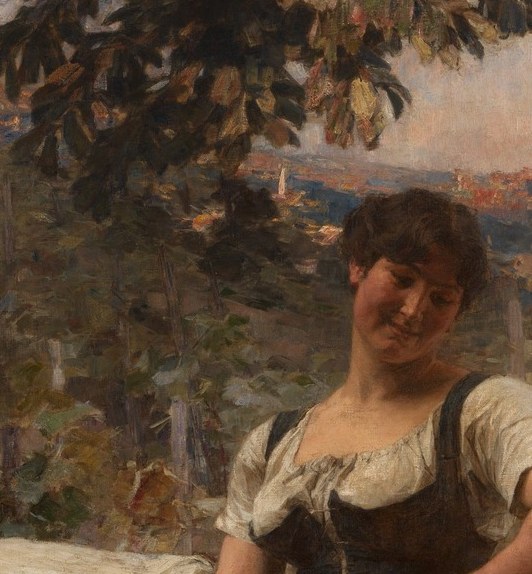
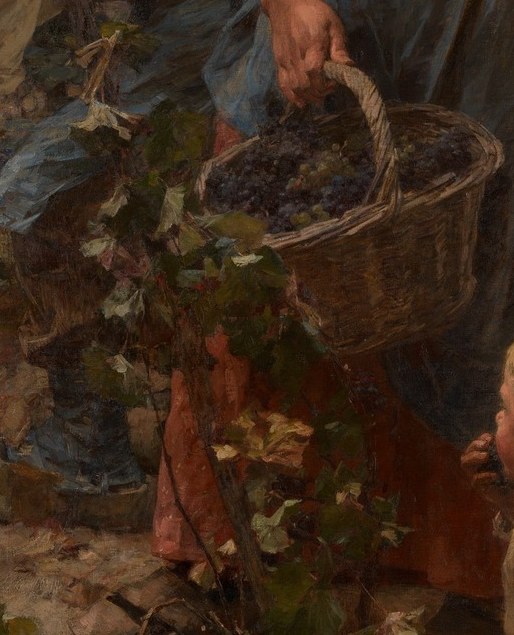
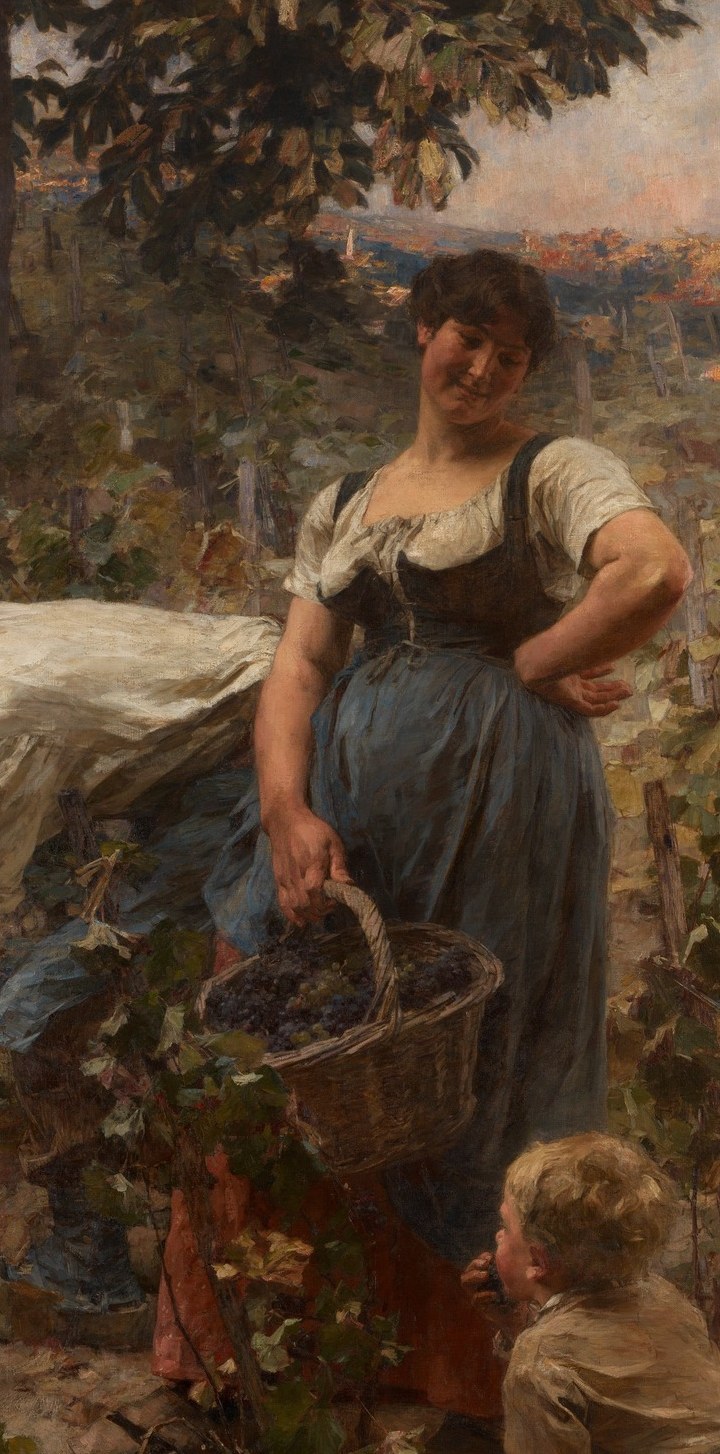
The Grape Harvest by Léon Augustin Lhermitte, painted in 1892, draws your eye straight to a radiant smile and a bountiful basket. But the secret of this painting lives in the corner most viewers scroll past: a pair of nearly invisible hands, lost in the leaves.
The woman in the blue dress is the compositional anchor, her pregnancy-hinted silhouette linking fertility to the fullness of the basket she carries. Follow the diagonal of the seated boy's gaze upward and you will find the older woman's weathered face, a portrait of a life spent in the fields.
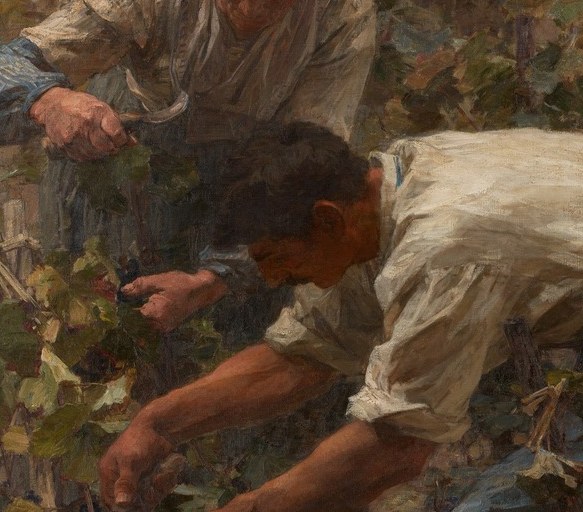
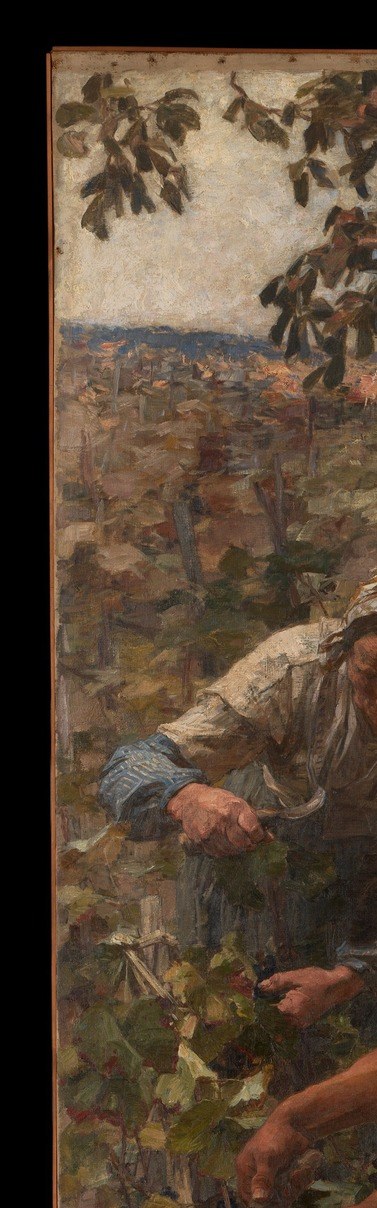
Now look closely at the vine canopy on the left. An older woman's hands reach into the foliage, but Lhermitte gave them no grand gesture. He painted those fingers with the same thick impasto he used on the grapes themselves, making the laborer and the fruit briefly one. It is an astonishing act of witness: the actual work of the harvest, buried in plain sight.
The artist spent his career documenting rural laborers with unflinching dignity. What do you see when you look past the smile?
Details
Transcript
You notice the smile first. She holds the harvest, and she is the harvest. The basket is nearly full. The work looks easy. But the real work is barely painted.