Sense of Taste by Adriaen van Ostade
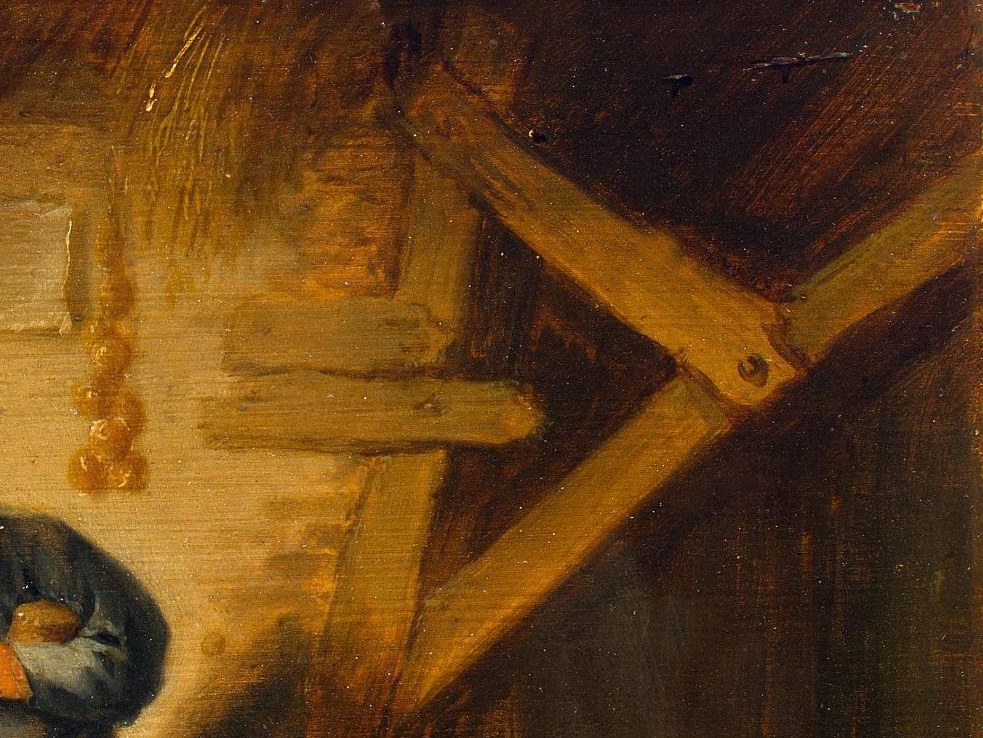
Adriaen van Ostade's "Sense of Taste," painted in 1635 and housed at the State Hermitage Museum, captures a quiet moment of everyday life in 17th-century Holland. What's curious is that there are two dates on the painting: 1635 (the year it was painted) and 1610.
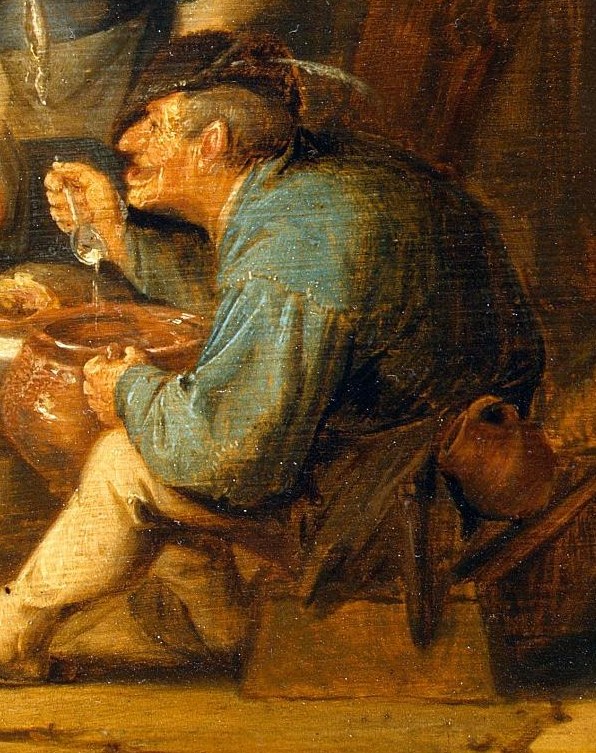
The painting focuses on the simple pleasures of eating and drinking, with figures absorbed in their meals. From the man drinking from a jug, eyes closed in pleasure, to the old man intently savoring his food, the artist brings these sensory experiences to life.
Adriaen van Ostade was a Dutch Golden Age painter, famous for his genre scenes depicting the lives of ordinary men and women. The date 1610, carved on a wooden beam within the painting, is the year of his birth. It's a subtle, personal touch from the artist, a nod to his own beginnings within a scene of daily life.
It makes you wonder, was this an intentional self-reference or a hidden detail for the keen-eyed viewer?
Details

Transcript
This painting is called "Sense of Taste" (1635). It shows humble everyday life in 17th-century Holland. The painter was known for scenes of ordinary people. Look closely at the wooden beam above the woman. An earlier date is carved here: 1610. The painter was only 25 in 1635. He was born in 1610, the date on the beam.