Regatta at Sainte-Adresse by Claude Monet
View the artwork: Regatta at Sainte-Adresse →
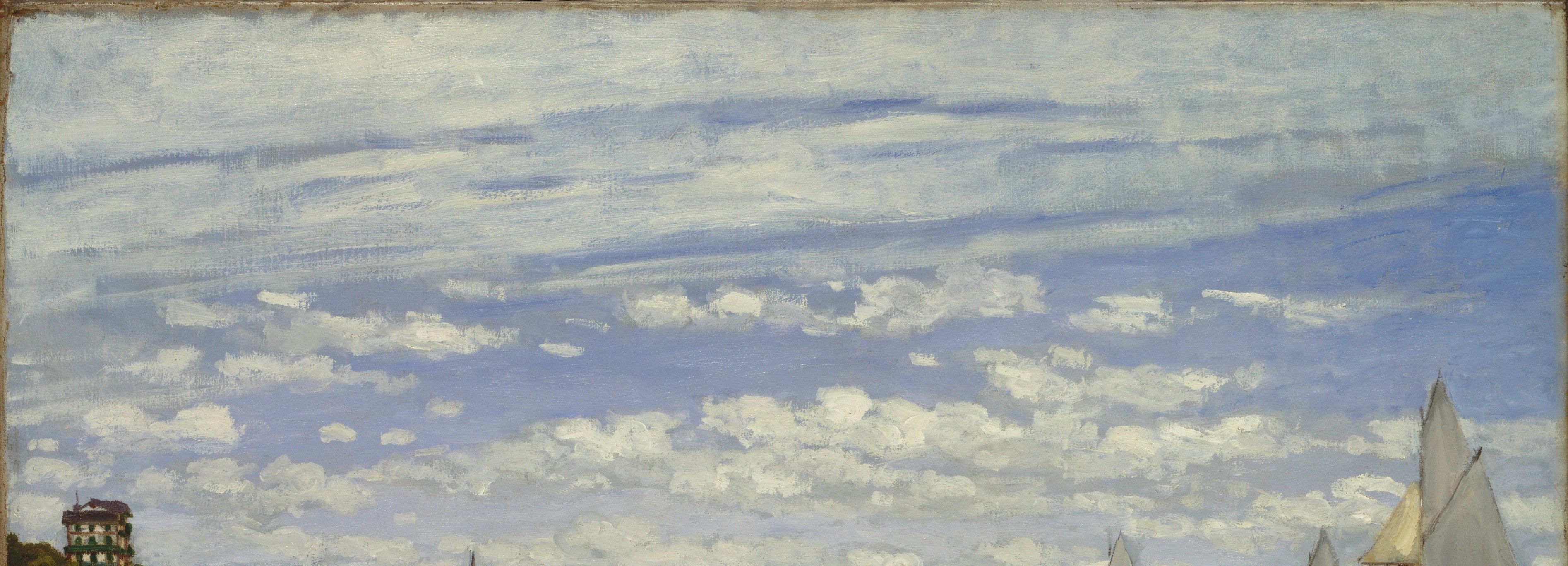
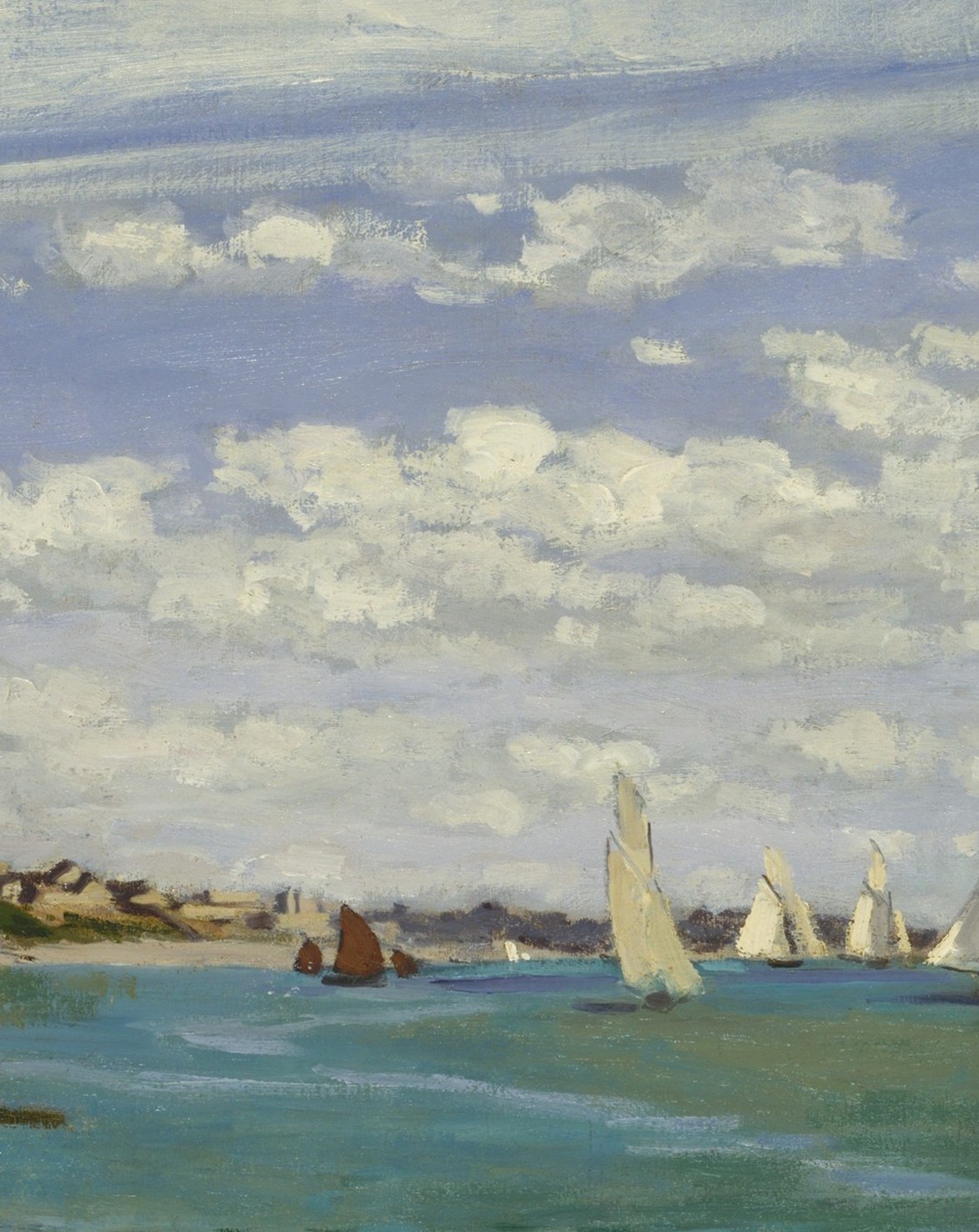
Claude Monet's "Regatta at Sainte-Adresse" (1867, The Metropolitan Museum of Art) was rejected from the Paris Salon the year it was painted. The jury, accustomed to blended surfaces and historical subjects, looked at this sun-struck beach scene and saw something raw and unexhibitable. Monet was twenty-six, living off his aunt's hospitality in Normandy, and painting outdoors with a ferocity the art world was not ready for.
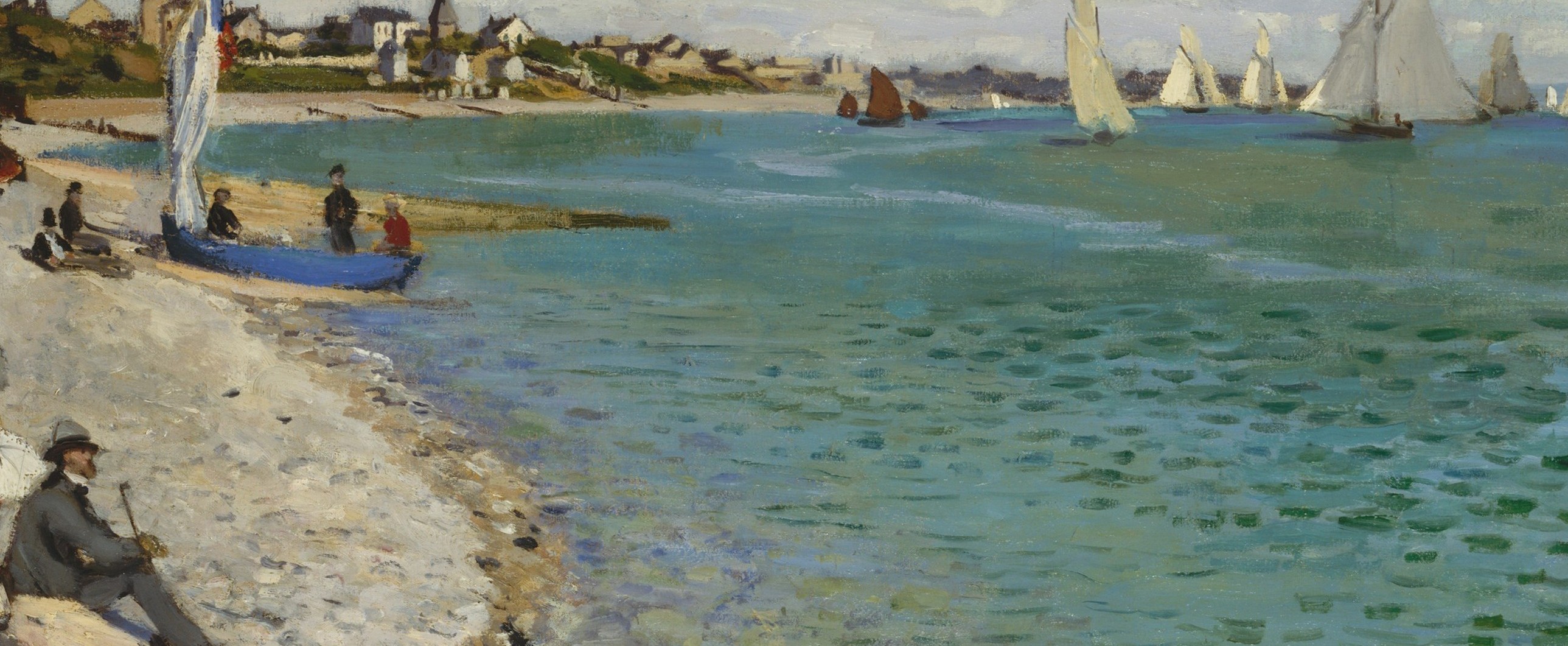
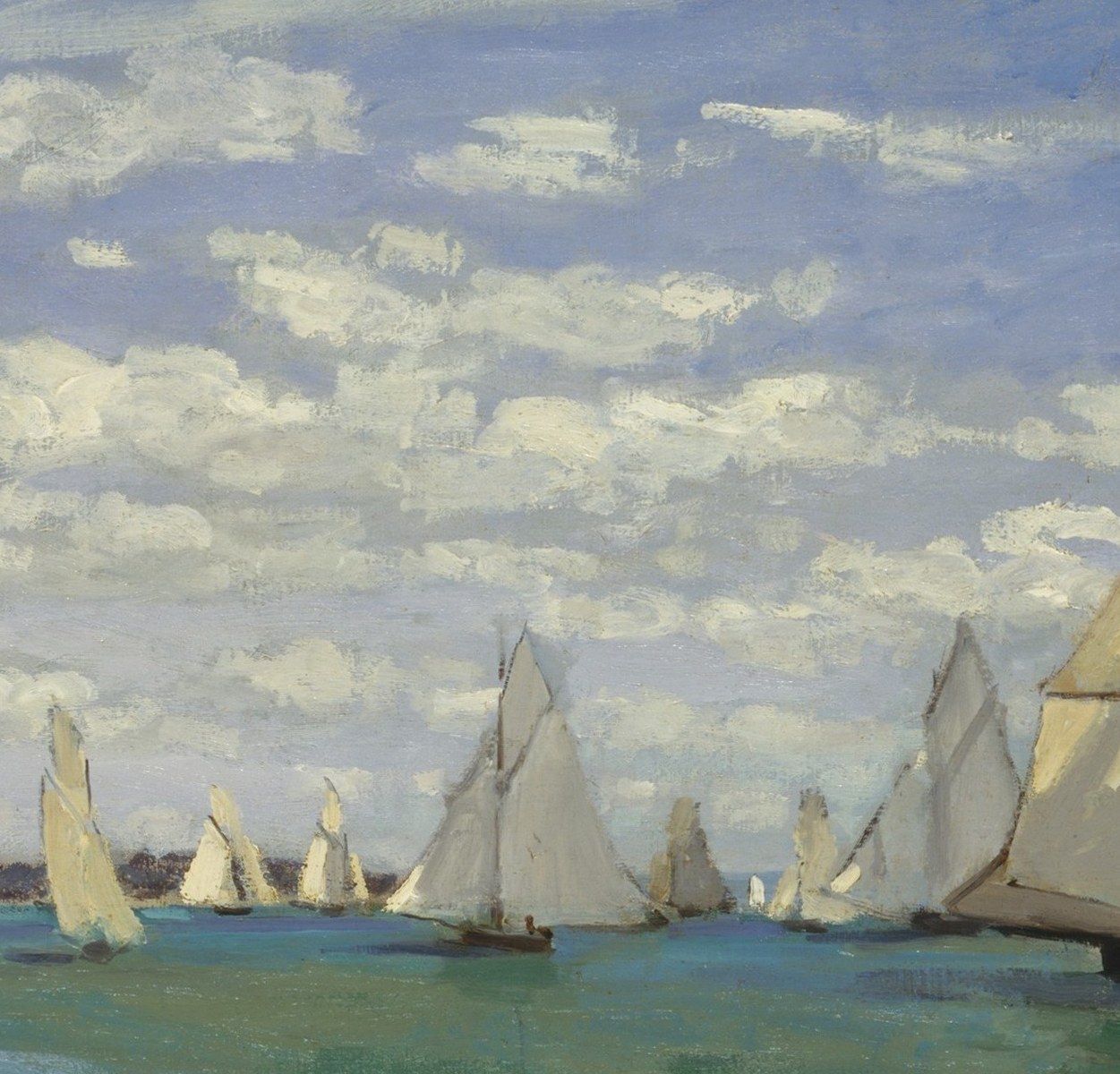
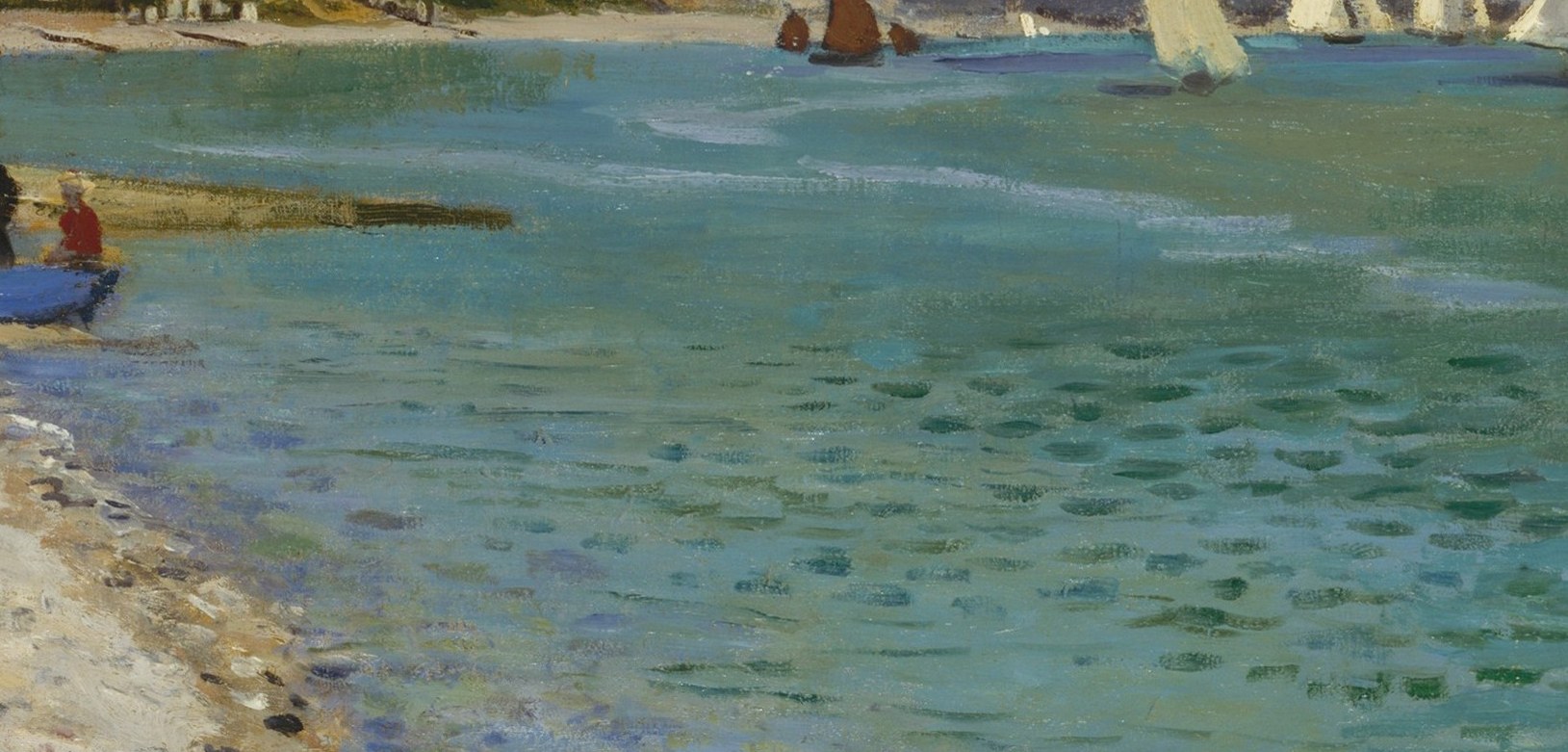
What startled the jury is what now looks so alive. The water in the foreground is the giveaway: it's built from short, separate strokes of green, blue, and pure white, laid side by side rather than mixed smooth on the palette. The white dabs on the harbor surface are not blended reflections; they're unmasked flicks of a loaded brush, imitating how sunlight shatters on choppy water. Monet was abandoning the finish of the studio for the speed of the eye.
The scene itself is a study in contrasts. Fashionable spectators on the shingle watch a regatta of white-sailed schooners, leisure painted as a spectacle. The painting was likely conceived as a pair with "The Beach at Sainte-Adresse", same dimensions, same summer, same stretch of coast, viewed from yards apart. Monet worked on roughly twenty canvases that season, borrowing money for paint, and later said he was so poor he had to scrape old canvases to reuse them.
This was the year before Impressionism even had a name. The brushwork that got him kicked out of the Salon in 1867 would, seven years later, give the movement its identity. Sometimes a rejection is just a preview.
#arthistory #impressionism #claudemonet
Details
Transcript
1867. Monet is broke, living with his aunt on the coast. He paints twenty canvases outdoors that summer. This one? A regatta, the rich at play. Look at the water. Not blended, chopped. He stabs it with green, blue, and unmixed white. The jury called it unfinished. Rejected it. Monet couldn't afford paint. He was borrowing from friends.