Artwork
Regatta at Sainte-Adresse
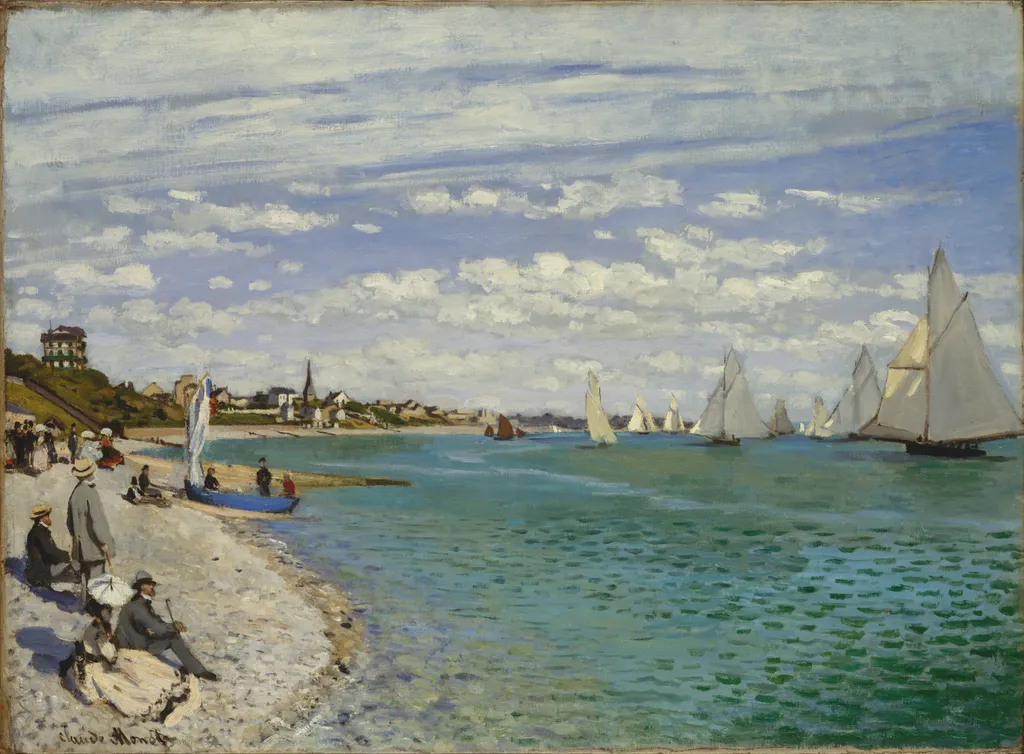
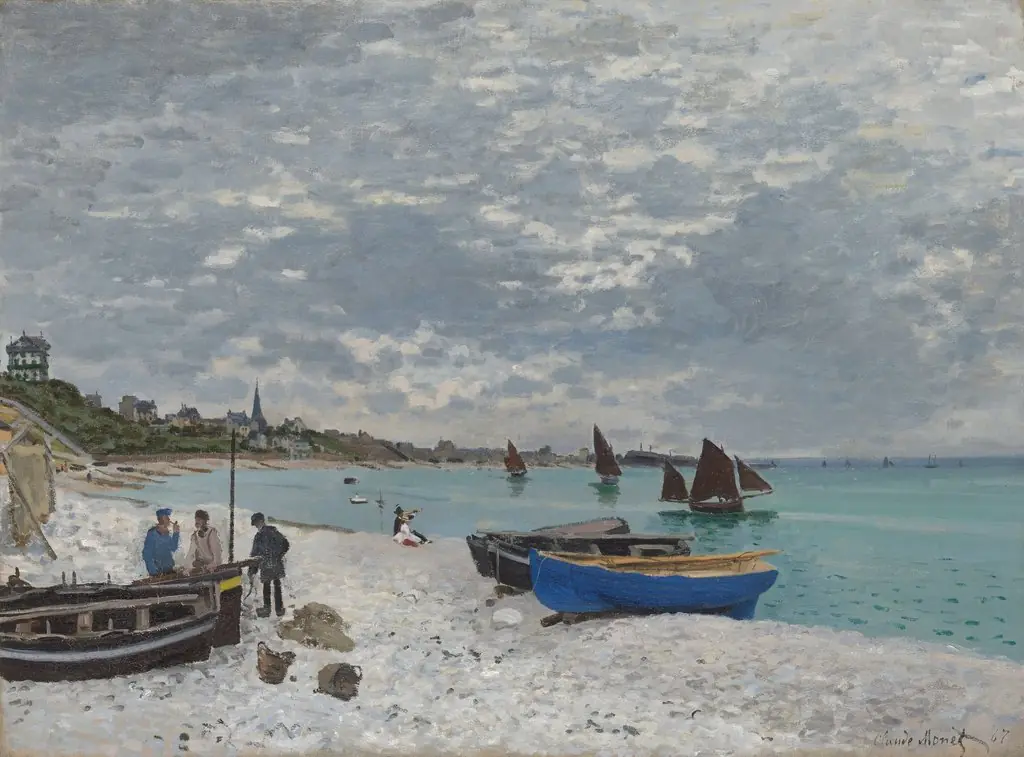
Regatta at Sainte-Adresse is an oil painting by the Impressionist artist Claude Monet. It dates from 1867 and is held in the collection of the Metropolitan Museum of Art.
About this work
Sailboats tack across the harbor on a summer day in 1867, their white sails catching the sun while well-dressed spectators watch from the shore at Sainte-Adresse, the Normandy resort where Monet's aunt kept a house. He painted it outdoors during a busy season, with some twenty pictures underway at once.
Subject & Meaning
The composition's shifting light, colored shadows, and brushwork reveal Monet's early Impressionist fascination with light on water.
The painting depicts a regatta at Sainte-Adresse, a wealthy suburb of Le Havre, where Monet's family lived. Well-dressed bourgeois figures, including a man and a woman with a parasol, observe sailboats from the beach at high tide, with a church and clouds visible in the distance. The scene embodies the nineteenth-century popularity of seaside holidays and regattas among the middle class.
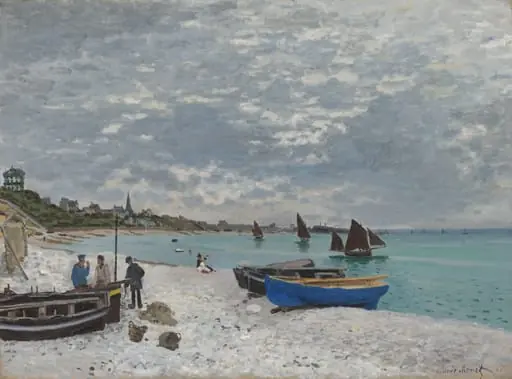
Monet painted this during a troubled period of financial hardship, having left his companion and newborn son in Paris. The work was likely conceived as a pair with The Beach at Sainte-Adresse; the sunny, leisure-filled high tide contrasts with that painting's overcast low tide and working-class figures, though this was probably not an intentional social statement but rather an exploration of differing atmospheric conditions. The composition's shifting light, colored shadows, and brushwork reveal Monet's early Impressionist fascination with light on water.
Technique & Style
Executed in oil on canvas (75.2 x 101.6 cm), Regatta at Sainte-Adresse displays Monet's early Impressionist handling. The medium is applied in varied, short brushstrokes, with alternating green and blue touches in the seawater creating a shimmering effect, while colored shadows animate the sunny beach. The composition captures a regatta at high tide, with well-dressed bourgeois figures and numerous sails in the outer harbor.
Signed at lower left, the painting forms part of a pair with The Beach at Sainte-Adresse, demonstrating Monet's practice of rendering the same site under different conditions of light and tide. Stylistically, it retains a relatively traditional spatial arrangement but already exhibits the broken color and interest in transient light that define Impressionism.
History & Provenance
Claude Monet painted Regatta at Sainte-Adresse in 1867 during a summer stay with his father in Sainte-Adresse, a suburb of Le Havre. Destitute at the time, Monet left his companion Camille Doncieux and their newborn son in Paris. On 25 June 1867, he wrote to Frederic Bazille that he was working on the regattas of Le Havre with many figures.
The painting was probably conceived as a pair with The Beach at Sainte-Adresse (Art Institute of Chicago), sharing identical dimensions and a nearly identical viewpoint. The work entered the collection of Henri Hecht in Paris in January 1873, purchased directly from the artist for 500 francs. It later passed through Durand-Ruel and P. A. B. Widener before being acquired by William Church Osborn in 1907. Upon Osborn's death in 1951, it was bequeathed to the Metropolitan Museum of Art, where it remains.
Context
Painted in 1867, this work and its pendant, The Beach at Sainte-Adresse, are identical in size and nearly identical in viewpoint, contrasting a sunny high tide with bourgeois viewers against an overcast low tide with fishermen. This pairing exemplifies Monet's early practice of rendering the same subject under different conditions, a hallmark of his later series. Though Monet never exhibited them together, scholars note the juxtaposition reflects varying atmospheric and social circumstances rather than a deliberate manifesto.
The painting displays nascent Impressionist traits such as broken color in the water and colored shadows. Created during Monet's financially strained summer in Sainte-Adresse, it anticipates his enduring fascination with light's effects on water.
Legacy
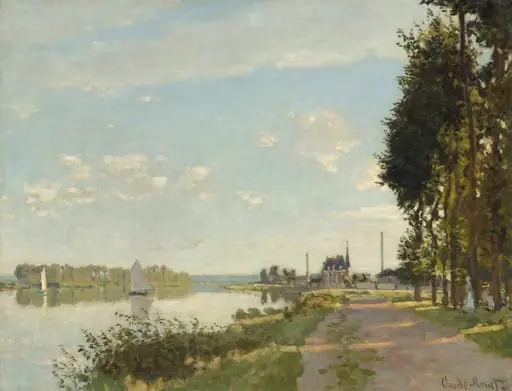
Regatta at Sainte-Adresse has been recognized as an early exemplar of Monet's developing serial practice, paired with The Beach at Sainte-Adresse to capture the same coastal scene under contrasting conditions of tide and weather. This approach anticipated his later serial masterpieces such as the Haystacks and Rouen Cathedral. The painting also prefigures Monet's mature fascination with reflections on water, a theme he would explore further in works like Regatta at Argenteuil.
Since entering the Metropolitan Museum of Art in 1951, it has been featured in major exhibitions globally, including retrospectives at the Grand Palais and the Royal Academy of Arts, cementing its place as a canonical Impressionist work.
Overview
Claude Monet's "Regatta at Sainte-Adresse," an oil on canvas from 1867, depicts a vibrant summer scene in the Normandy resort town. The painting captures sailboats maneuvering across the harbor, their white sails illuminated by the sun, while elegantly dressed figures observe the spectacle from the shore. This work is part of the collection of the Metropolitan Museum of Art, where it has resided since the mid-20th century.
Own this work as a print
Artist & collection

Artist
Oscar-Claude Monet was a French painter and founder of Impressionism who is seen as a key precursor to modernism, especially in his attempts to paint nature as he perceived it.