François de Jullienne (1722–1754) and Marie Elisabeth de Jullienne (Marie Elisabeth de Séré de Rieux, 1724–1795) by Charles-Antoine Coypel
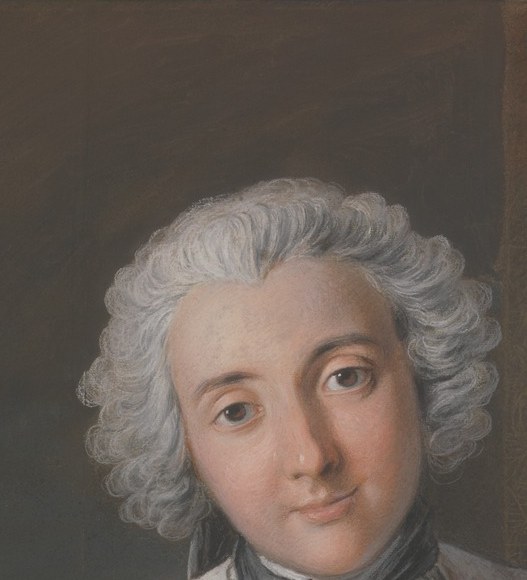
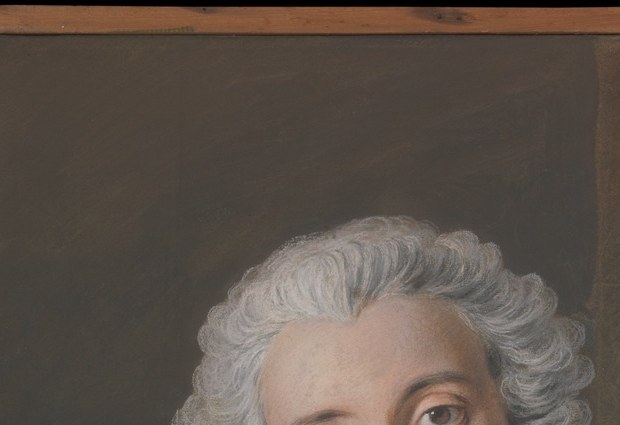
This is François de Jullienne and his wife, Marie Elisabeth de Séré de Rieux, painted by Charles-Antoine Coypel in 1743 and now in the collection of The Metropolitan Museum of Art. Coypel was court painter to the king and director of the Académie Royale, an artist at the very summit of French cultural power. What he captured here is not just a portrait of privilege but a study of two distinct interior lives.
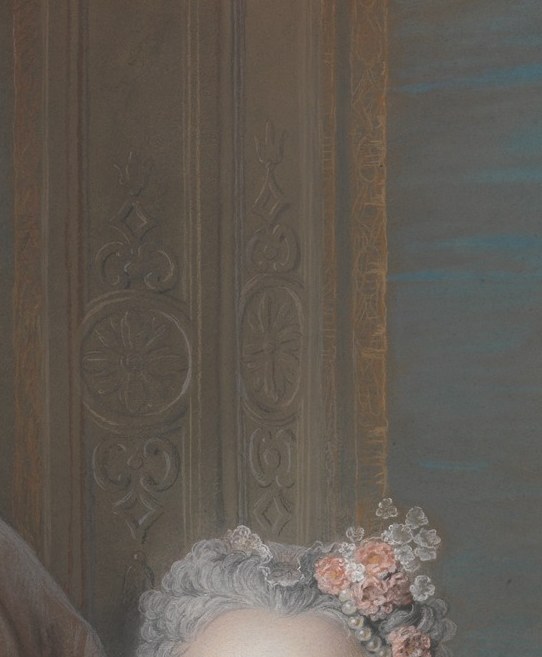
Look first at the faces. François meets the painter with a direct, almost amused gaze, his powdered wig and fine lace jabot signaling a man entirely at ease in his station. Marie Elisabeth, by contrast, is painted with a softer, inward expression. The slight downward tilt of her head suggests genteel reserve, not passivity. Her floral headdress, with individual petals rendered in delicate strokes, is a small marvel of Rococo excess and a reminder that fashion itself was a visual language.
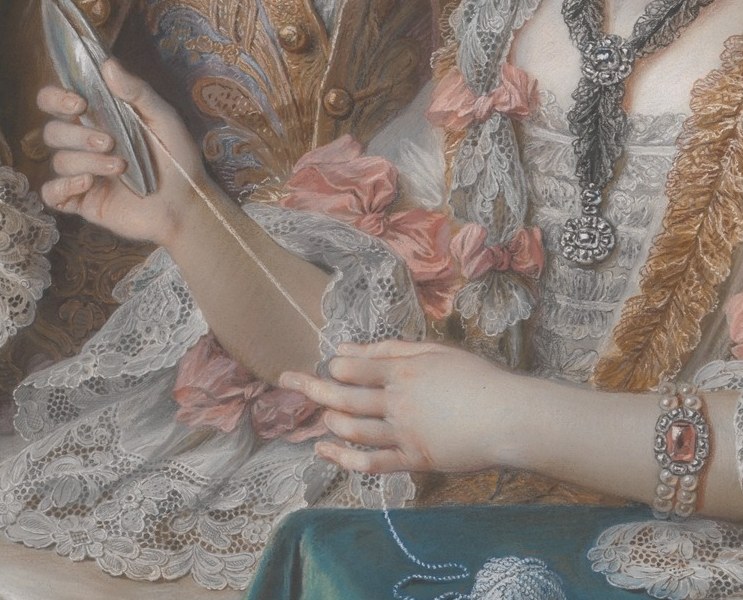
Their hands meet at the compositional center of the canvas, the emotional hinge of the portrait. Whether they touch or simply gesture near each other signals something about the formality or intimacy of their union. The painting is technically dazzling, the layered lace and silk sheen of Marie Elisabeth's dress are a tour de force of textile illusionism, but the human facts behind it carry the weight.
François de Jullienne died in 1754, barely a decade after this picture was made. Marie Elisabeth lived on for forty-one more years, dying in 1795. She survived the French Revolution and the collapse of the aristocratic world Coypel so elegantly enshrined. This canvas, with its tender reserve, became a memorial to a marriage long before she left the world herself.
Details
Transcript
They meet us as a married couple, painted in 1743. His gaze is direct, almost amused. Hers turns inward, softer, more reserved. Their hands meet at the center of the canvas. François died in 1754, only eleven years after sitting for this. Marie Elisabeth lived until 1795, through revolution and a vanished world.