Red Sunset on the Dnieper by Arkhip Kuindzhi
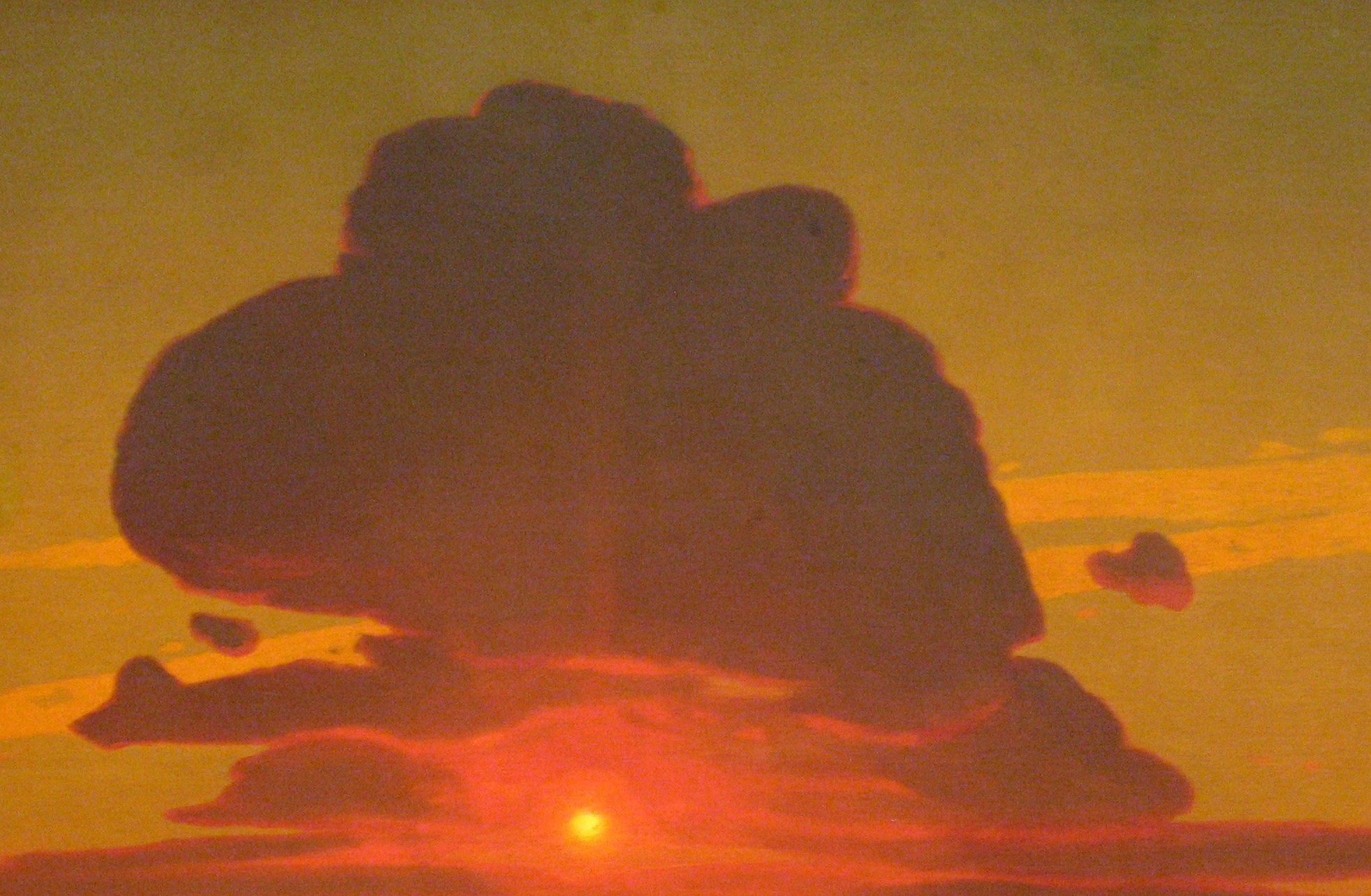
Arkhip Kuindzhi's Red Sunset on the Dnieper, painted between 1905 and 1908, achieves something almost impossible in oil paint: it makes you feel the physical heat of a setting sun. The blazing orange core on the horizon reads less like a picture and more like a light source. This is Russian luminism at its most extreme, a style few in Imperial Russia embraced, but which Kuindzhi pushed into near-abstraction through sheer optical intensity.
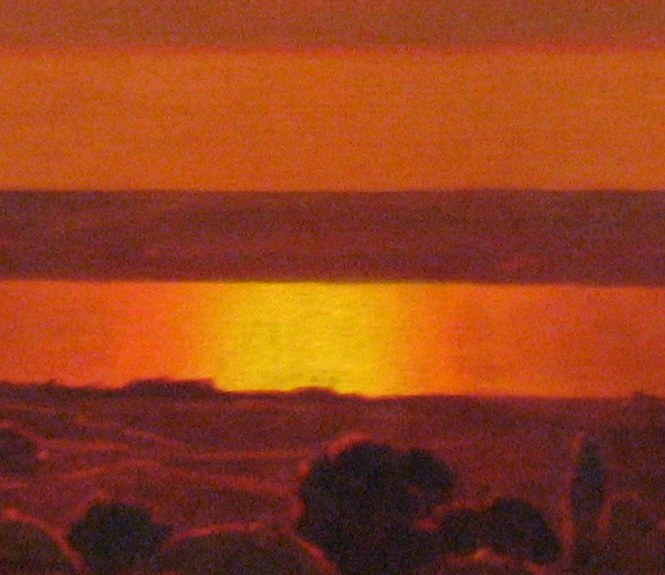
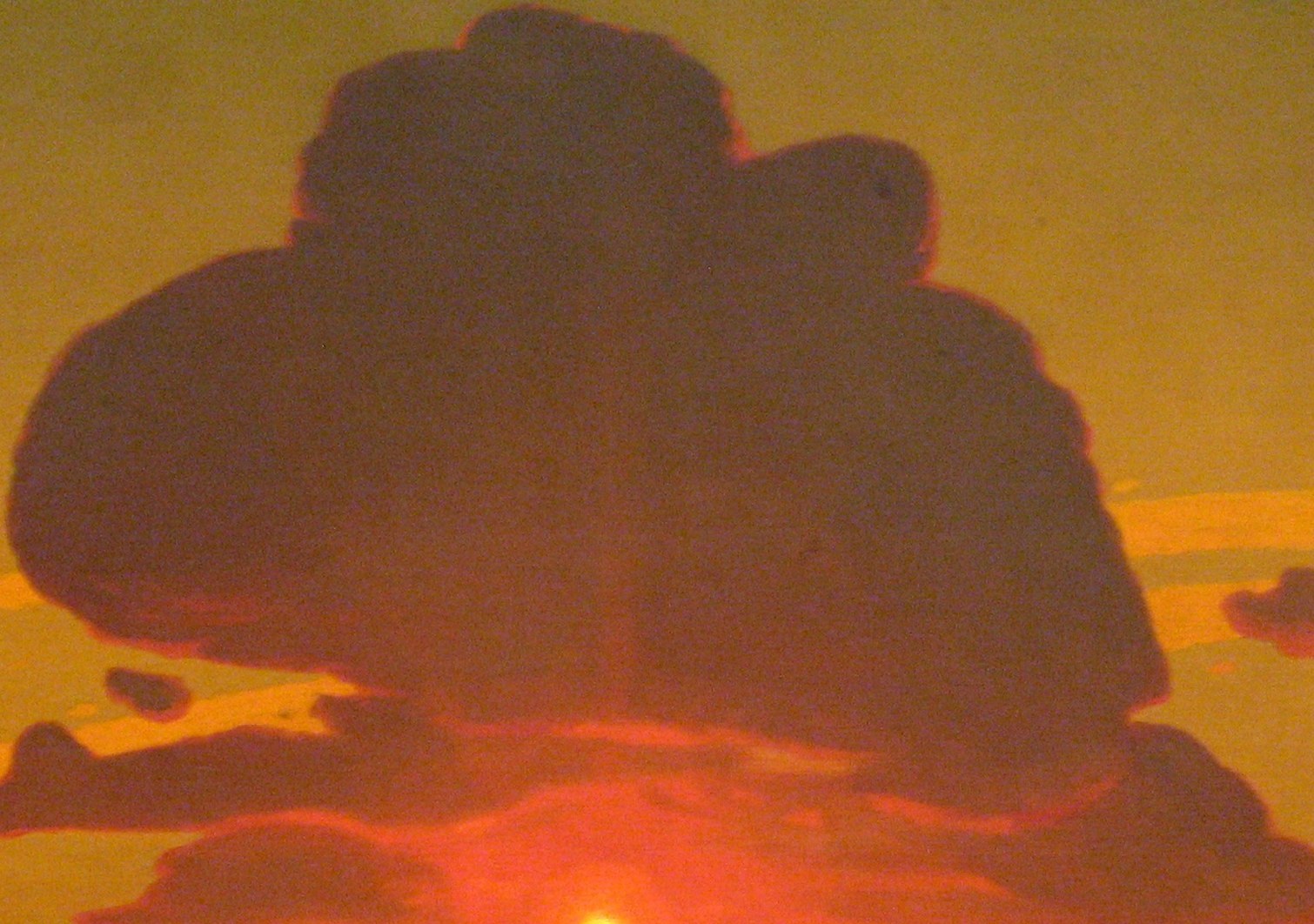
Look at how the sun's reflection turns the Dnieper River into a column of molten metal. The thick paint on the canvas, a technique called impasto, physically catches the gallery light, making the surface glow rather than simply depicting glow. Above it, the massive storm cloud is not truly black. Kuindzhi modeled its interior with deep purples, browns, and warm undertones, a chromatic choice that makes the orange fire beneath it feel hotter by contrast.
Kuindzhi was a landscape painter of Greek origin, born in what is now Ukraine, and he became known for these vast, almost cinematic views of the steppe. He made two preparatory sketches for this canvas, carefully plotting the exact balance of darkness and light. The tiny silhouettes on the far bank are the only clue to the river's true scale: without them, the sky and water would swallow the world entirely.
It's a painting that uses every trick of the medium to produce one overwhelming sensation: a sun you can feel on your skin.
Details


Transcript
Look directly at the sun. It glows with an almost electric heat. Now look below. The river catches that fire. The light becomes molten metal, doubling the sun. Kuindzhi built this glow with thick paint, laid down in heavy layers. The technique is called impasto, it traps light on the surface. And the dark cloud above is not black. It's bruised purple and brown. He modeled the darkness itself, so the sun would burn hotter by contrast.