Portrait of a Knight by Savoldo, Giovanni Girolamo
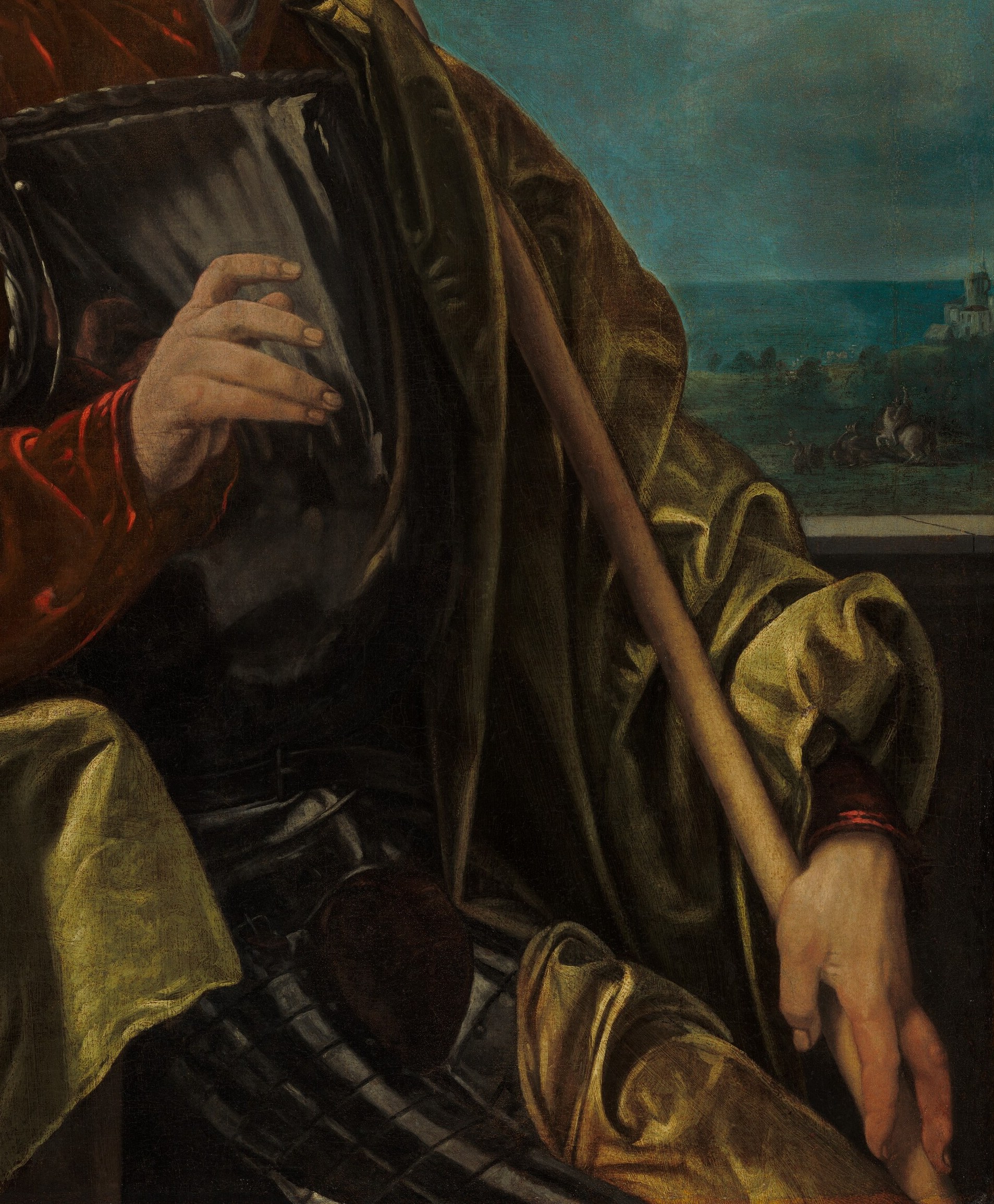
Giovanni Girolamo Savoldo's "Portrait of a Knight" (c. 1525) uses objects to convey a hidden meaning, a technique common in Renaissance portraiture. The sitter, likely an unidentified man of status, is depicted with symbolic items that suggest more than just his appearance.
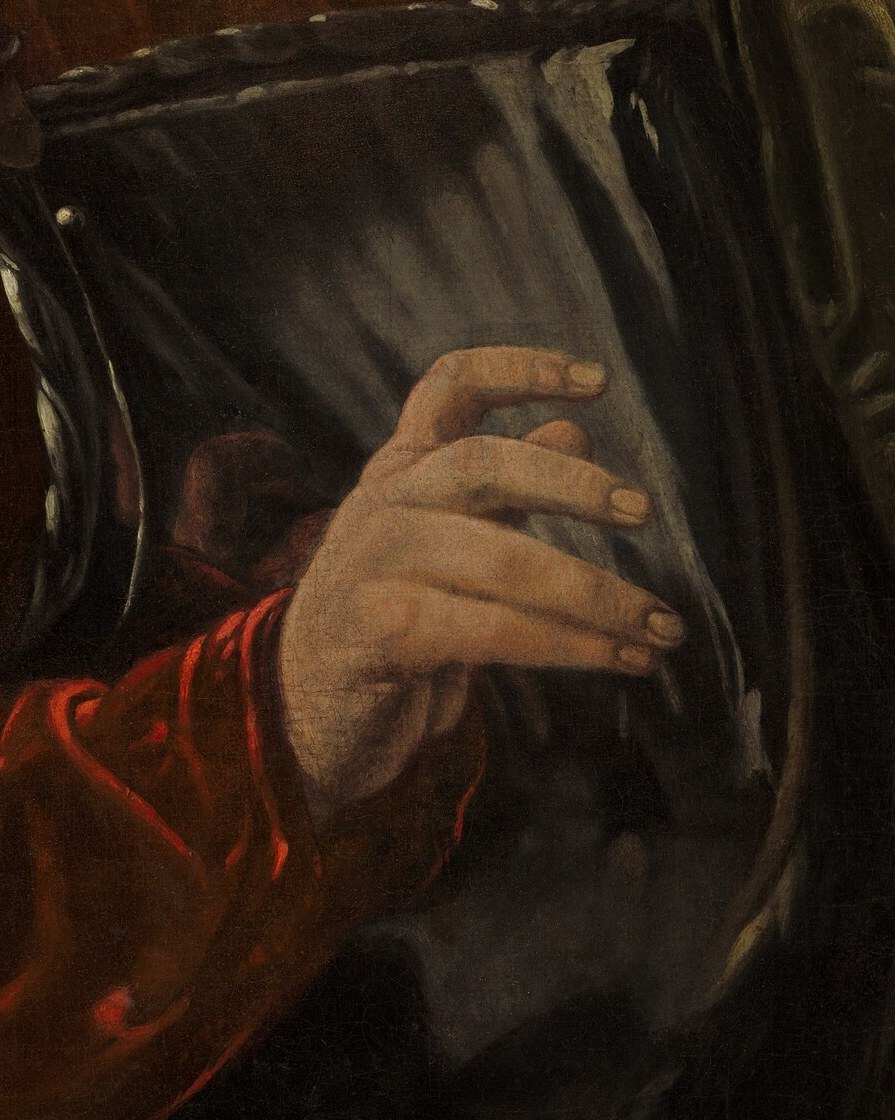
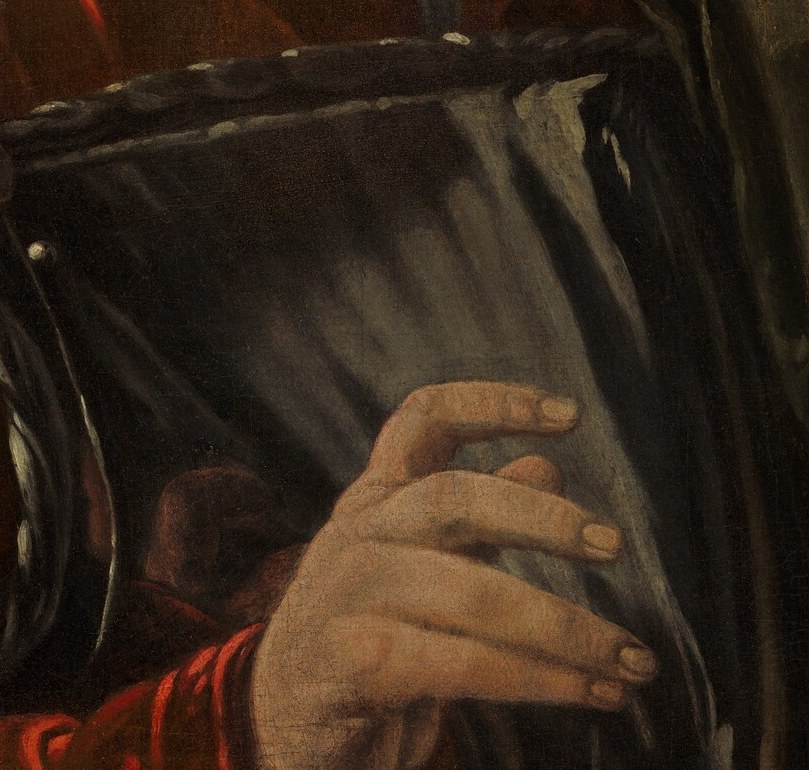
Look at the knight's attire: his opulent gold cloak speaks of wealth, while the vibrant red shirt hints at passion or perhaps a military connection. He holds a black shield, a clear symbol of protection and readiness for conflict, and a wooden staff, representing authority and command.
Savoldo, working around 1525, masterfully combined these elements. The collection of symbols, cloak, shirt, shield, and staff, was not arbitrary. They form a coded message, indicating that the sitter was not merely a wealthy individual but a trusted general.
This painting demonstrates how artists of the period used visual language to communicate complex identities and roles beyond the sitter's likeness.
Details


Transcript
He sits like a knight, armed and ready. His gold cloak whispers of status and wealth. But the red shirt adds a different message. This was Savoldo's secret signal. The shield means protection, the staff command. He holds a wooden staff, a sign of authority. Savoldo painted this in 1525. The objects together mean: a trusted general.