The Wheat Field by George Inness
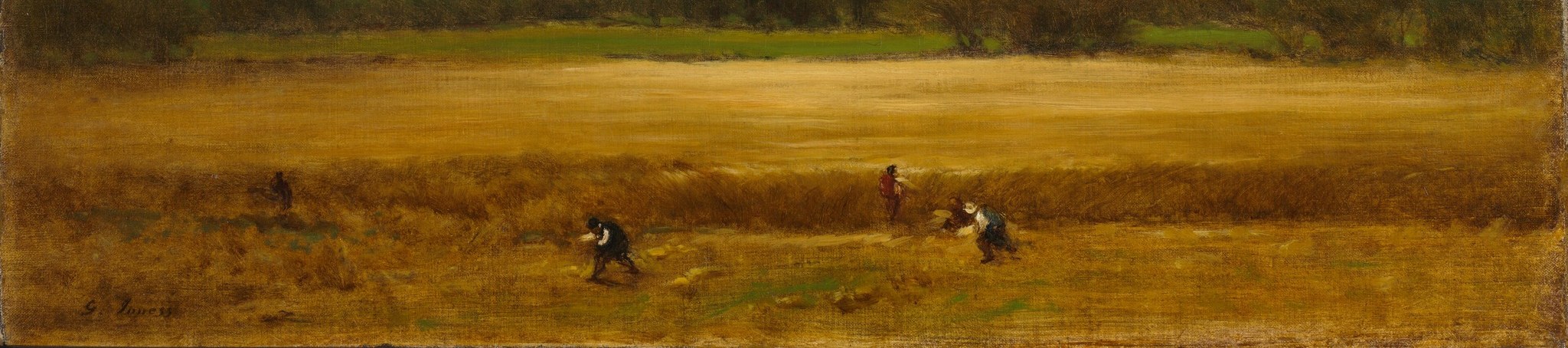
George Inness's "The Wheat Field" (1888) is a powerful testament to nature's overwhelming presence, now in The Cleveland Museum of Art. The painting draws us into a moment where human endeavor seems dwarfed by the sheer scale and drama of the natural world.
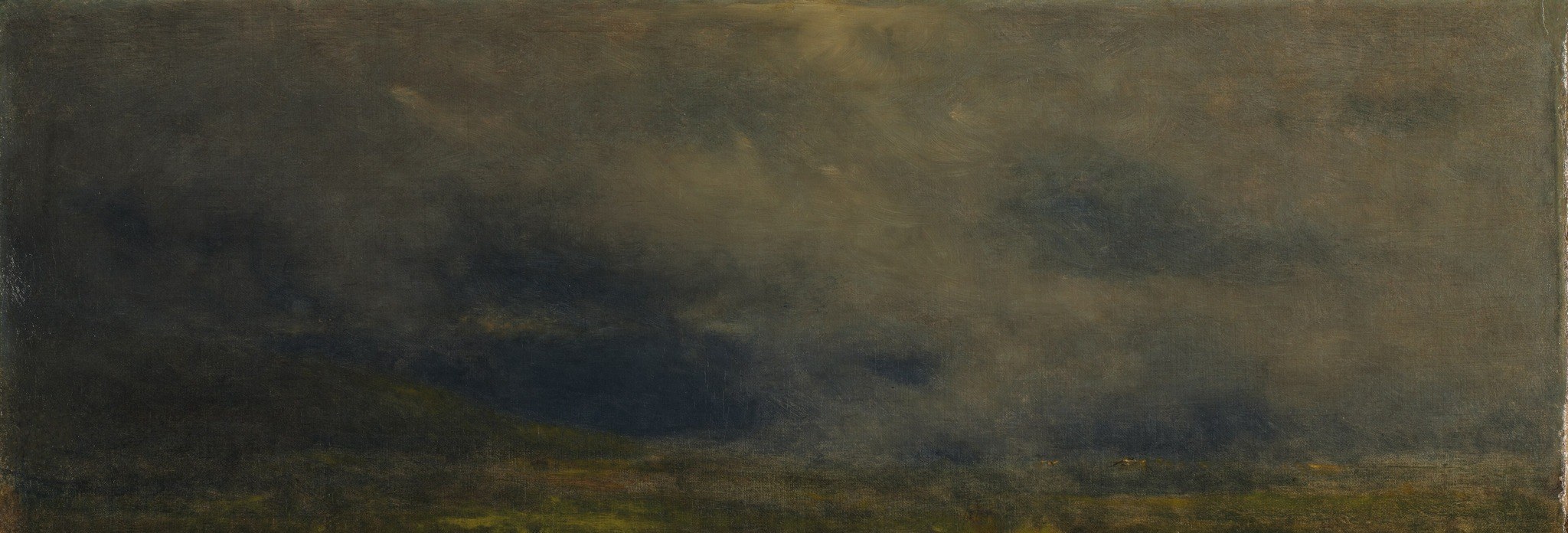
Observe the vast expanse of golden wheat, rendered with Inness’s signature soft brushwork, creating a tactile sense of harvest. Notice how the dark, turbulent sky and the solitary tree contribute to a mood of impending weather, placing the human figures in a vulnerable position within the landscape.
Inness, a transitional figure between the Hudson River School and Impressionism, developed a mature style deeply influenced by the theological ideas of Emanuel Swedenborg. He sought to capture not just the earthly appearance of nature, but its spiritual essence and mood.
This painting invites us to contemplate our own place within the grand, often turbulent, forces of nature. The quiet triumph here is not of human labor, but of nature's enduring power.
Details
Transcript
This field is ready for harvest. Dark clouds gather over the land. A lone tree stands against the storm. Human hands are small in this vastness. George Inness began to paint nature's spirit. He added Swedenborg's spiritual ideas. Nature's mood is the real subject.