The Taj Mahal by Field, Erastus Salisbury
This is 'The Taj Mahal' by Erastus Salisbury Field, painted around 1870. An American folk artist who never left the United States, Field created this image from a printed engraving, the only way most Americans of his generation could ever see the monument.
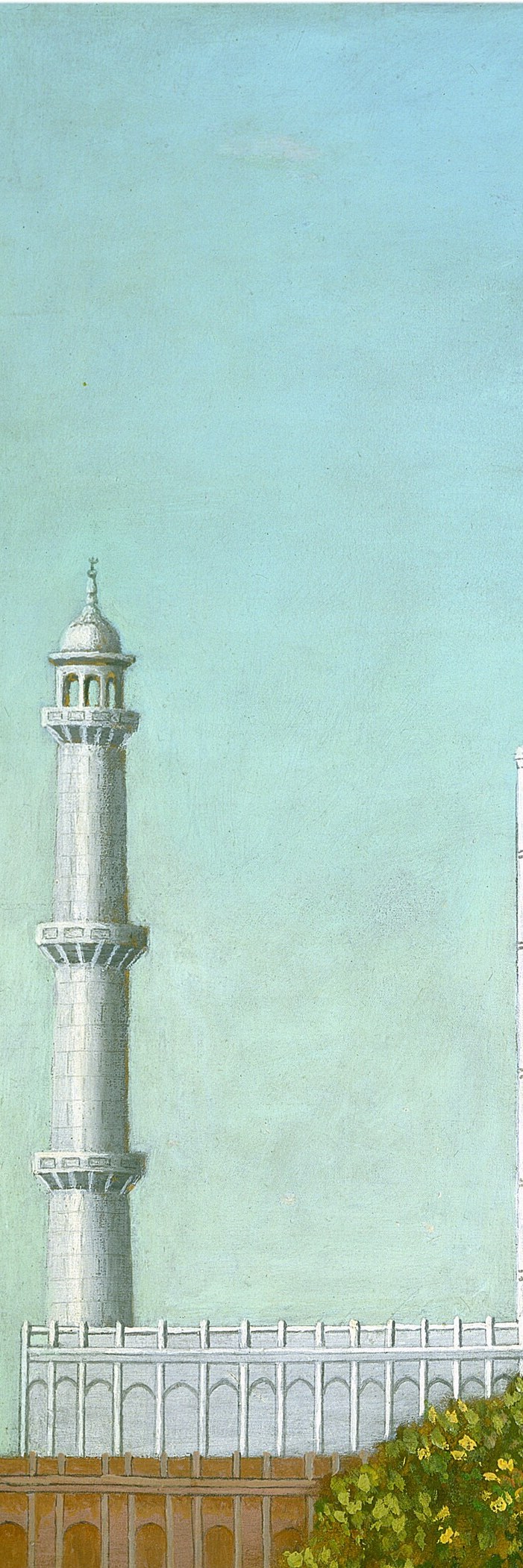
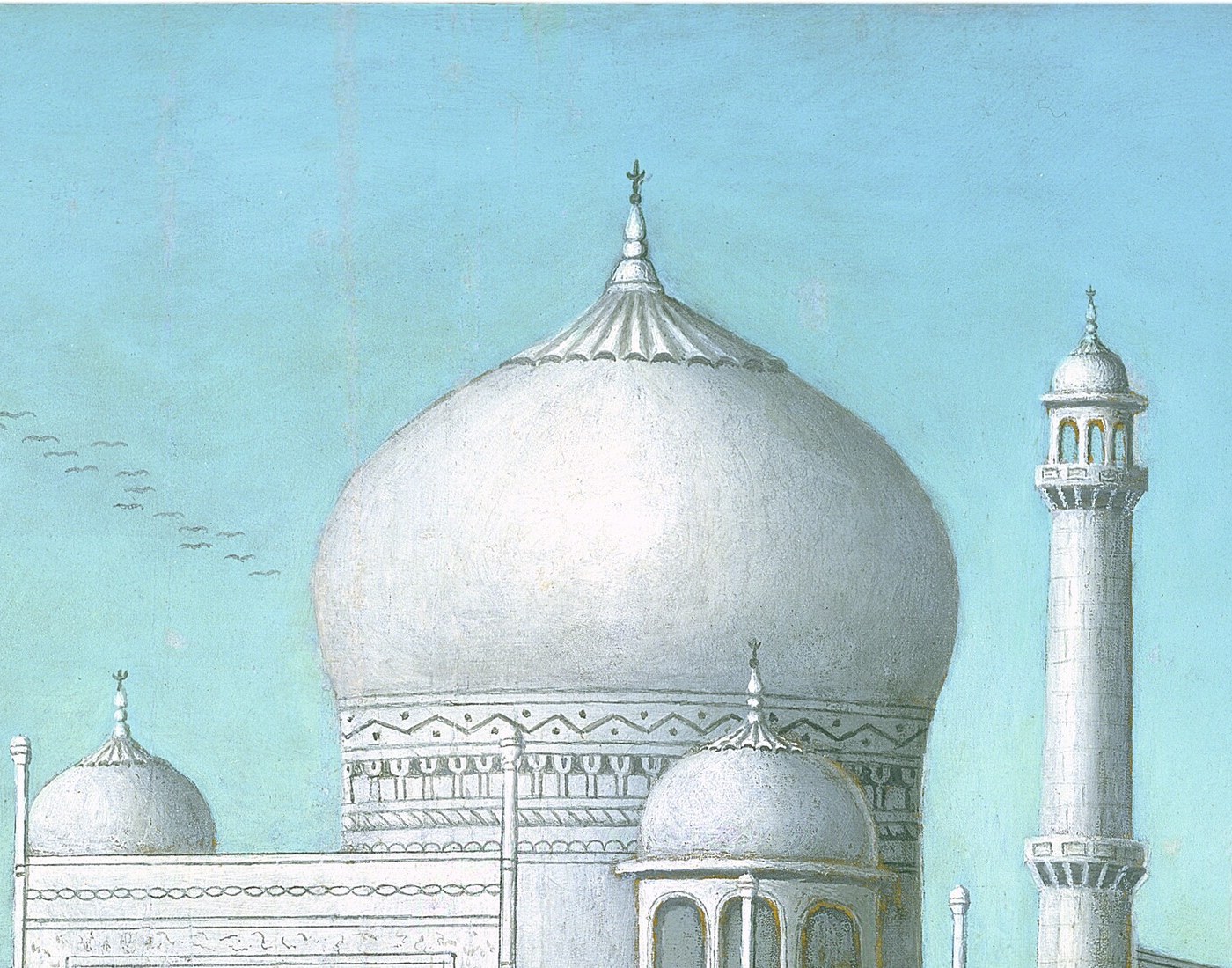
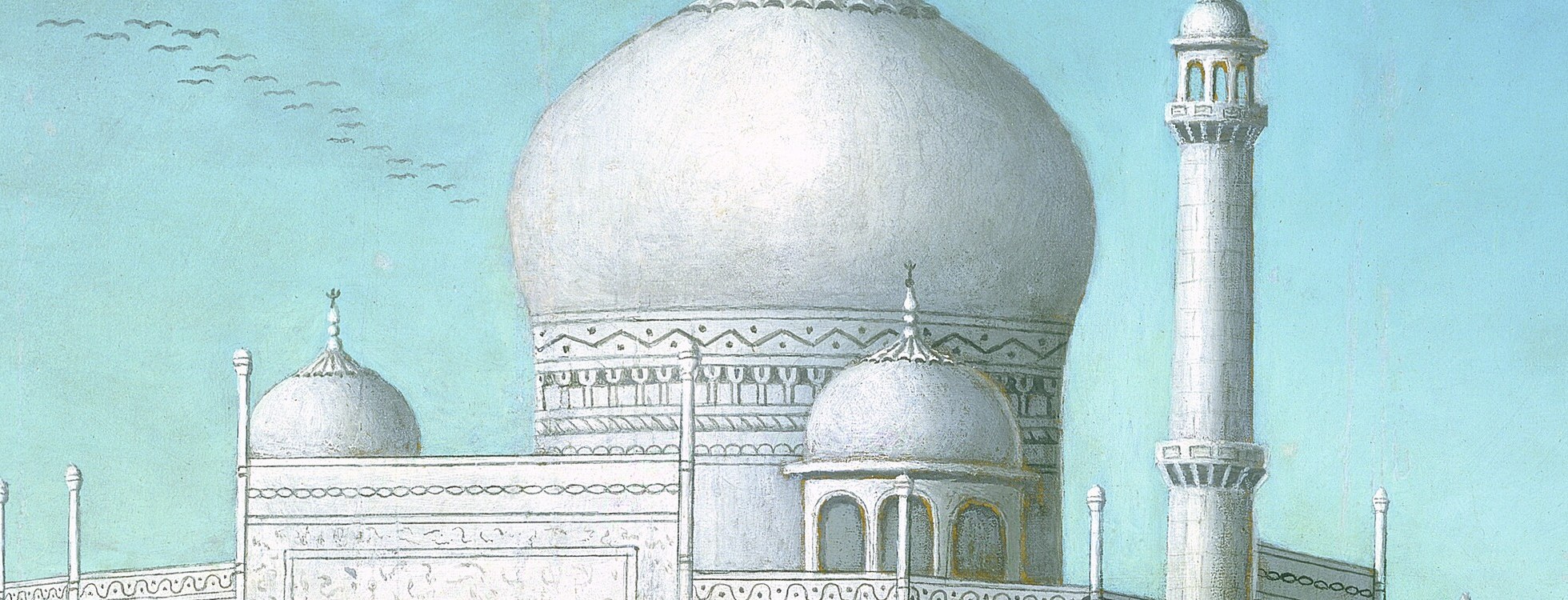
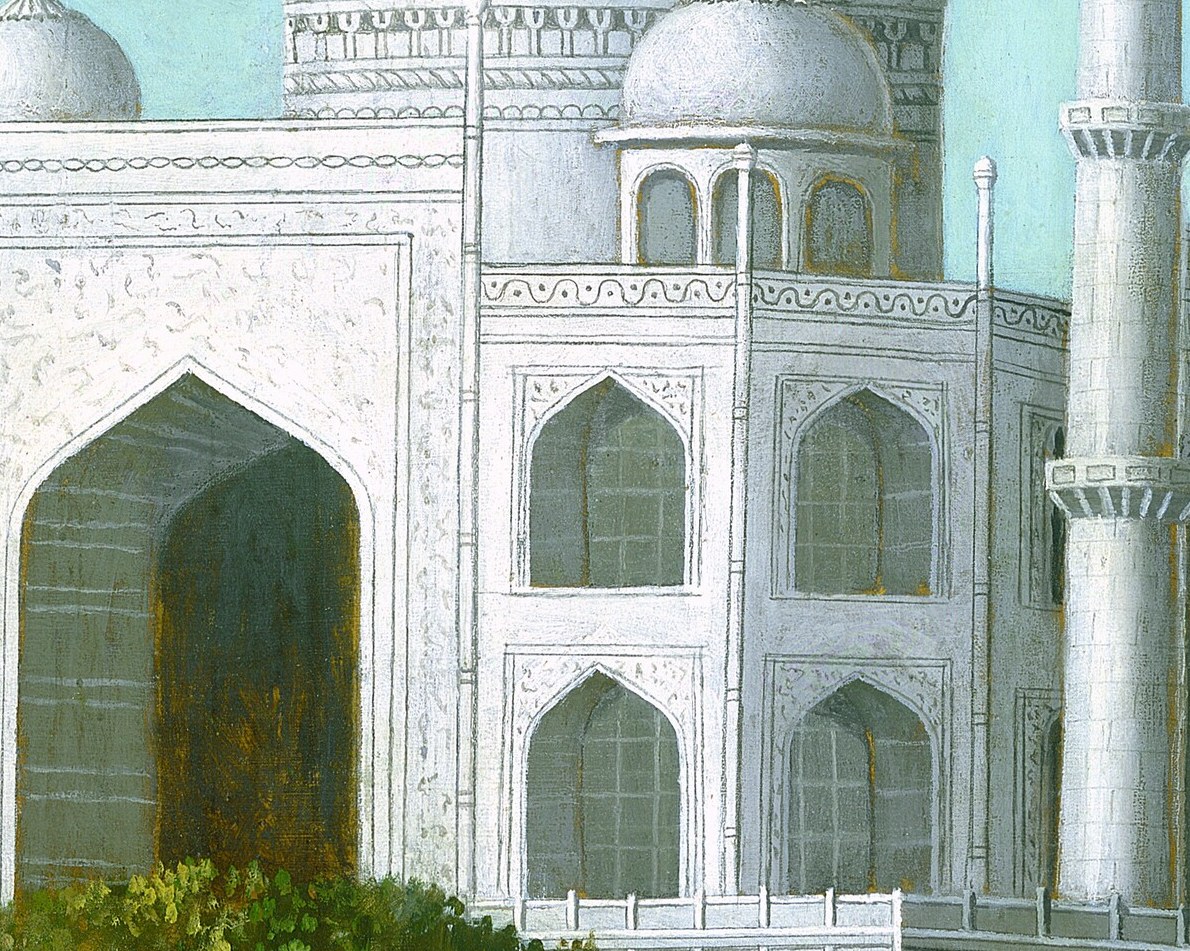
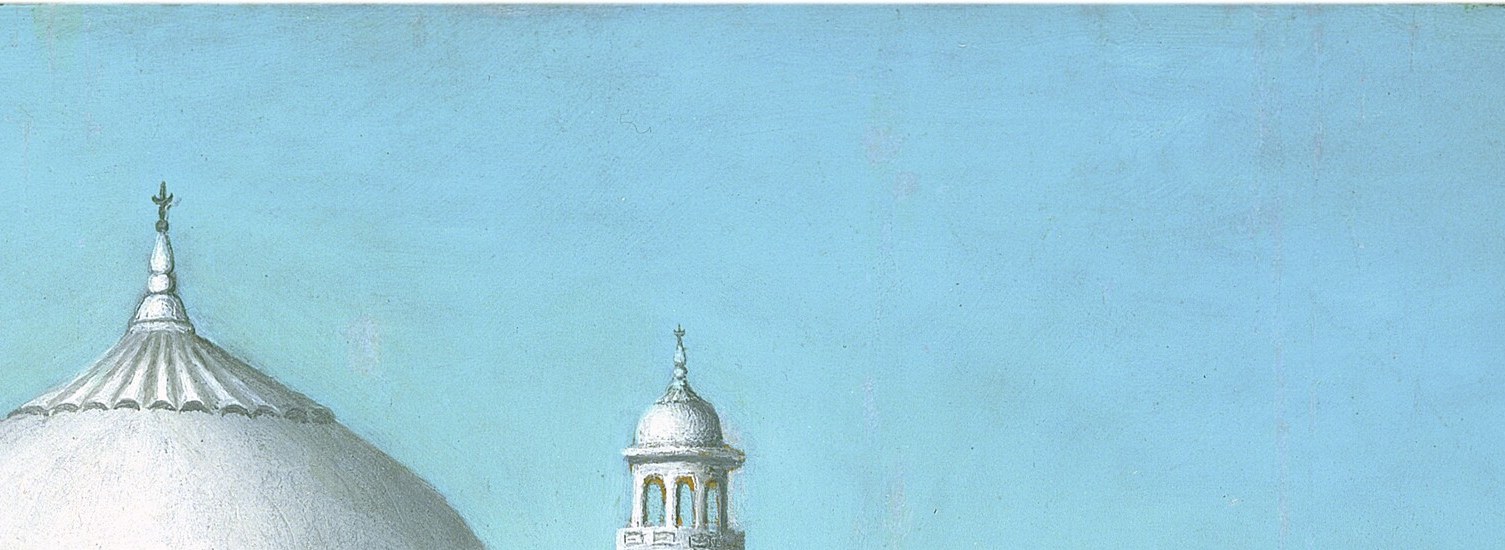
Look at the left minaret. It leans slightly forward, a spatial quirk Field inherited directly from his source material. The entire painting is built like a diagram, pattern and flat color, not light and shadow. The luminous white dome, the repeating chhatri kiosks, and the dark recessed iwan arch all work as symbolic shapes rather than observed ones.
Field was born in 1805 in Leverett, Massachusetts, and spent most of his long life painting portraits and landscapes for rural New England families. In his seventies, he turned to a series of imagined world landmarks, the Taj Mahal among them, based on prints circulated in books. The painting is a document of American visual curiosity in an era before photography was widespread.
What does it mean to paint a place you have only read about? Field's Taj Mahal is not the building but the idea of it, a quiet, personal vision of a wonder on the other side of the world.
Details
Transcript
He never saw the Taj Mahal. A farmer from Massachusetts, he painted this from a book. The minaret leans. An engraving's distortion, perfectly copied. No shadows. Light comes from the paint itself, not any sun. He turns architecture into a pattern: dome, kiosk, dome. The dark arch is the only hint of a tomb inside. Erastus Field lived to 95. He painted this in his seventies.