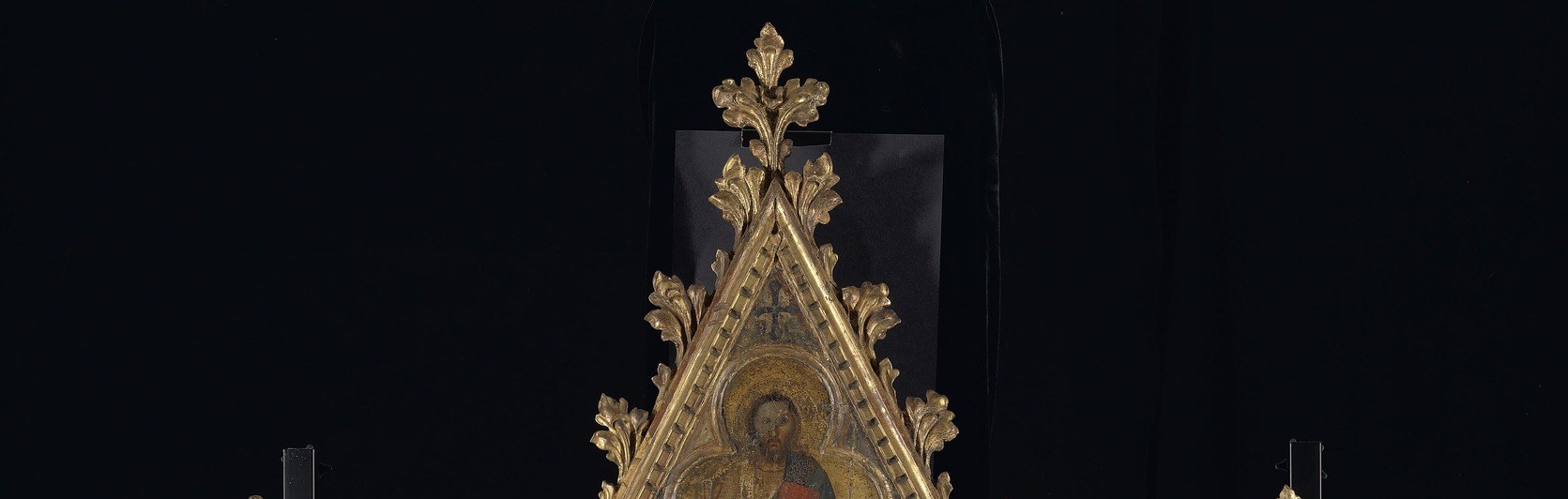
Triptych with the Virgin and Child, and Saints Mary Magdalene and Ansanus by Orcagna
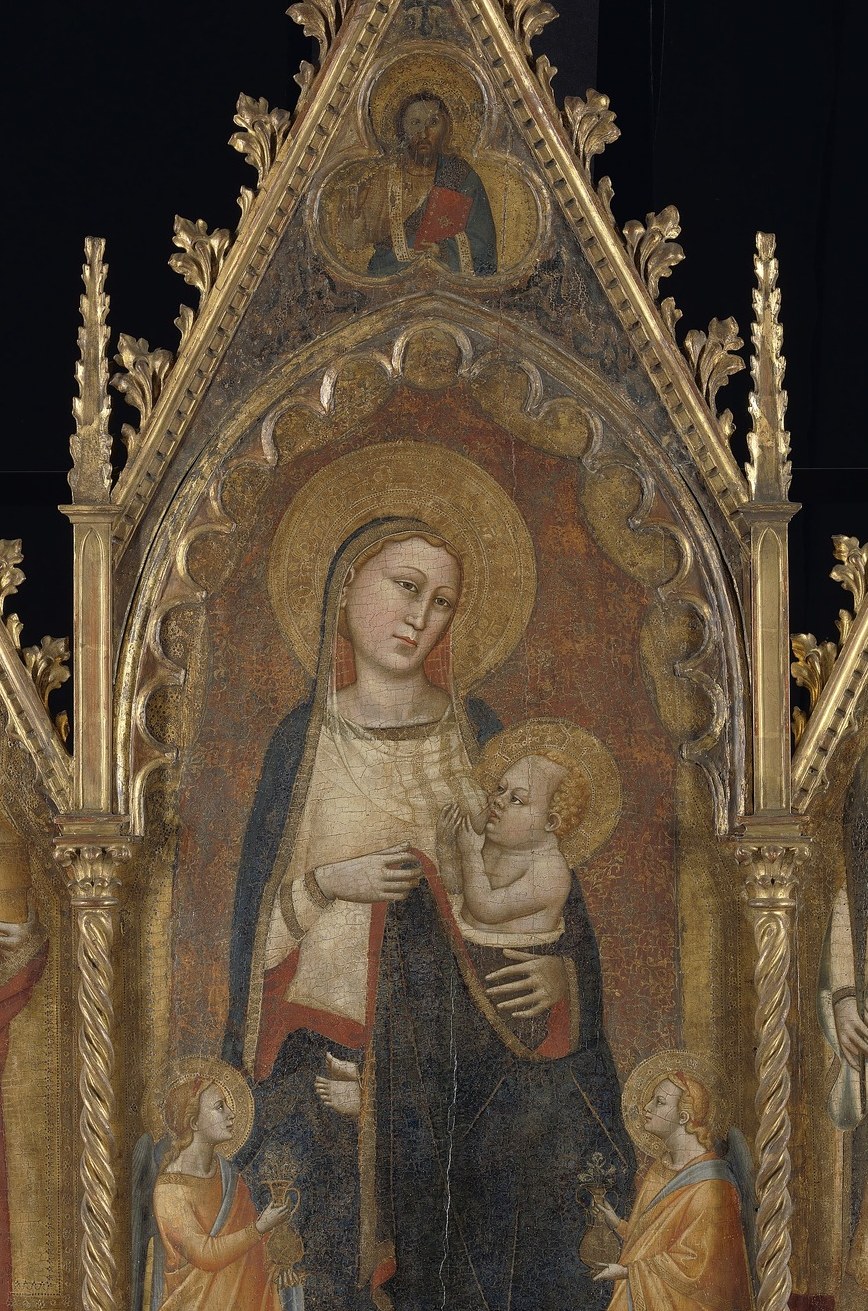
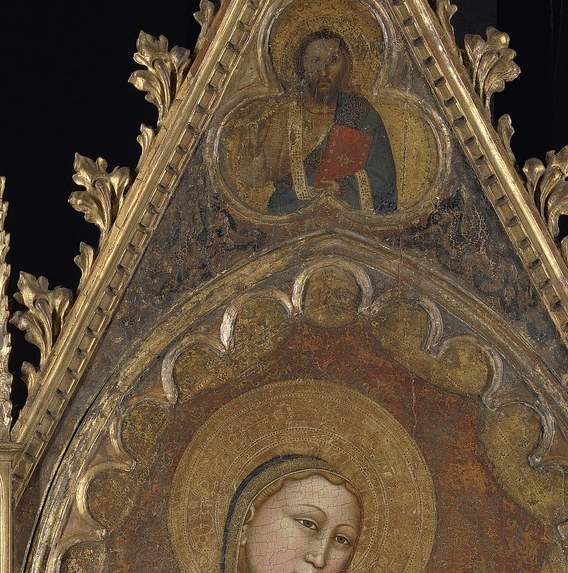
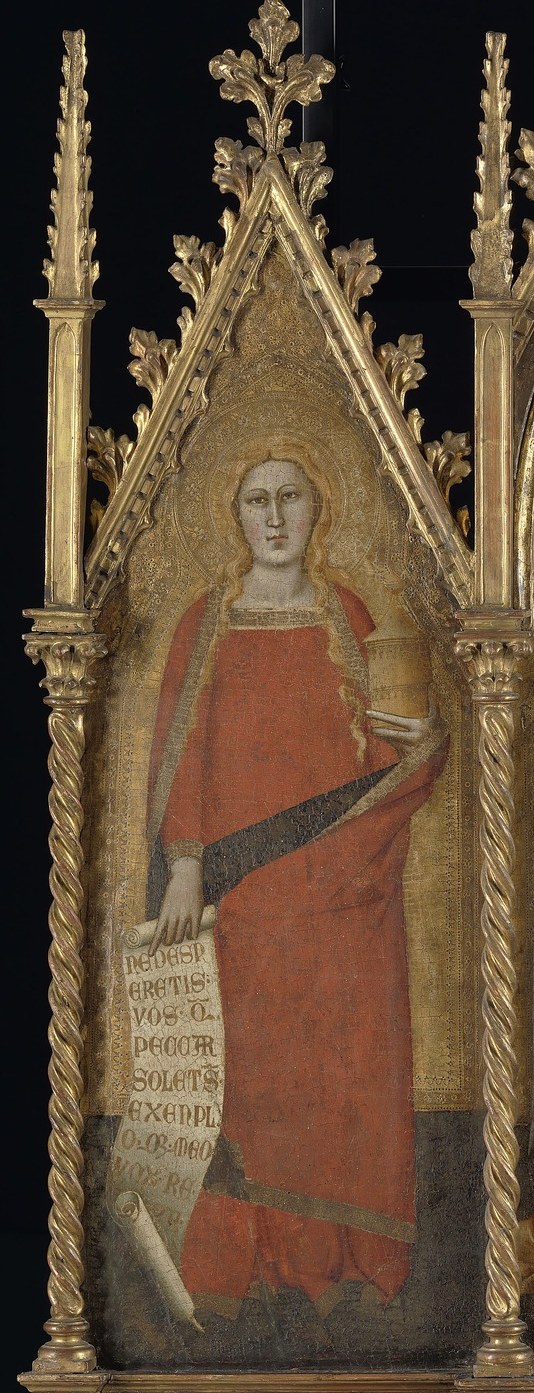
Orcagna's Triptych with the Virgin and Child, and Saints Mary Magdalene and Ansanus, painted around 1350, is a beautiful example of Italo-Byzantine art from the Rijksmuseum collection. While the painting adheres to formal conventions, a tender human story emerges through the Virgin Mary's gaze.
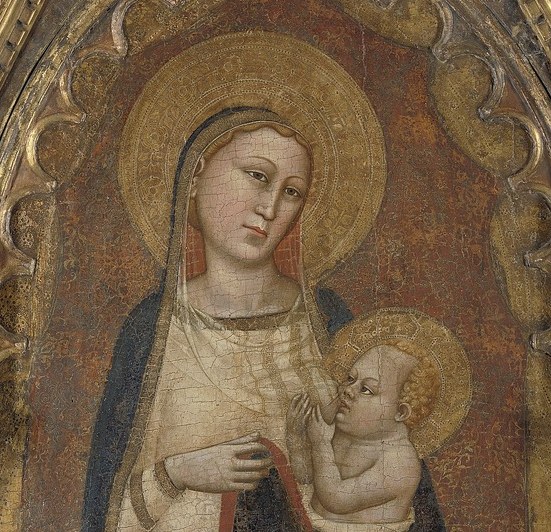
Notice the way Mary inclines her head, her eyes softly directed towards the Christ Child. This subtle gesture breaks through the rigid formality, imbuing the divine scene with genuine maternal warmth and intimacy.
Orcagna, also known as Andrea di Cione, was a highly versatile Florentine artist. He worked across painting, sculpture, and architecture, contributing to major projects like the Florence Cathedral. This triptych shows his skill in conveying profound emotion within the established artistic language of his time.
It reminds us that even within the most structured art, human connection and feeling can shine through.
Details
Transcript
This altarpiece was painted in Florence, around 1350. Its style is formal, blending Byzantine tradition and local trends. Yet Orcagna, the painter, found a way to show real human feeling. Look at the tender gaze of the Virgin Mary. Her eyes are soft with maternal love for the Christ Child. A moment of quiet intimacy in a majestic, sacred scene.