Bay of New York, Sunset by Chambers, Thomas

Thomas Chambers painted Bay of New York, Sunset in the 1840s, and it is one of the truest visual records we have of a vanished world. It hangs now in a collection that preserves his odd, bright, self-taught legacy.

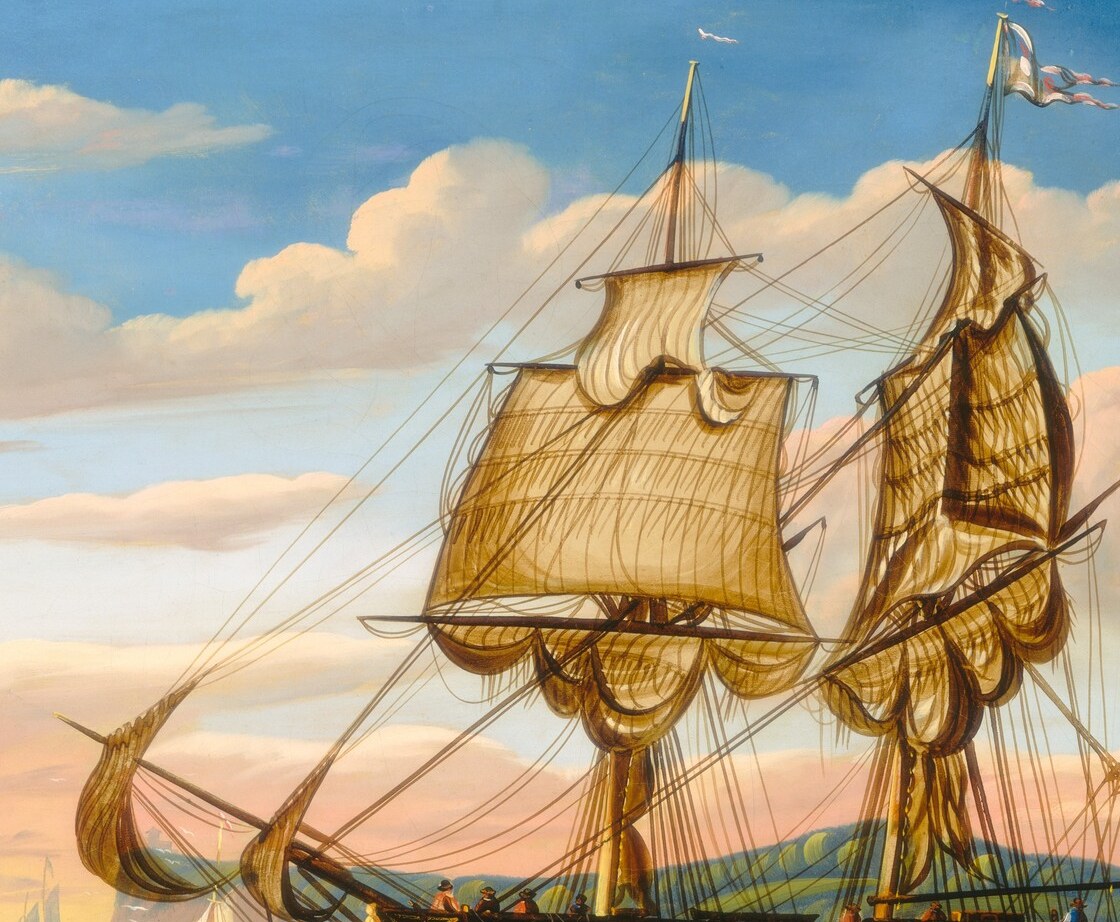
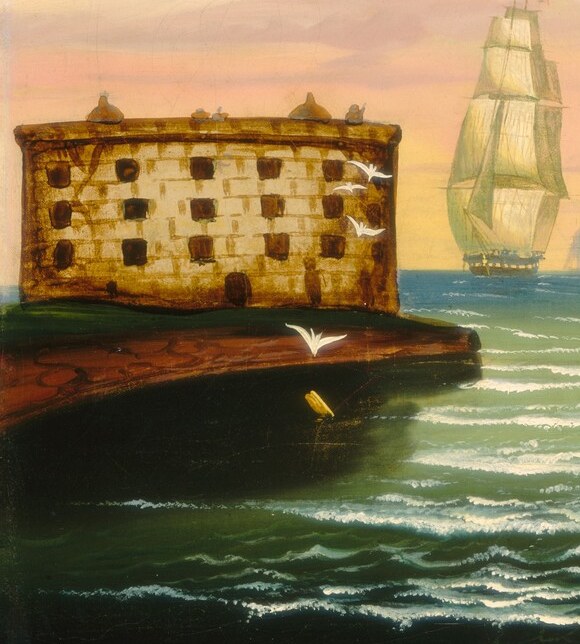
Look first at the American warship dominating the right side of the bay. Then look past it. The shore is a green, rocky promontory with almost nothing built on it. A single Federal-style building, probably a fort or customs house, is the only man-made weight on the land. Behind it, Brooklyn is a tree-covered hill.

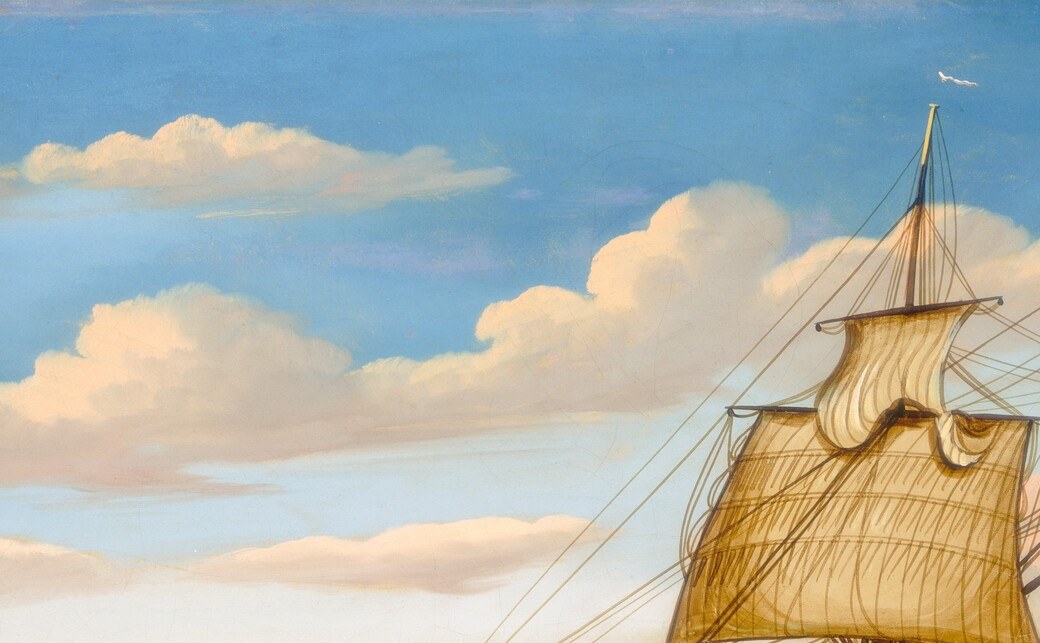
Chambers was an English-born mariner who became an American itinerant painter. He worked from popular prints, not nature, which is why his rigging looks like a ship-in-a-bottle diagram and his waves are schematic rounded ridges. The candy-pink sunset is not observed light but emotional light, a Romantic ideal painted by a man who understood the sea and wanted it to feel grand, not wet.

This is the front door of New York City just years before the boom. No skyline. No industry. Only a living working harbor and an almost empty shore. Staring at this painting is like hearing a quiet voice say, I remember when.

#arthistory #americanart #hudsonriverschool

Details
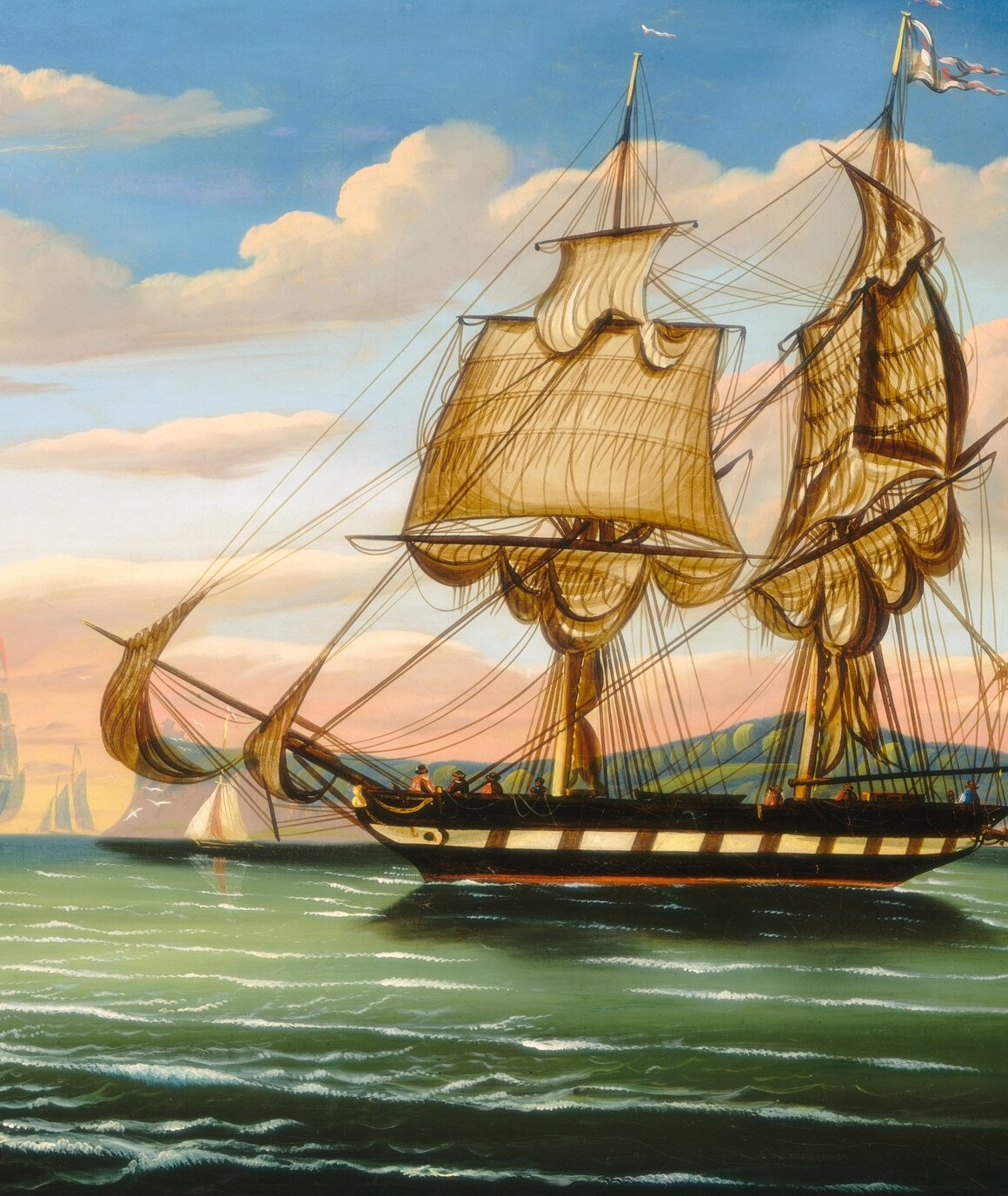
The compositional anchor; the sheer scale and meticulous rigging reveal this is a naval vessel, not a merchant ship , likely an American warship asserting presence in the home harbor.
The warm glowing center is Chambers's emotional signature , he consistently used theatrical, almost candy-colored sunsets that feel more Romantic ideal than observed fact.
Chambers renders the rigging with folk-art precision , every line is clean and schematic rather than naturalistic, exposing his self-taught approach and making the ship look like a ship-in-a-bottle diagram.
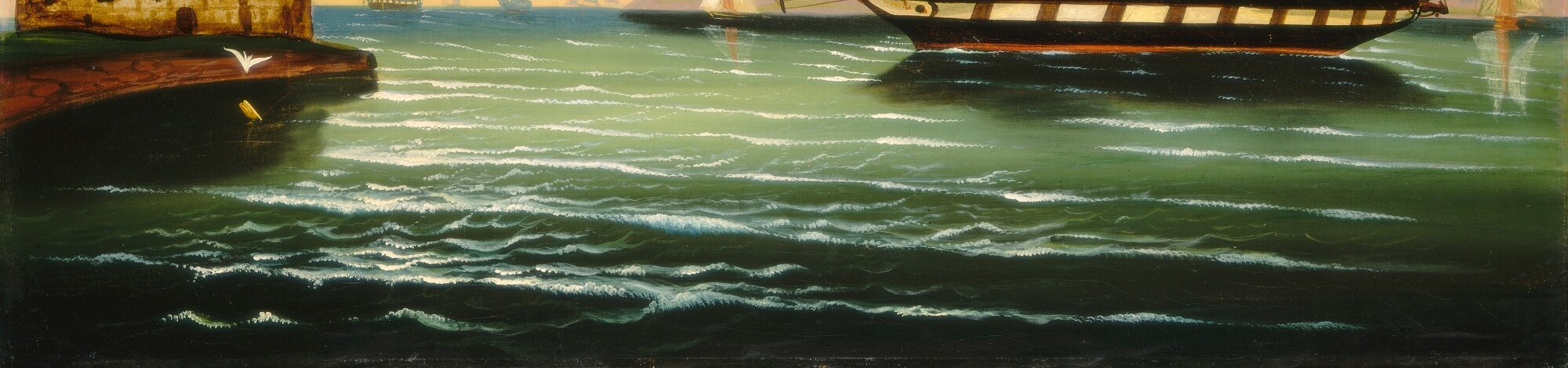
Each wave is a schematic rounded ridge , a folk-art convention rather than observed motion, giving the water an almost decorative quality that reveals Chambers's artistic lineage in popular print culture.
The undeveloped, verdant shore contrasts sharply with what that coastline became; this margin detail is a quiet document of New York's pre-industrial waterfront.
Transcript

A warship sits at anchor in the lower bay. The American ensign. Stars and stripes in the harbor. But the shore behind it is still mostly trees. One solid building. A fort or a customs house. There is no skyline. Brooklyn is a wooded bluff. The painter was a self-taught mariner who loved sunsets more than facts. This bay was about to disappear under stone and steam.