Artwork
Bay of New York, Sunset
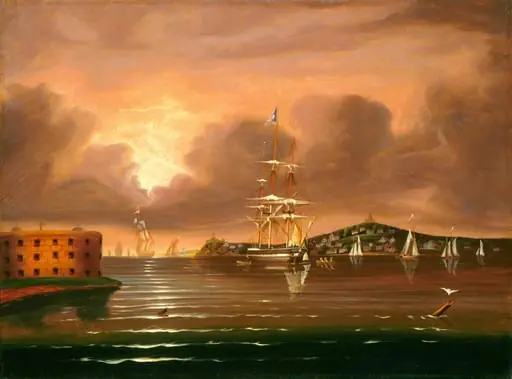
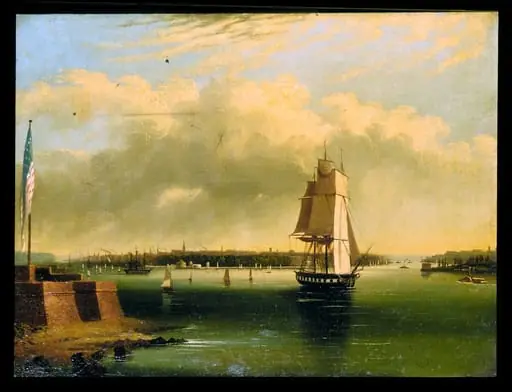
Bay of New York, Sunset is an oil painting by the American Impressionist artist Thomas Chambers. It dates from 1850 and is held in the collection of the National Gallery of Art.
About this work
History & Provenance
Neither an accession number nor a detailed inventory designation is listed in the sources; the curatorial file explicitly notes the absence of donor records.
The painting was created in 1850. Its ownership was traced to Edgar William and Bernice Chrysler Garbisch, who purchased it by 1973. The Garbisches subsequently gifted the work to the National Gallery of Art in 1973, where it remains in the collection. No documentation of a commission or earlier provenance has survived.
Bay of New York, Sunset is located in the collection of the National Gallery of Art (NGA) in Washington, D.C. According to provenance records, the painting was purchased by Edgar William and Bernice Chrysler Garbisch and subsequently gifted to the NGA in 1973. Neither an accession number nor a detailed inventory designation is listed in the sources; the curatorial file explicitly notes the absence of donor records. The consulted sources do not mention any exhibition history for this painting.
Overview
Thomas Chambers's Bay of New York, Sunset is an oil on canvas painting capturing a broad vista of New York Bay. The composition is dominated by a vibrant sky, rendered in hues of pink and gold as the sun descends. Rolling waves animate the water's surface, while a solitary sailboat, identifiable by its ensign flag, is visible near the distant horizon.
Subject & Meaning
The artwork presents a tranquil yet expansive depiction of New York Bay. The dramatic sunset colors the sky, creating a focal point that draws the viewer's eye across the water. The presence of a single sailboat with its flag suggests human activity within this vast natural setting, offering a sense of scale and perhaps a quiet narrative of maritime travel during the era.
Context
Chambers created this painting during the 1840s, a period when the landscape of New York Bay retained much of its natural, undeveloped character. Unlike its later appearance, the bay was then largely open and untamed. The burgeoning city's presence was minimal, marked by only a scattering of structures along the shoreline, providing a stark contrast to the expansive natural environment.
Own this work as a print
Artist & collection


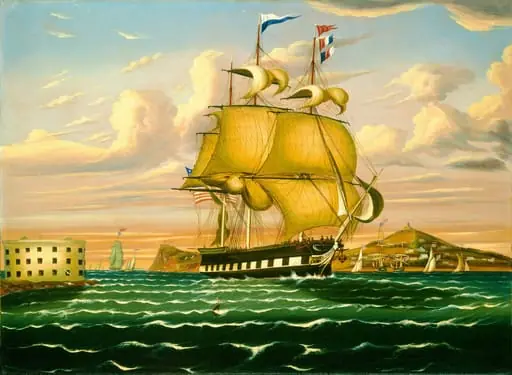
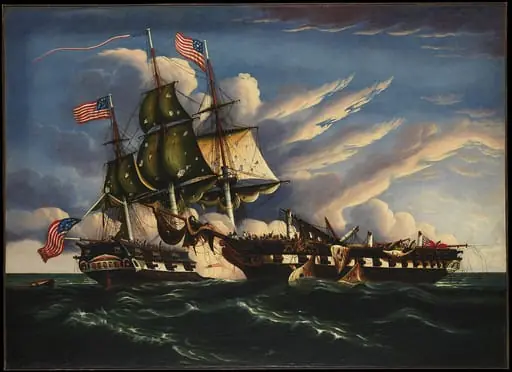
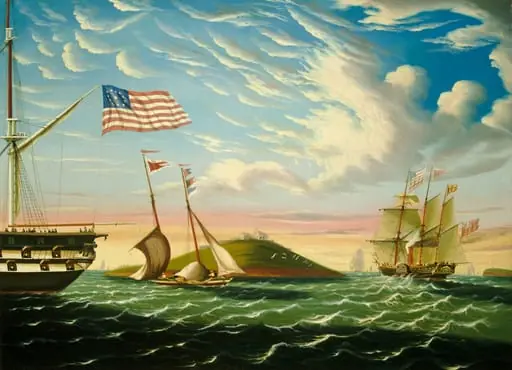
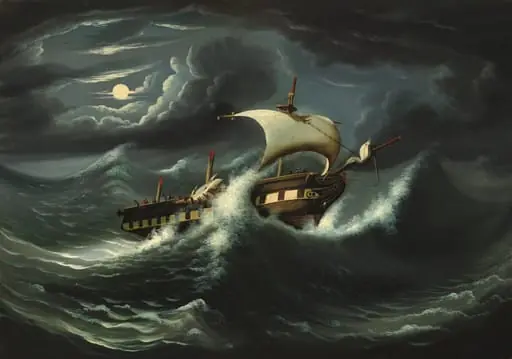
 Three Views of "Amity Hall" With a View of Dover and the White Cliffs
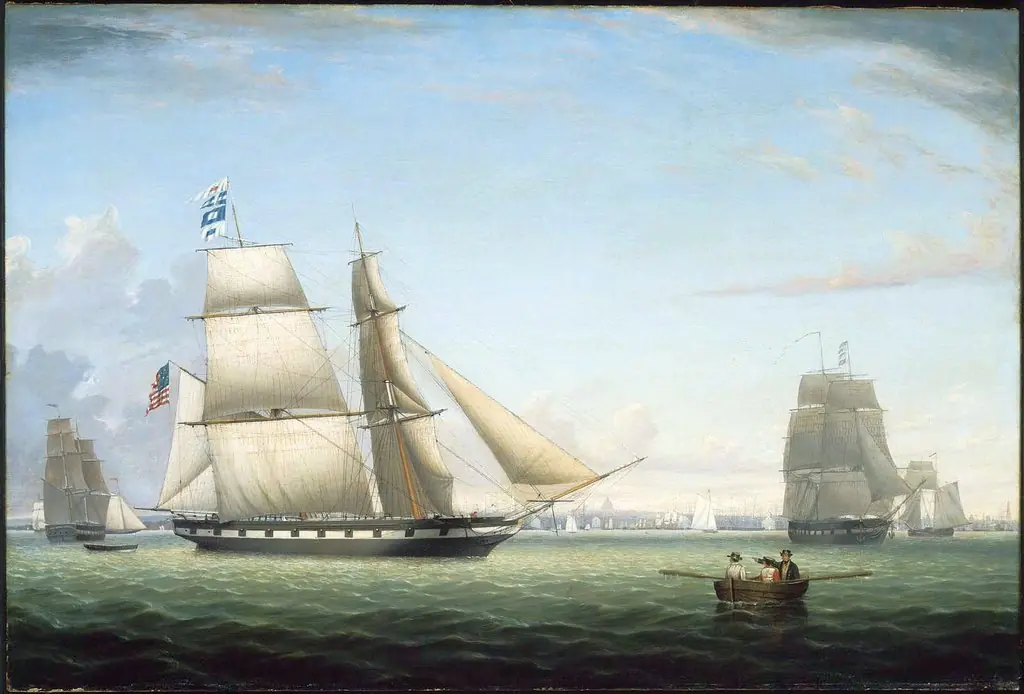 Brig "Antelope" in Boston Harbor
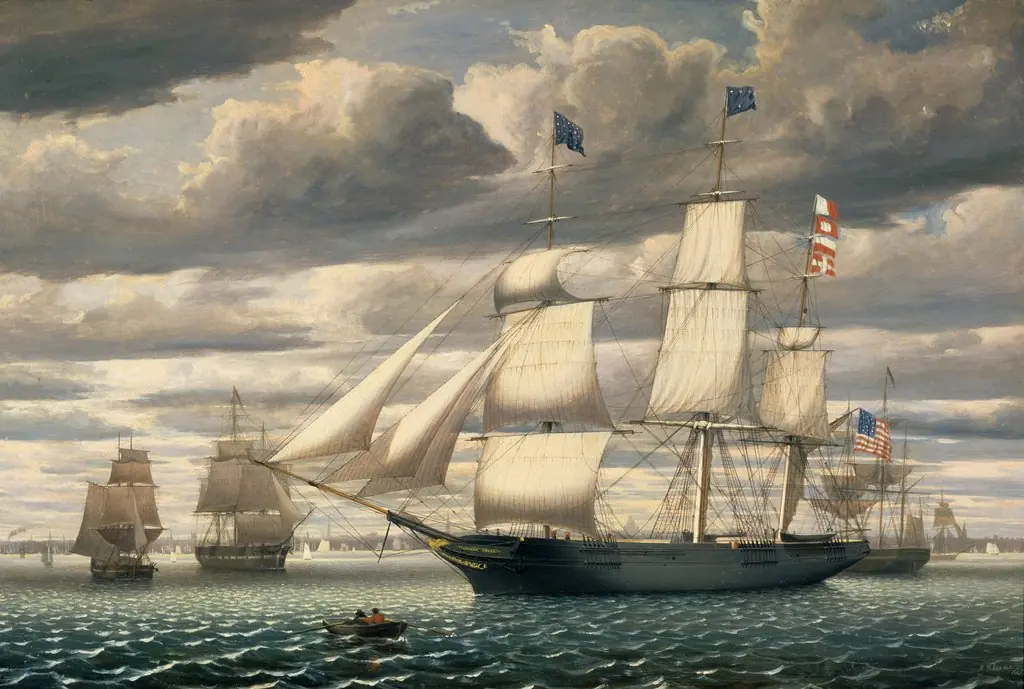 Ship Southern Cross in Boston Harbor, 1851
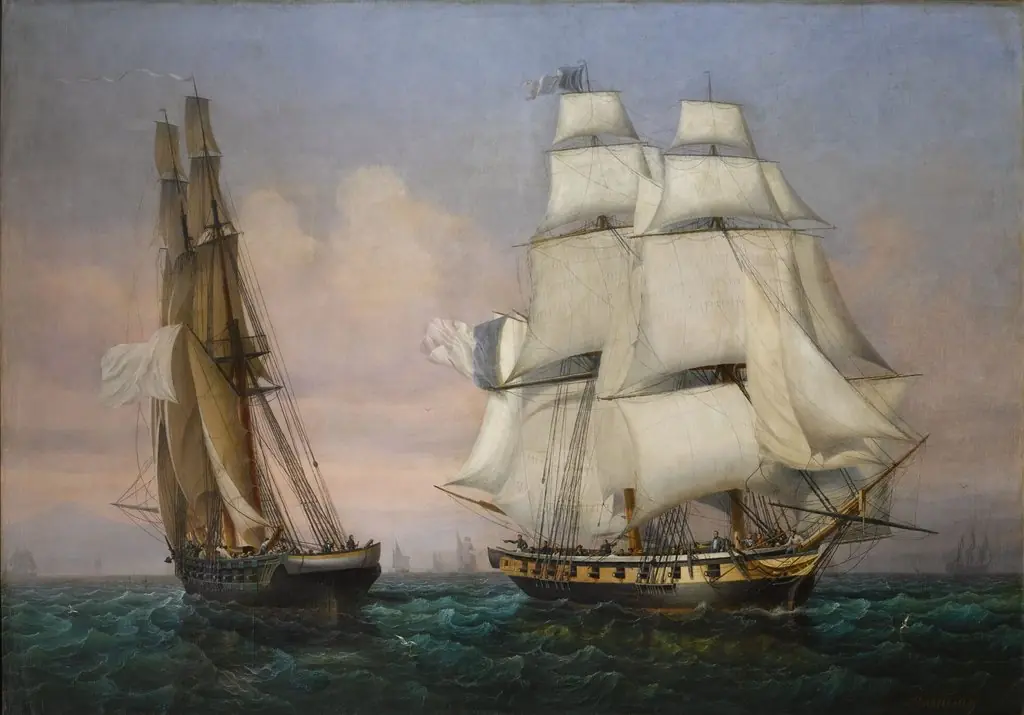 Return of Napoleon from Elba
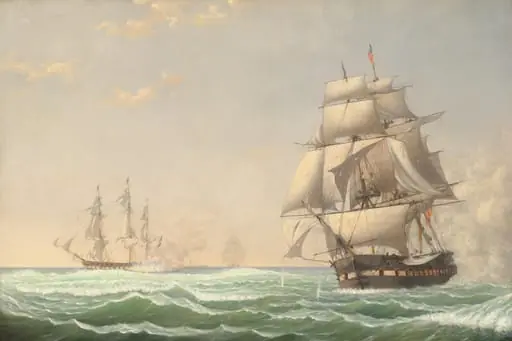 The United States Frigate "President" Engaging the British Squadron, 1815
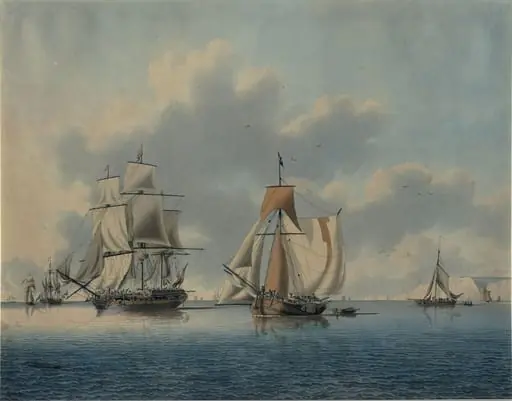 A frigate and Dutch fishing boats off the Isle of Wight
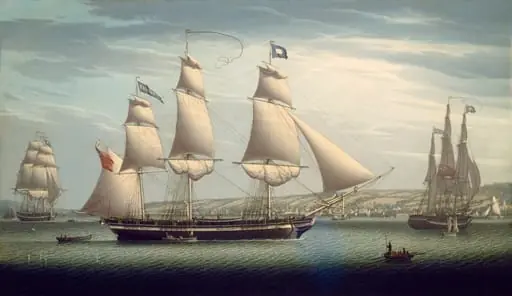 The Ship "Favorite" Maneuvering Off Greenock
 South Sea Whale Fishing II
- Boston Harbor, Sunset
 Bay and Harbor of New York from Bedlow's Island