Cain Slaying Abel by Pier Francesco Mola
Pier Francesco Mola's "Cain Slaying Abel," painted in 1651 and held at The Metropolitan Museum of Art, captures the biblical moment of fratricide with incredible dramatic intensity. Mola, a prominent figure of the Roman Baroque, masterfully uses light and shadow to heighten the psychological tension.
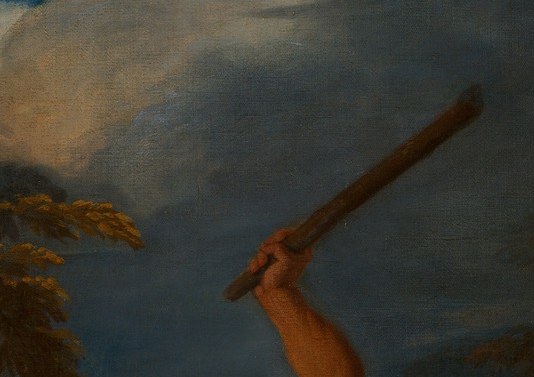
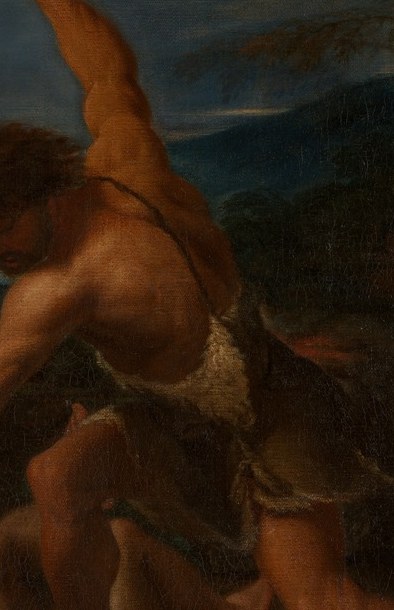
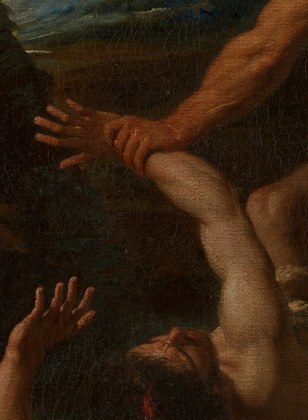
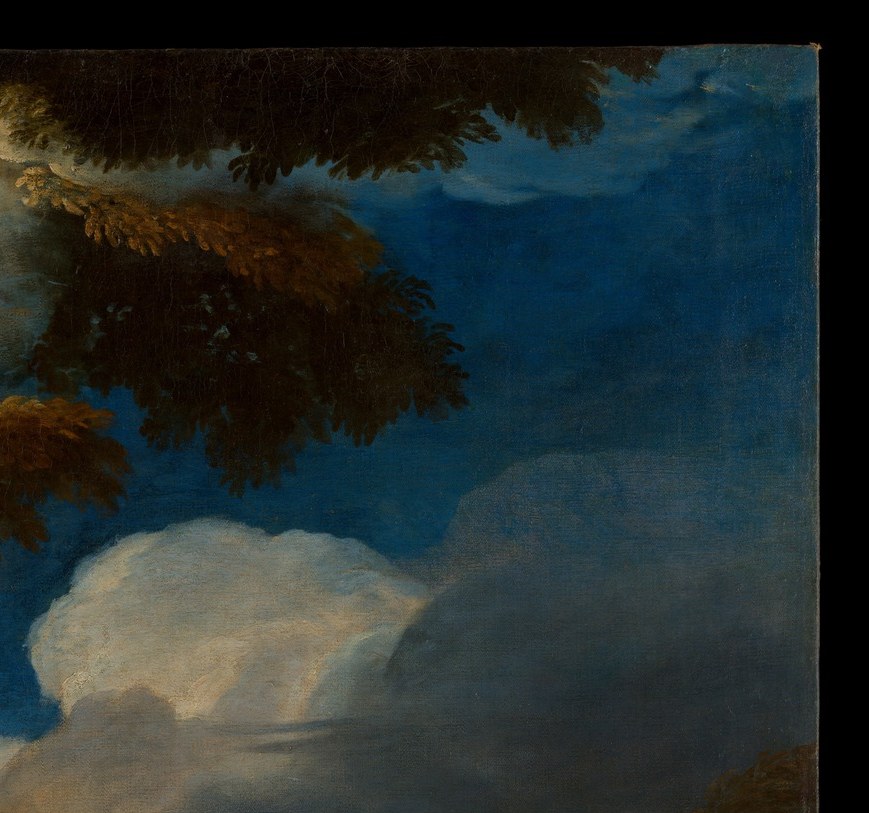
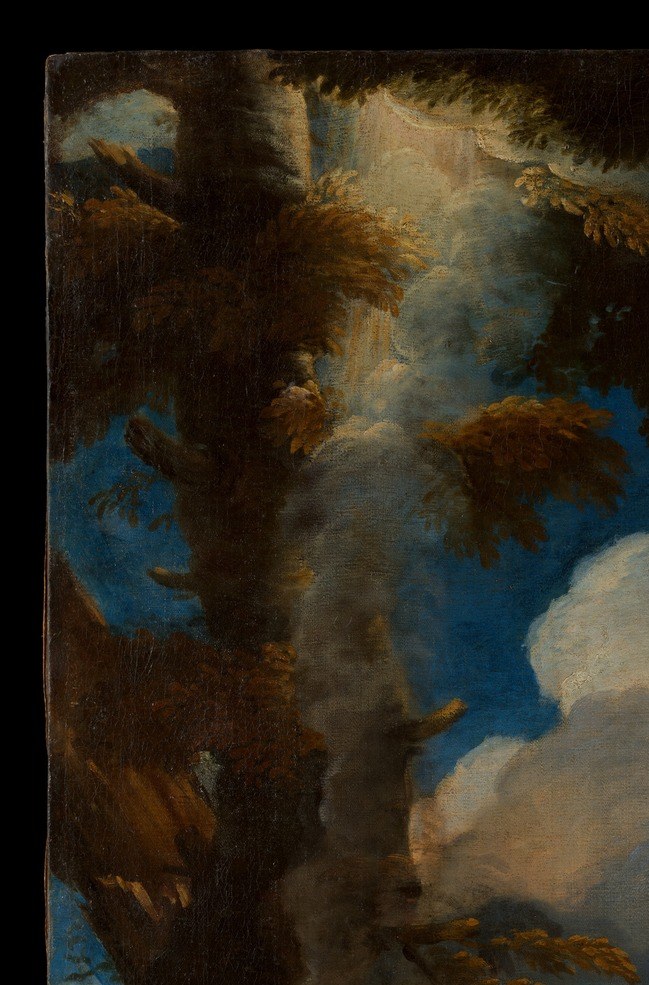
Notice Cain's powerful physique, emphasized by the dramatic chiaroscuro, as he raises the club. Contrast this with Abel's vulnerable, outstretched arms, a desperate gesture in the face of impending doom. The turbulent sky and dark landscape amplify the sense of foreboding and divine displeasure.
Mola painted this work during a period when he was establishing his reputation in Rome. It demonstrates his ability to handle complex narrative subjects with both anatomical precision and profound emotional depth, showcasing his mature style and securing his place among leading history painters of his time.
The raw power and human emotion in this painting are truly striking. What detail first caught your eye?
Details
Transcript
This painting tells the Bible story of Cain and Abel. Cain, rejected by God, prepares to strike his brother. The artist used strong light and shadow, called chiaroscuro. It highlights his muscular power and the impending violence. Abel's outstretched arms show his desperate, final plea. The turbulent sky mirrors the scene's emotional turmoil. This dramatic work cemented the artist's reputation in Rome.