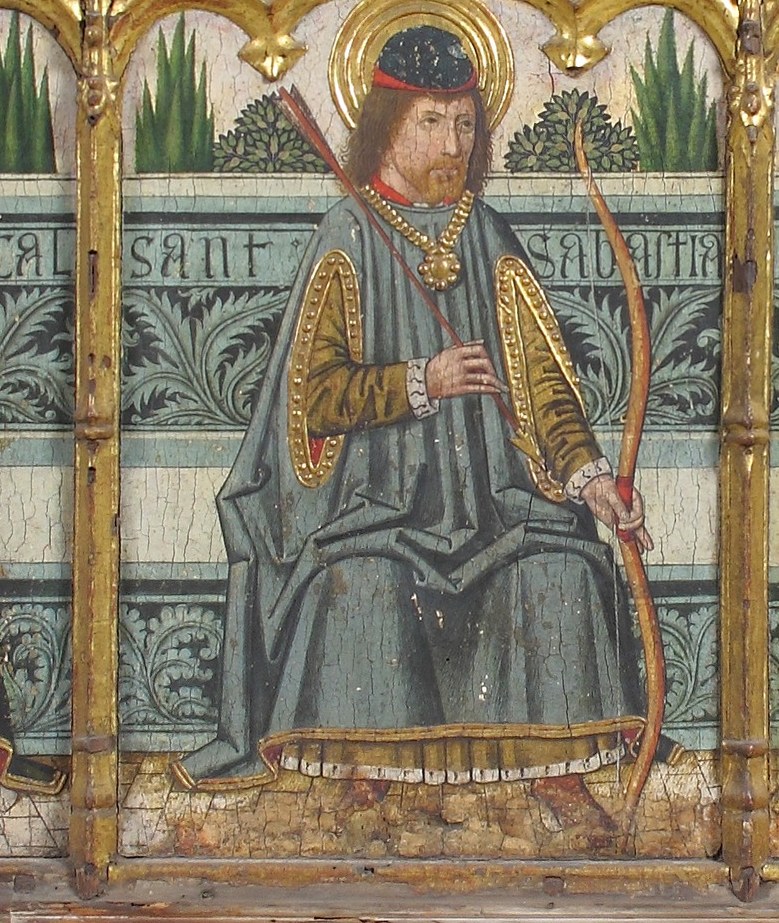
Predella panel with Saint Martial, Saint Sebastian, and Saint Mary Magdalen from Retable by Domingo Ram
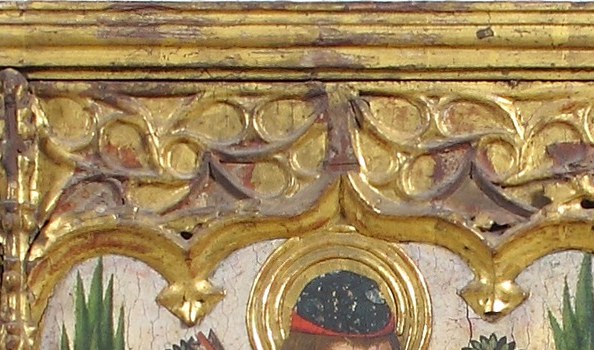
This small tempera panel by Domingo Ram, painted around 1500, is a predella, the lower horizontal section of a much larger Spanish altarpiece. It presents three saints seated under gilded arches, but every object they hold is a deliberate code. Recognizing that code was the primary way a fifteenth-century worshipper would know who was who.
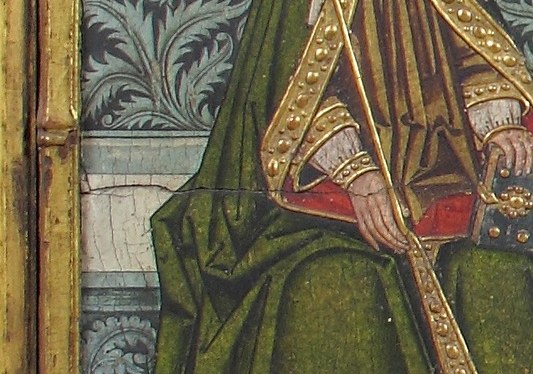
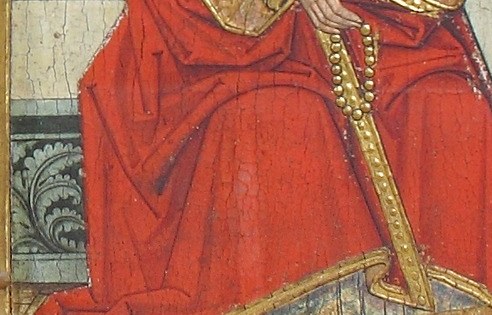
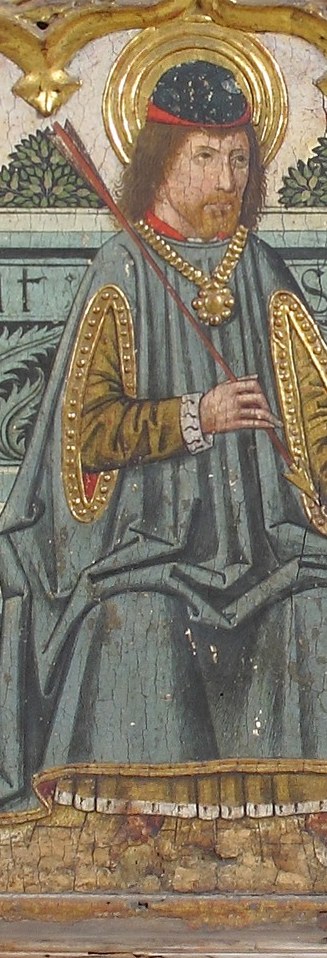
Look at the hands. On the left, Saint Martial grips a closed Gospel book, the shorthand for an apostolic bishop. On the right, Mary Magdalen cradles her alabaster jar of myrrh, the attribute that identifies her in nearly every medieval image. And in the center, Saint Sebastian holds a martyr's palm branch, the symbol of victory over death.
But the center holds the real surprise. Sebastian is almost universally shown as a near-nude young man pierced by arrows, the instrument of his first attempted martyrdom. Here, in Domingo Ram's Aragonese workshop, he appears fully robed and serene, without a single arrow. This is not a mistake. In the regional devotion of late-medieval Aragón, Sebastian was venerated less as a suffering martyr and more as a dignified intercessor, a protector against plague.
The painting lives at The Metropolitan Museum of Art, where its gold-leaf ground and raised gilded halos still catch raking light exactly as Domingo Ram intended. The inscription tablets at each saint's feet confirm identities the objects already announce, a visual library in tempera.
Details
Transcript
Three saints. Three objects. A silent language. On the left, a closed book. Not reading. Ruling. A closed Gospel means apostolic authority. He is Saint Martial, a bishop. On the right, a gilded jar of myrrh. An anointing. The jar names her instantly: Mary Magdalen. Now the center. He holds a palm, a martyr's victory branch. But the code breaks. Where are his arrows? This is Saint Sebastian, dressed like a courtier. Not a wound in sight.