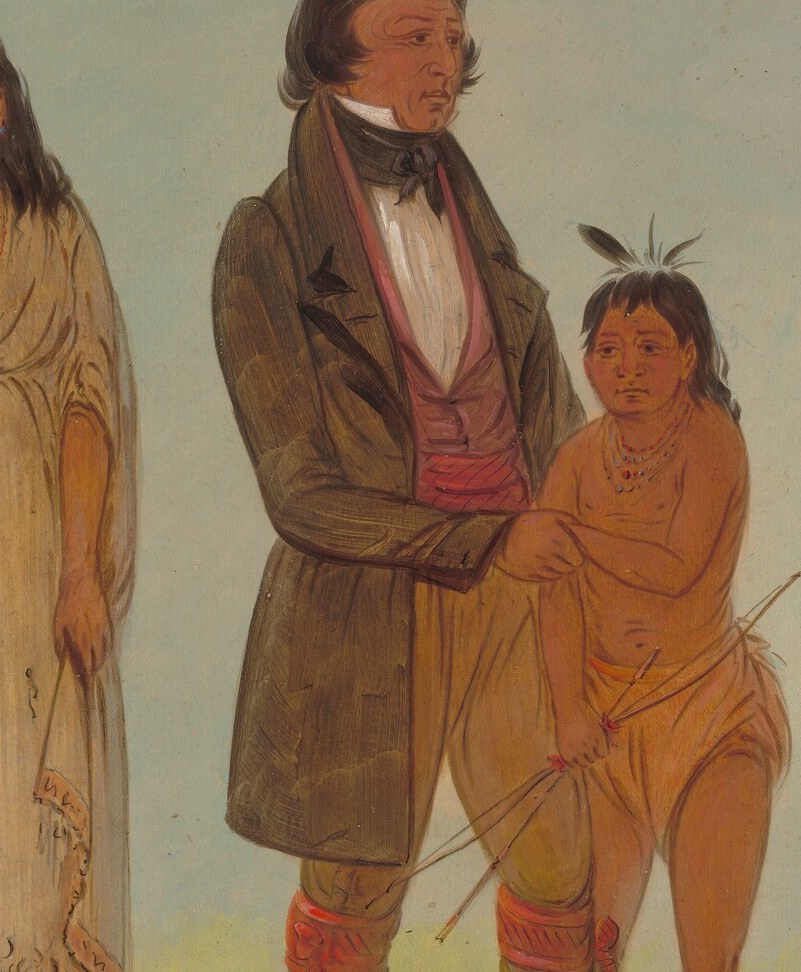
Kaskaskia Chief, His Mother, and Son by Catlin, George
George Catlin, a lawyer who became a dedicated artist, captured an intimate family moment in his 1861-1869 painting, *Kaskaskia Chief, His Mother, and Son*. This oil on card, mounted on paperboard, is part of his extensive documentation of Native American life and is housed in a prominent collection.
In this portrait, observe the protective hand of the chief on his son's shoulder, a tender gesture of connection. The son's feathered headpiece and the mother's intricate beaded necklace are vivid details reflecting their cultural identity and craftsmanship.
Catlin traveled the American frontier in the 1830s, chronicling Indigenous peoples through his art. This particular piece, created in the post-Civil War era, reflects his enduring interest and contributions to a vital visual record, capturing cultures undergoing significant change.
What stories do you see in the quiet strength of their gazes?
Details
Transcript
This lawyer turned artist painted scenes of Native American life. He traveled extensively to document these cultures. The chief's hand rests protectively on his son's shoulder. The boy's feathered headpiece indicates his cultural identity. His mother's serene gaze suggests quiet strength. This work is part of a lifelong effort to record Indigenous peoples.