Madonna Adoring the Child with the Infant Saint John the Baptist and an Angel by Lorenzo di Credi
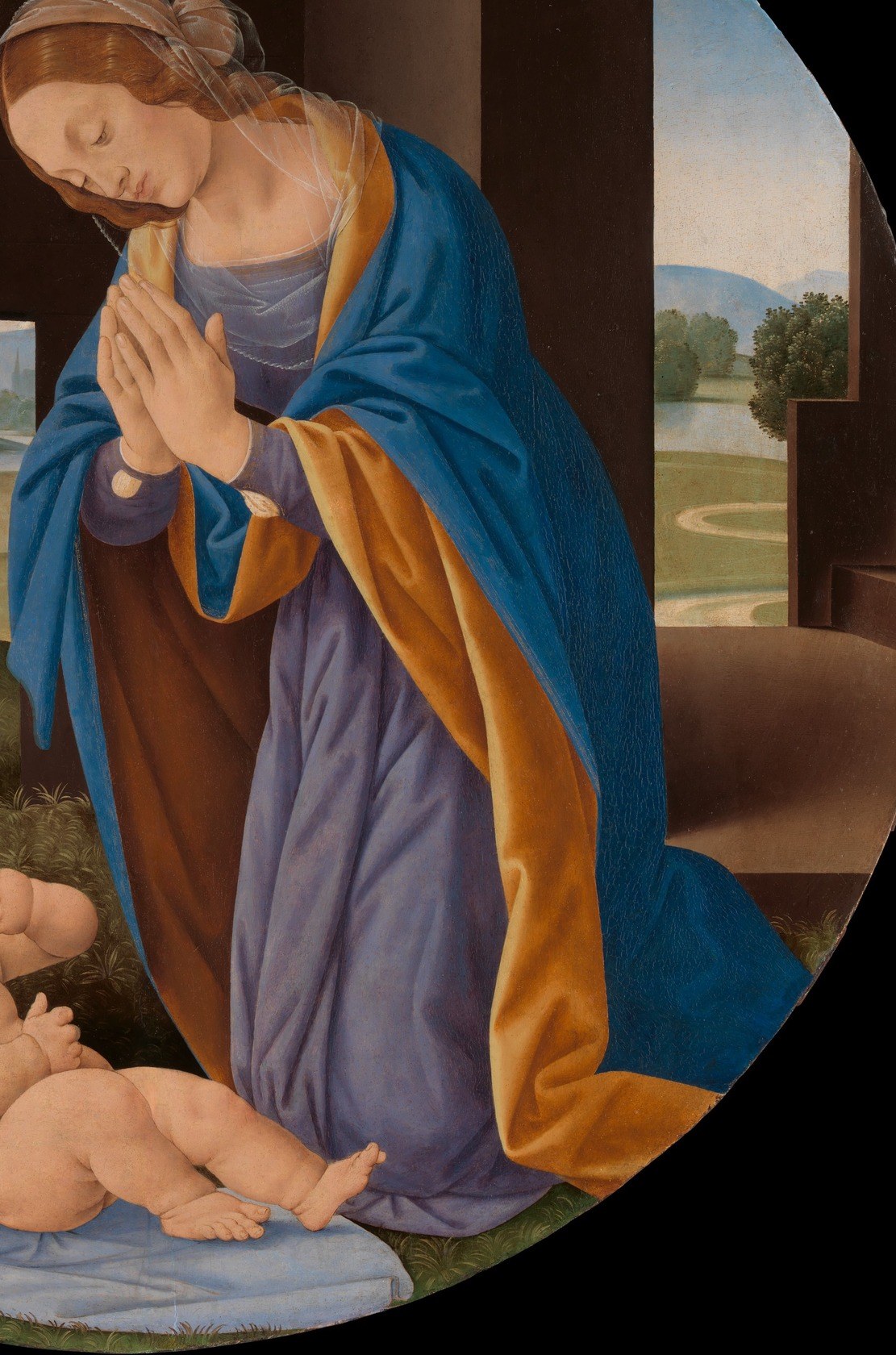
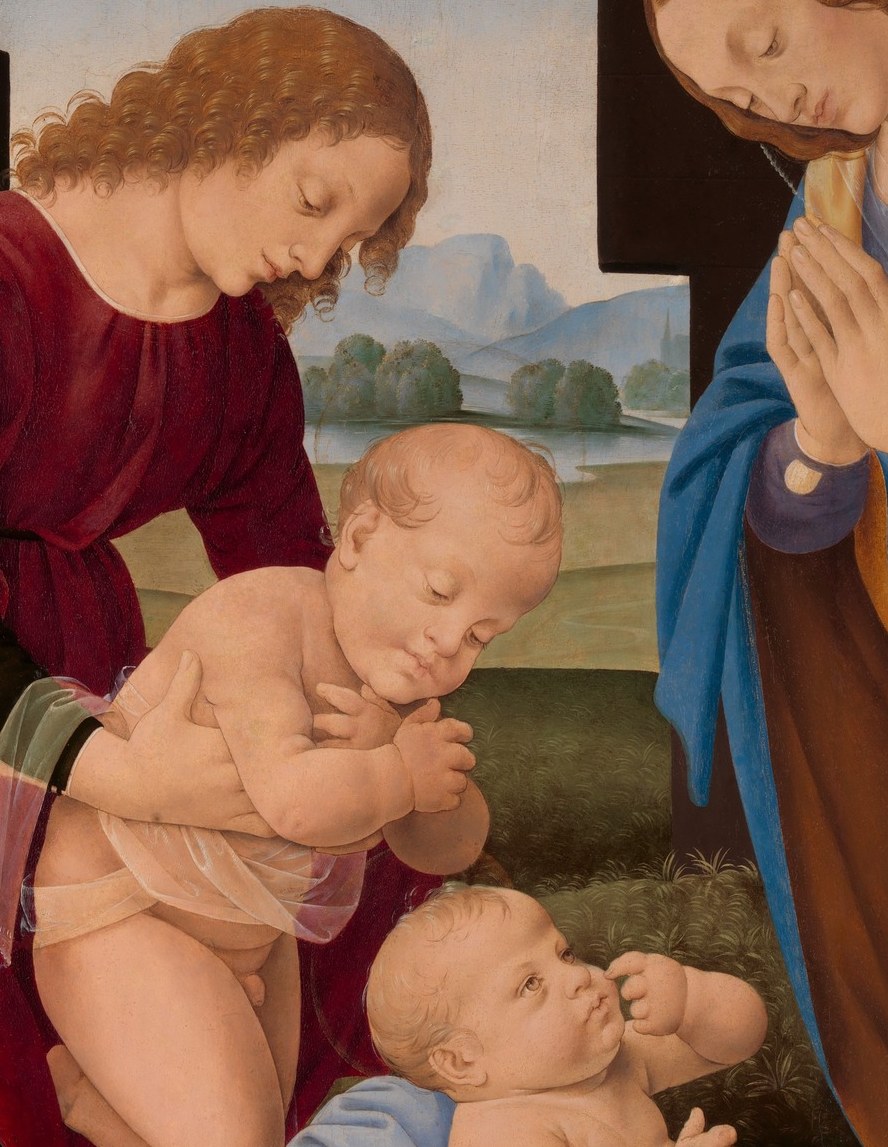
Madonna Adoring the Child with the Infant Saint John the Baptist and an Angel, painted by Lorenzo di Credi around 1490, is a Florentine tempera painting that doubles as a theological argument. Now in the National Gallery, London, it gathers four figures in a Tuscan landscape and quietly insists on a single idea: that the infant Christ is already the body offered at Mass.
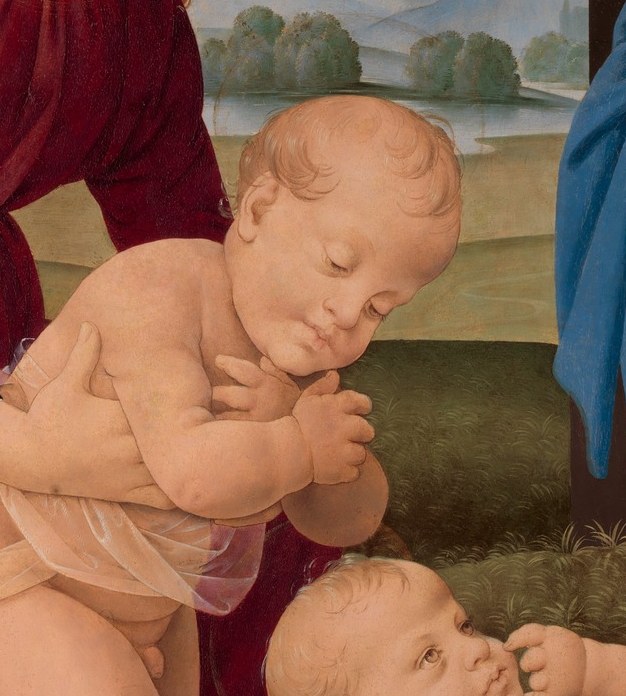
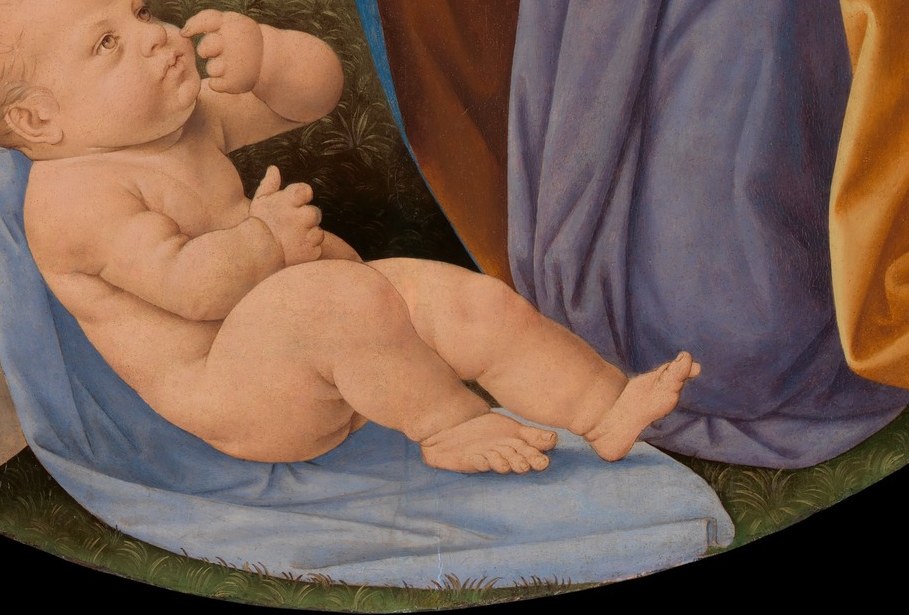
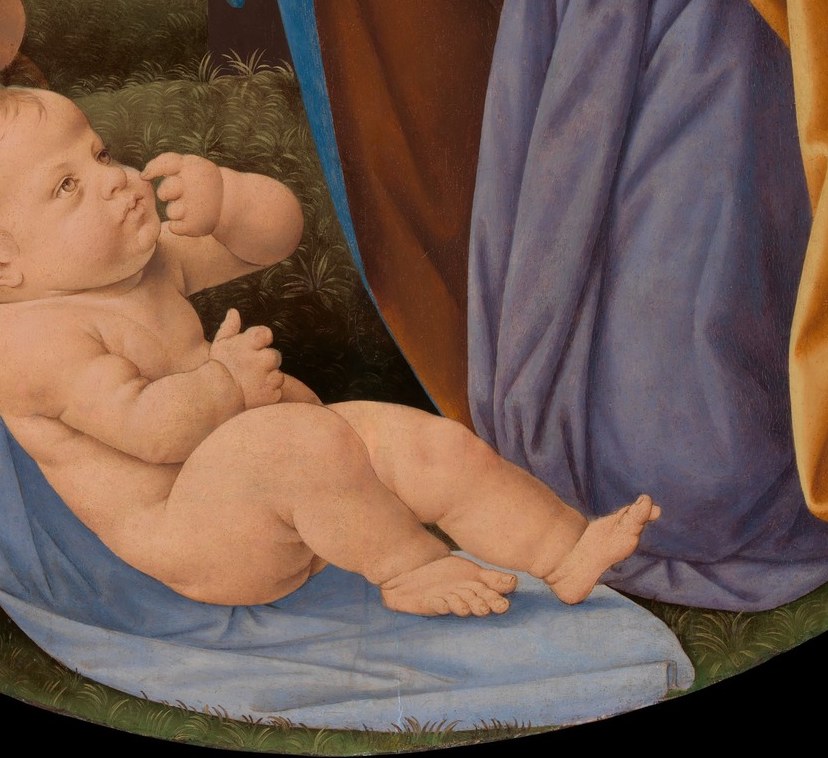
To see the argument, follow the colour. The Madonna's mantle is ultramarine, made from lapis lazuli imported at staggering cost from Afghanistan. Its expanse declares both her celestial status and the patron's resources. Below her hands, the white linen cradling the child is not merely bedding; in Credi's Florence, a white cloth laid under a body was the eucharistic altar cloth. The infant Saint John reaches toward Christ with an urgency that prefigures his adult mission, but he is identifiable only because of his red camelot sash. Without that crimson marker, the theological programme collapses; the sash is a decoder key hiding in plain sight.
Credi trained alongside the young Leonardo da Vinci in Andrea del Verrocchio's workshop and eventually inherited the studio. He never left Florence, and by the time this panel was painted, the atmospheric haze in the distant tree line already showed Leonardo's influence. Credi worked in tempera, using egg yolk as a binder, which gave him the precision for delicate passages like the Madonna's gilded halo. That halo is so fine it seems almost apologetic, balancing naturalism against devotional convention at the exact moment Florence was debating both.
Every object in this painting bears a job. Together they make a case that a mother adoring her child is also the Church adoring the sacrament. What does your eye go to first: the expensive blue, or the white cloth underneath?
Details
Transcript
She wears blue so deep it had to be bought with gold. Lapis lazuli, ground from stone that came from Afghanistan. It signals her queenship over heaven. And the patron's wealth. The baby in red reaches forward urgently. Without that crimson sash, he is just another infant. The cloth beneath Christ reads as an altar at Mass. Every object builds one argument: this child is the Eucharist.