Still Life with Peaches and Grapes by Pierre-Auguste Renoir
Pierre-Auguste Renoir's 'Still Life with Peaches and Grapes' (1891) reveals a painter in his fifties who had already helped invent Impressionism, now turning his radical eye to the quietest domestic objects. It hangs at The Metropolitan Museum of Art, a small but concentrated demonstration of everything he knew about light.
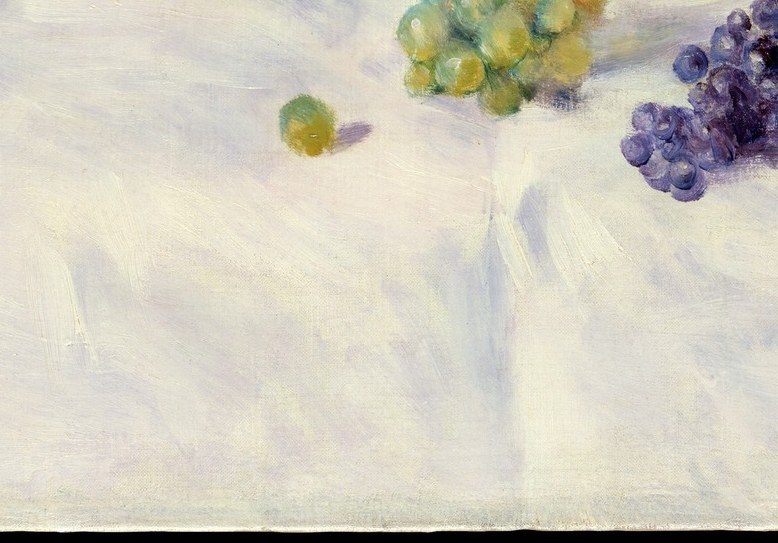
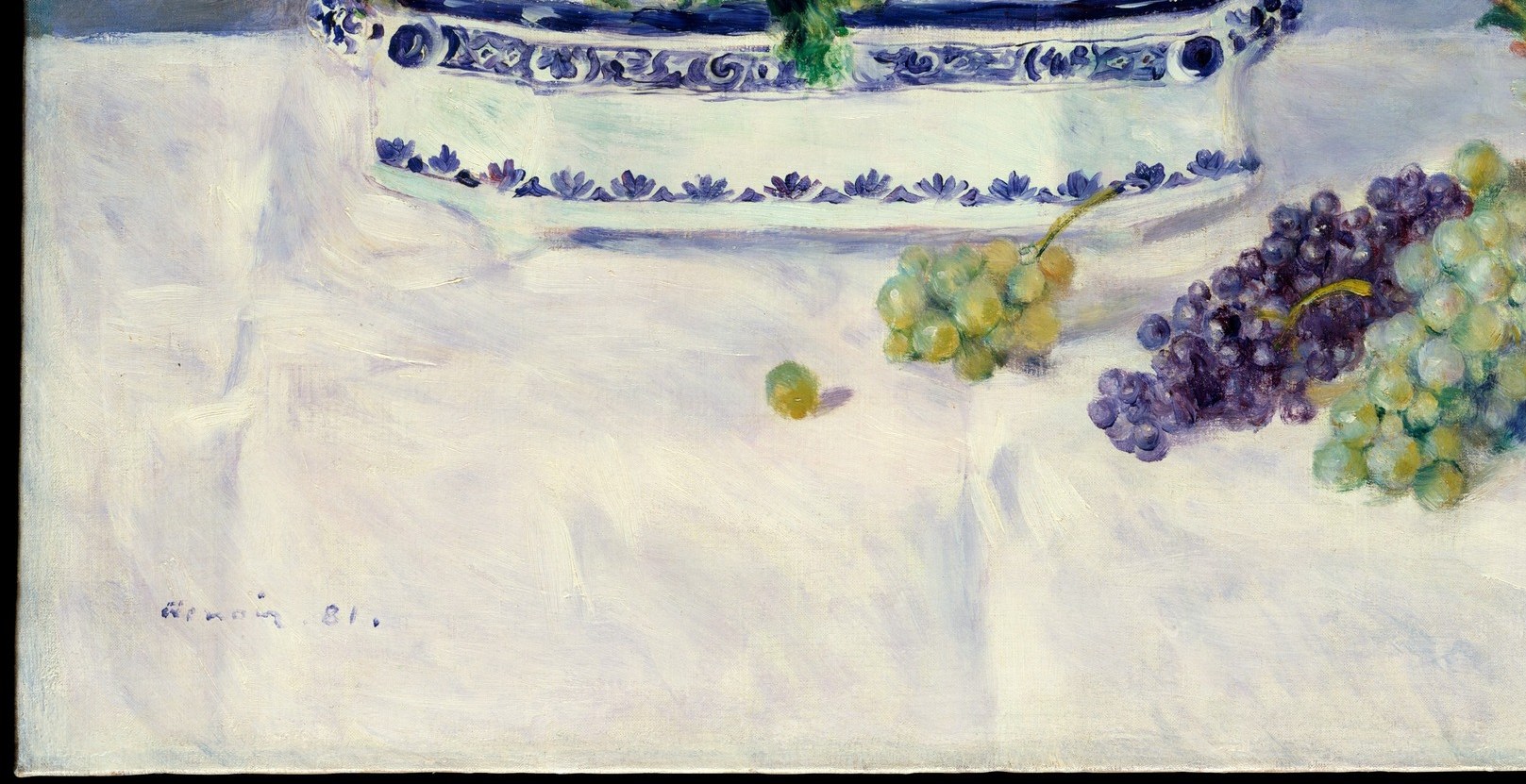
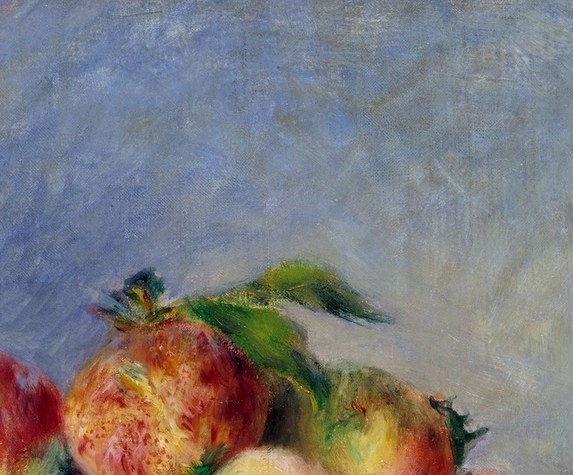
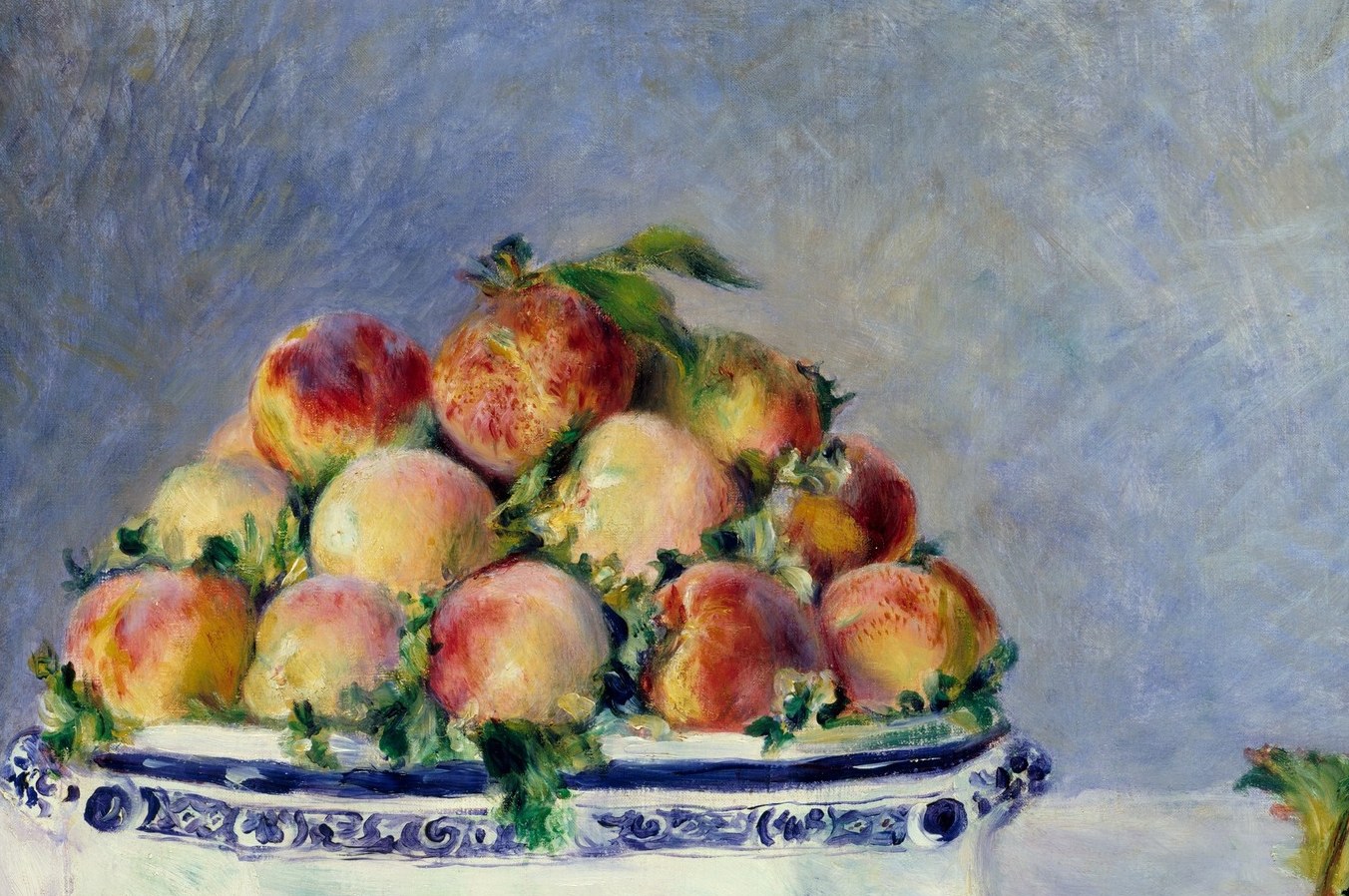
Find the topmost peach. Its blushing highlight is built from layered pinks and creams, coaxed into roundness by a warm shadow underneath. Renoir treats the fruit exactly as he treated skin in his portraits: a soft, breathing surface that absorbs light rather than merely reflecting it. Then drop your eye to the tablecloth. The creases aren't grey. They are violet and periwinkle blue.
This refusal of black or grey shadow was a core Impressionist principle: shadows are not the absence of light but a light of a different color. Renoir scatters loose grape leaves across the cloth to pull your eye from the deep violet grapes on one side to the pale green cluster on the other, testing complementary color harmony inside a space no bigger than a kitchen table. The blue-faience bowl, a luxury ceramic, acts as the cool anchor that makes all that warm peach glow even harder.
Renoir was sixty when he painted this. Arthritis would eventually twist his hands so badly he had to strap a brush to his wrist. Yet in this small canvas, painted with evident ease, there is no struggle. Just a man still falling for the problem of how light lands on a soft surface, no matter how many times he had solved it before.
Details
Transcript
A bowl of peaches. Pretty, but not a showstopper. Look closer. The white tablecloth is not white. Renoir builds the shadows from violet and blue. No grey, no black. This is the Impressionist shadow trick. Now look at the peach catching the light. Renoir paints fruit the way he paints skin: warm, soft, alive. Sixty years a painter. He never stopped chasing warmth.