A Hen with Peacocks and a Turkey by Melchior d' Hondecoeter
Melchior d'Hondecoeter's "A Hen with Peacocks and a Turkey," painted around 1680 and held by the Rijksmuseum, is more than just a beautiful animal scene. It's a composition rich with symbolic meaning, a common practice in Dutch Golden Age painting.
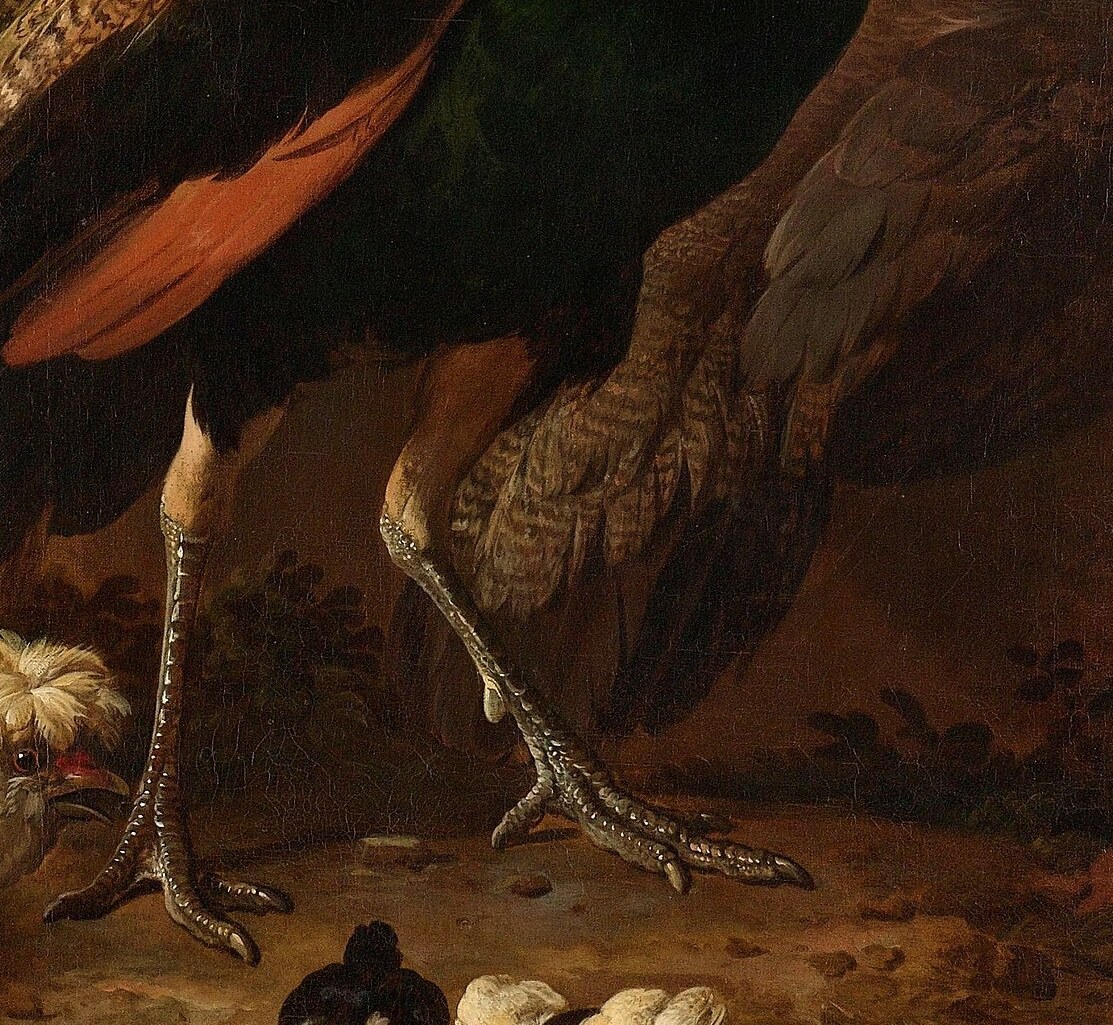
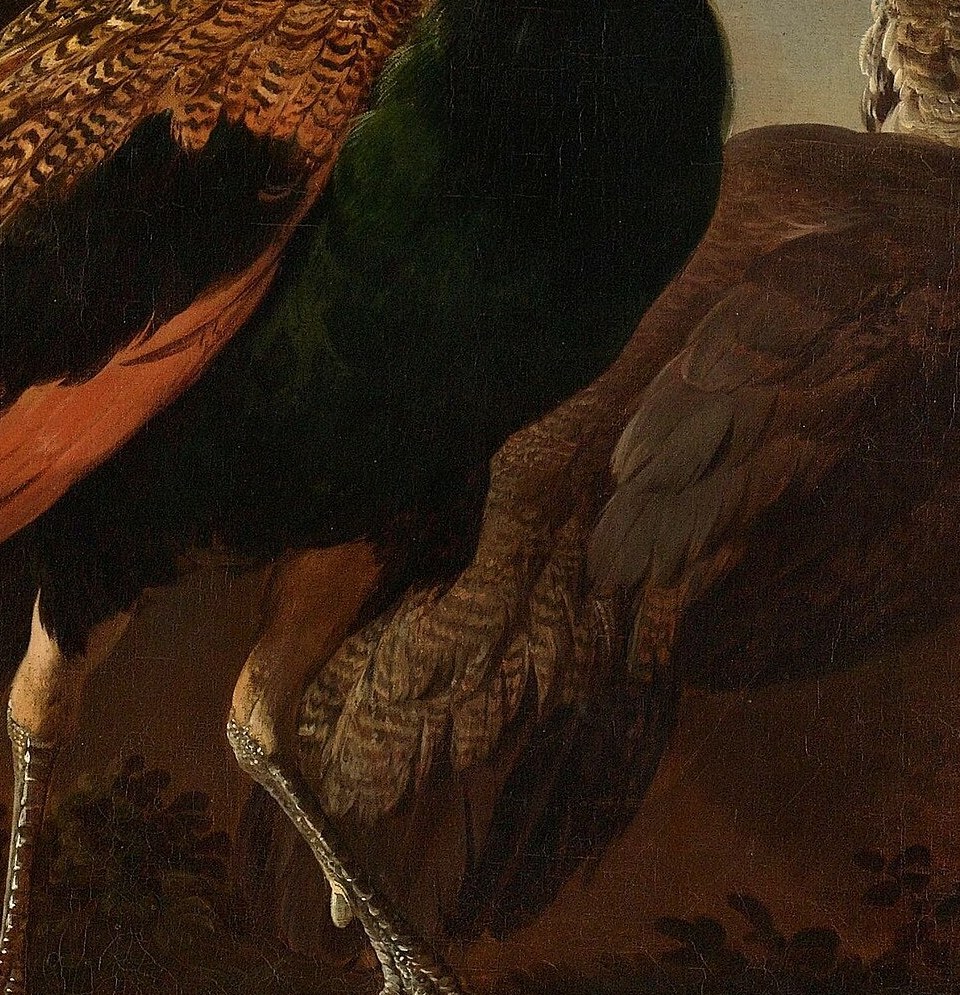
Observe the domestic hen, a classic symbol of motherhood and protection, diligently guarding her chicks. Nearby, the grand turkey, an exotic import to 17th-century Europe, represents abundance and festivity. But it's the regal peacocks, with their striking plumage, that truly catch the eye.
Peacocks carry a dual symbolism: they often represent pride and vanity, but also deeper themes of immortality and spiritual resurrection. Hondecoeter, a master 'animalier' painter, was renowned for these intricate bird compositions, often blending the familiar with the exotic in a park-like setting.
This painting invites us to consider the rich tapestry of life, from domestic tranquility to ostentatious display, all through the language of birds.
Details
Transcript
This 1680 painting shows a common hen and her chicks. Hens often symbolize motherhood, protection, and domestic life. But these aren't the only birds here. Look at the turkey. Turkeys were exotic in Europe, symbolizing abundance and celebration. Now, the peacocks. They demand attention with their plumage. Peacocks symbolize pride and vanity, but also immortality and resurrection. The artist, Melchior d'Hondecoeter, specialized in these bird dramas.