The End of the Hunt by American 19th Century
In "The End of the Hunt," painted around 1800 by an anonymous 19th-century American artist, the traditional hunting scene takes on a more grounded and less idealized perspective. Instead of focusing solely on the triumph of the chase, the painting highlights the physical exertion and weariness of both animals and humans.
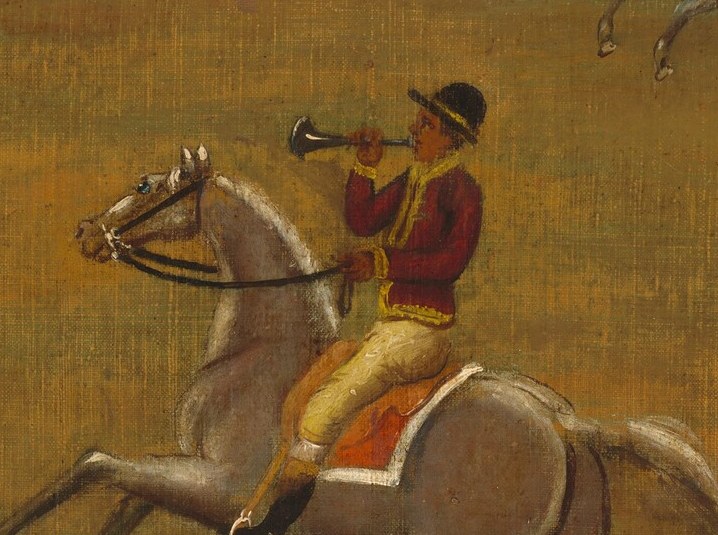
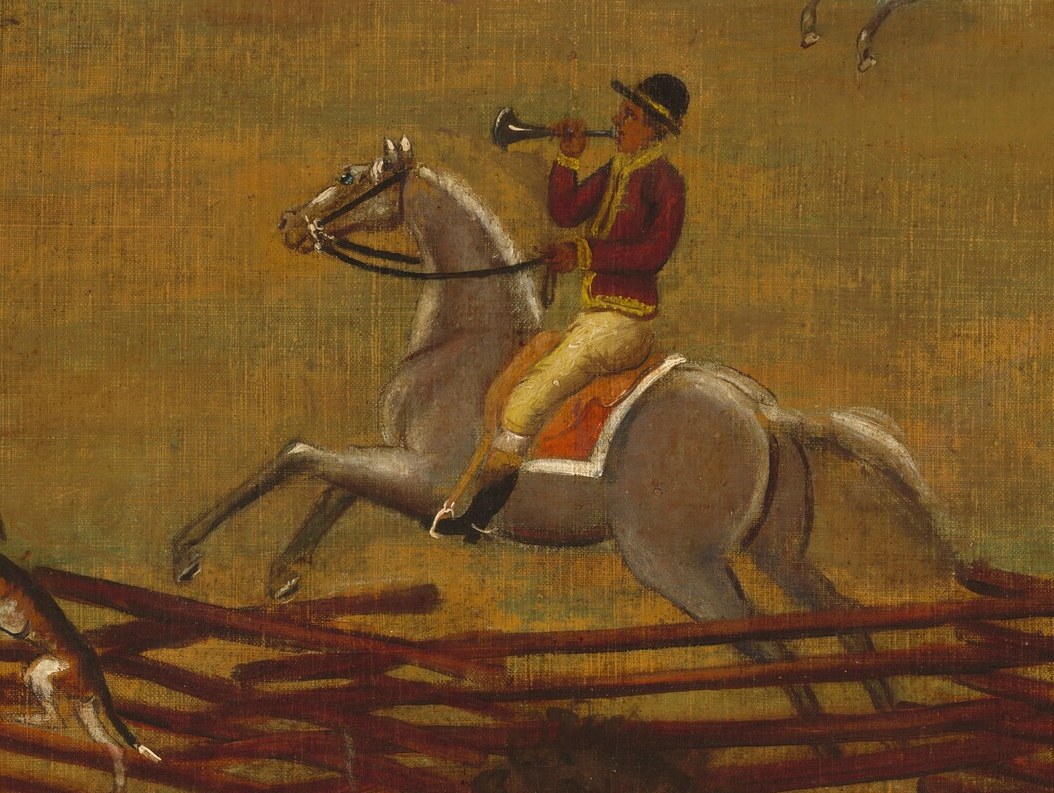
Observe the exhausted horses and the scattered pack of dogs making their way back. The lead rider on the grey horse signals with his bugle, but the strain is evident in his mount's wide eyes. Most strikingly, a figure in a green jacket has fallen to the ground in the foreground, a poignant detail that underscores the real dangers and fatigue of the hunt.
Hunting scenes were a popular genre, often commissioned to depict aristocratic leisure. However, this work deviates by emphasizing the labor and effort involved, offering a realistic observation of rural life and its demands. The artist's use of light and shadow, reminiscent of chiaroscuro, accentuates the musculature of the horses, adding to the naturalistic tone.
This painting invites us to consider the often-unseen struggles behind such traditional activities. What does this shift in focus reveal about the artist's view of the natural world and human interaction with it?
Details

Transcript
This hunt is ending, but the action is not over. Look closely at the lead rider, raising his bugle. His horse is weary, its eyes wide from exertion. But in the foreground, a figure has fallen to the ground. The painting captures the physical toll of the chase. It shows a grounded, less idealized view of the hunt.