Landscape Album in Various Styles: Scenery of Mt. Changbai after Huang Gongwang by Zha Shibiao
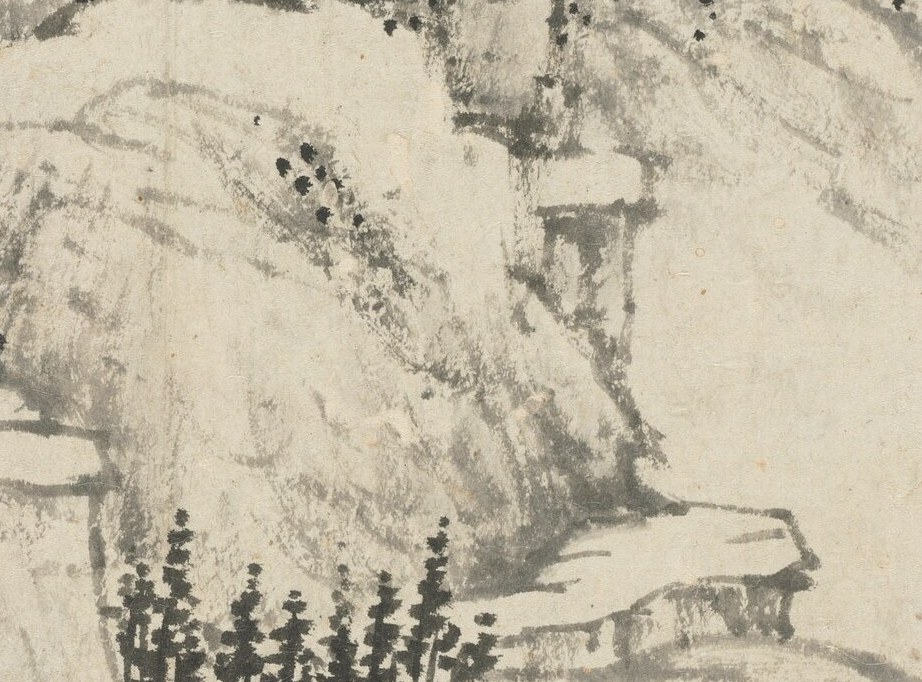
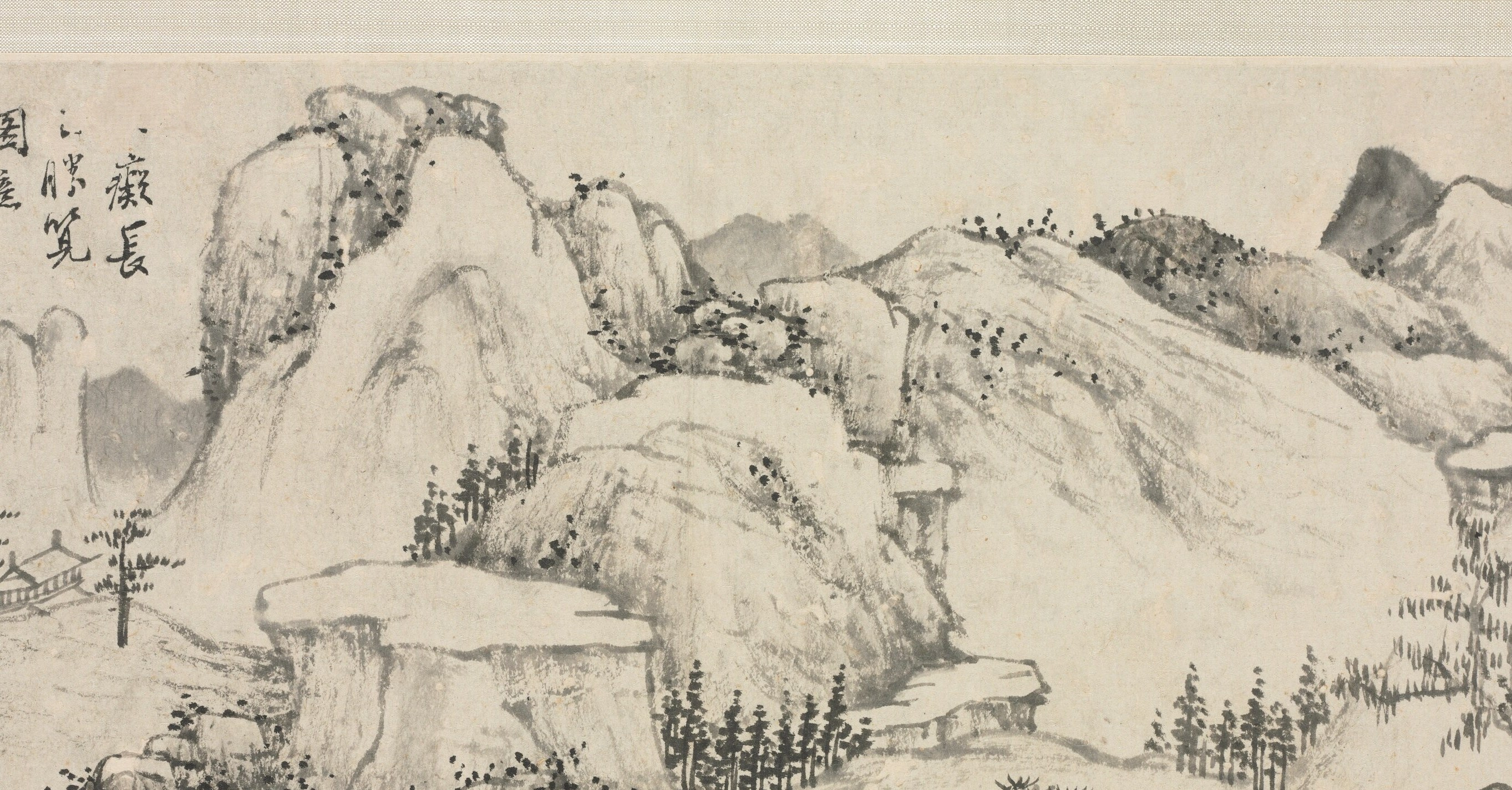
This is *Scenery of Mt. Changbai after Huang Gongwang*, a 1692 album leaf by the Chinese painter Zha Shibiao, now at The Cleveland Museum of Art. The image is gentle, soft gray washes, a winding stream, a hidden pavilion. But the object itself survived a real art crime.
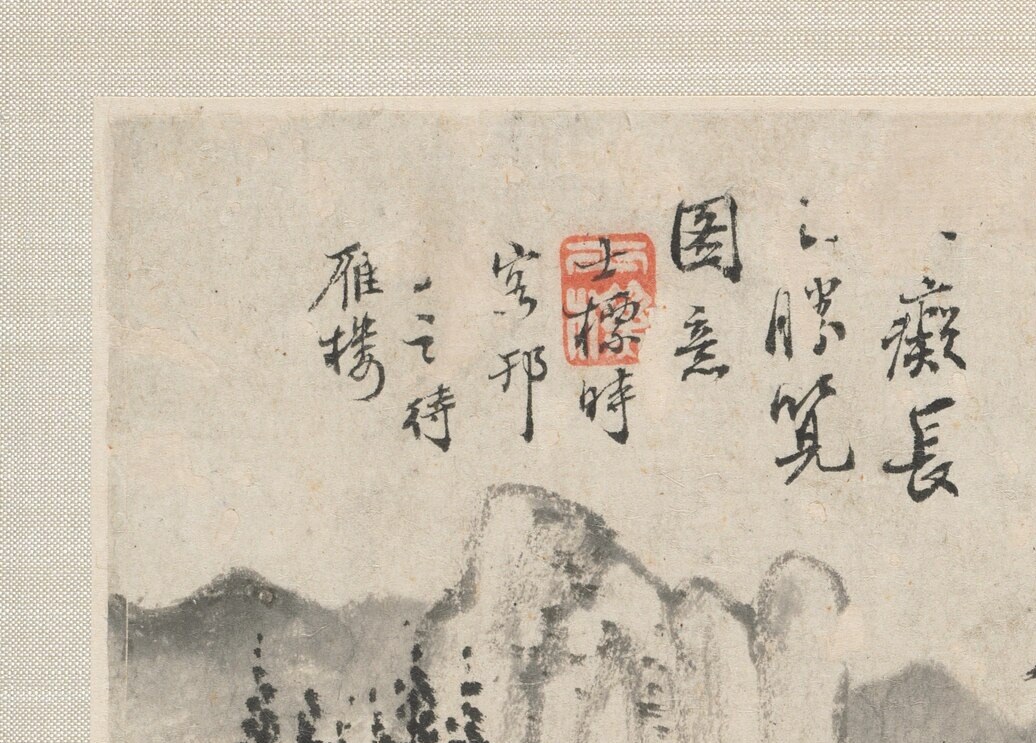
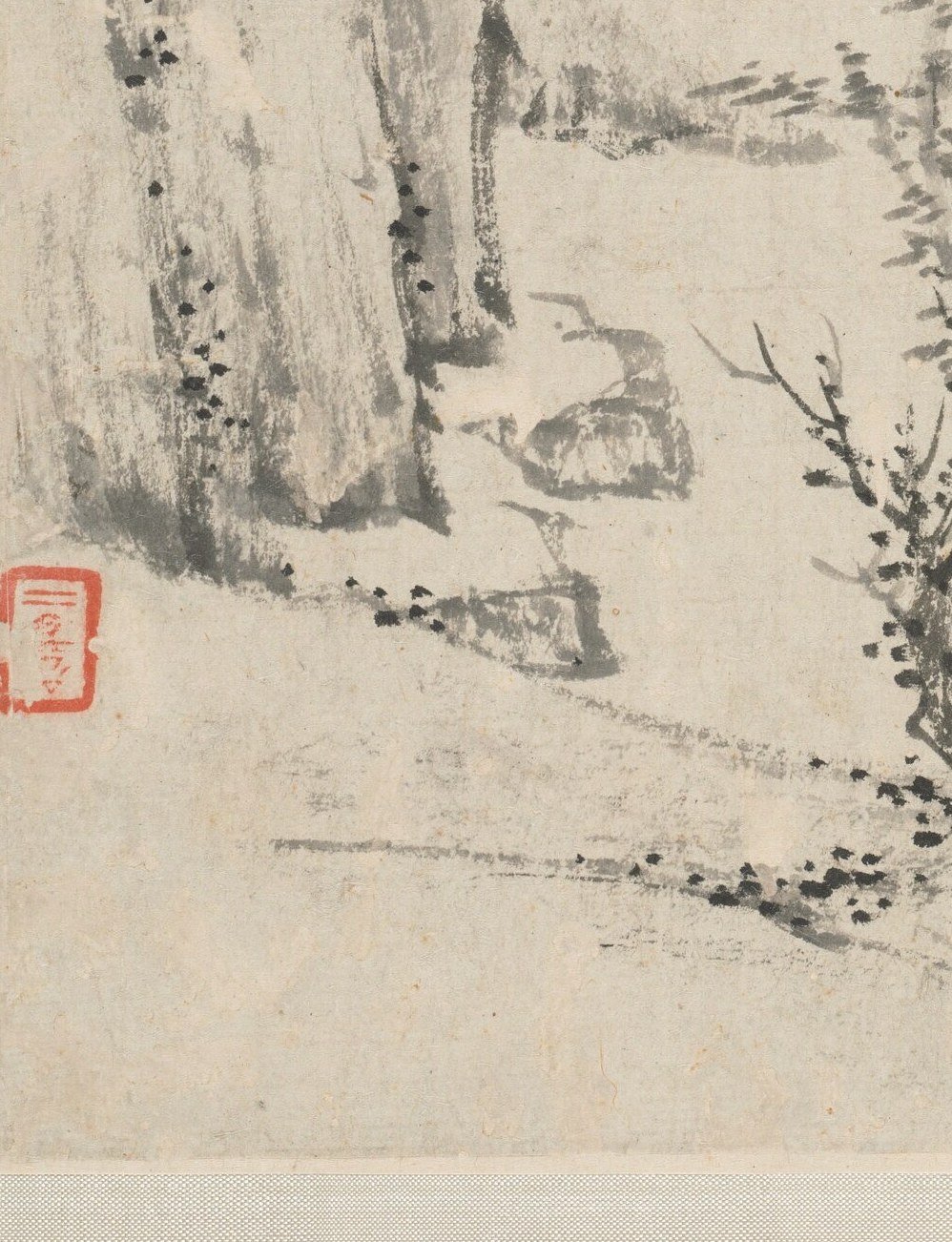
Zha Shibiao painted in the manner of Huang Gongwang, a revered master of the Yuan dynasty. The inscription in the upper left explicitly declares the homage. Look at the bare trees in the foreground: every wiry branch terminates in a sharp 'crab-claw' stroke, a signature move borrowed from old Northern Song painting to show off brush control. Across the stream, a small wooden fence and a second rooftop peek from the margins; the mountain is not empty wilderness but an inhabited retreat.
The leaf was originally part of a larger album in the Qing imperial collection. In 1922, the boy emperor Puyi, still living in the Forbidden City, began smuggling priceless works out under the guise of gifts to his brother. A palace eunuch later confirmed the albums were taken. Enterprising dealers dismantled them and sold individual leaves on the open market. This painting was literally cut from its binding and scattered from the rest of the set, a quiet landscape born from an act of imperial-scale looting.
So when you look at the pale, unbroken calm of that mountain, remember what the margins don't show: the knife edge.
Details
Transcript
This painting began as a page in an imperial album. A winding stream pulls the eye toward a hidden pavilion. The inscription names Huang Gongwang, a master who died 300 years earlier. Tucked behind the cliff, a shelter for a scholar-hermit. Every bare branch ends in the precise 'crab-claw' stroke of an old master. In 1922, the last emperor smuggled it out of the Forbidden City. A dealer neatly cut out this leaf and sold it alone.