A January Evening in the Woods of The Hague by Louis Apol
Louis Apol's "A January Evening in the Woods of The Hague," painted in 1875, is a masterclass in rendering winter's quiet beauty. This oil on canvas, held at the Rijksmuseum, captures the subtle interplay of light and texture in a snow-covered forest.
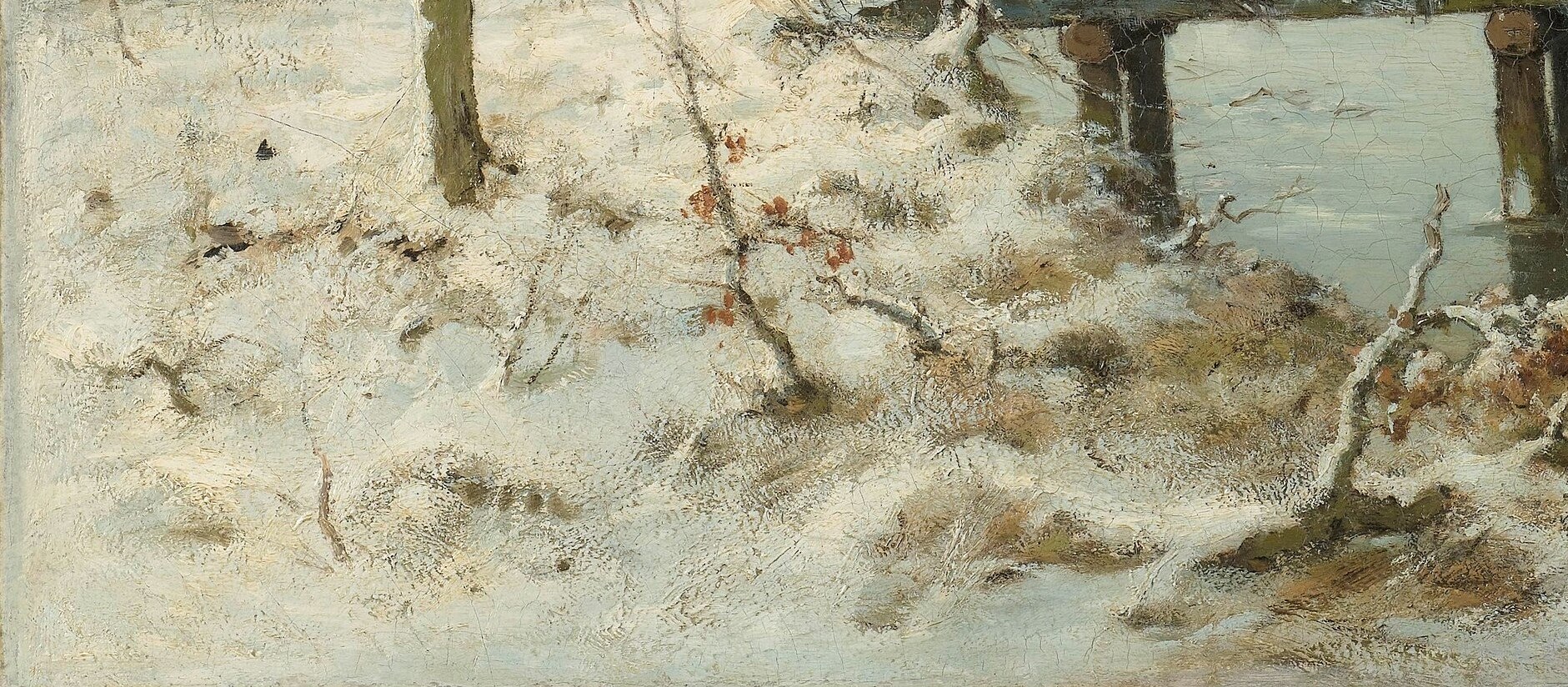
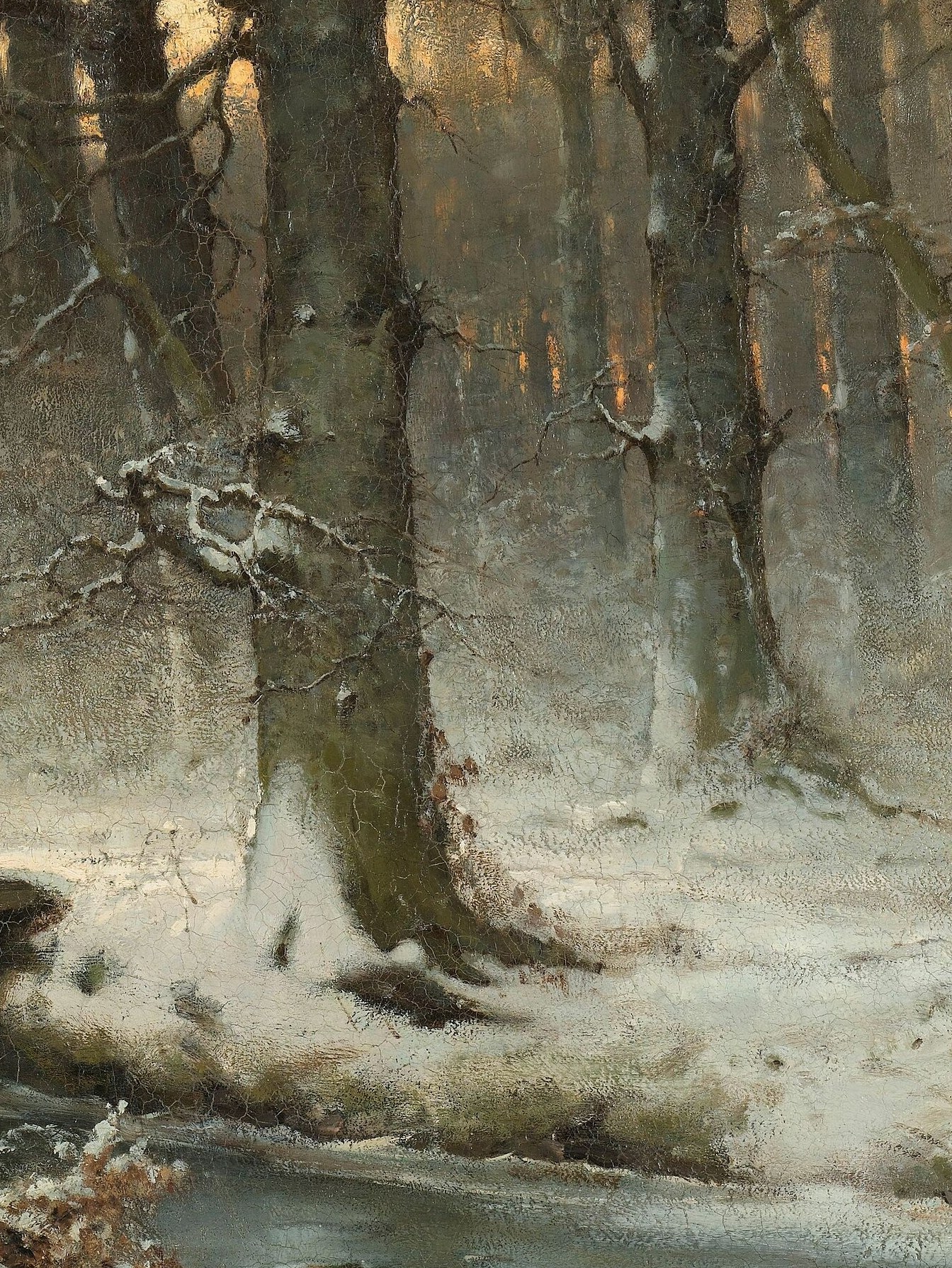
Look closely at how Apol built the scene: the foreground snowdrifts are rich with texture, while the intricate bare branches seem to hold real patches of snow. The rough bark of the tree trunks feels almost tactile under the brush.
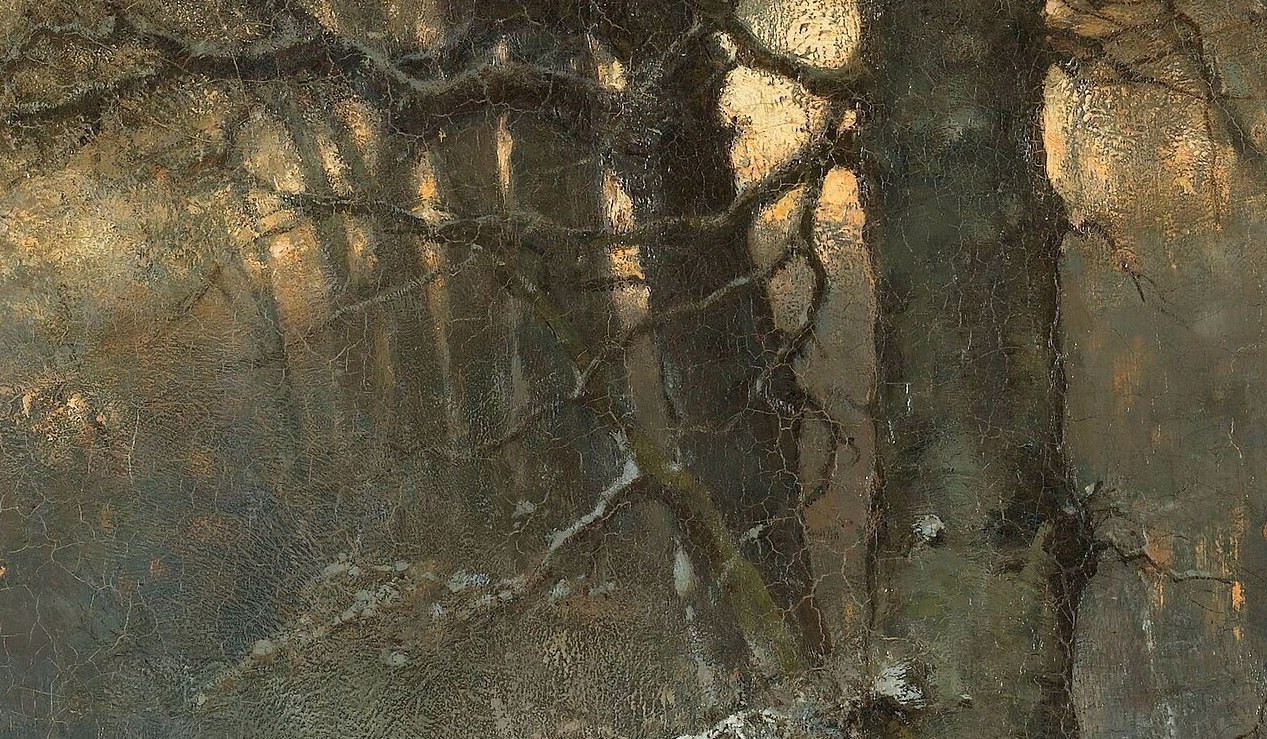
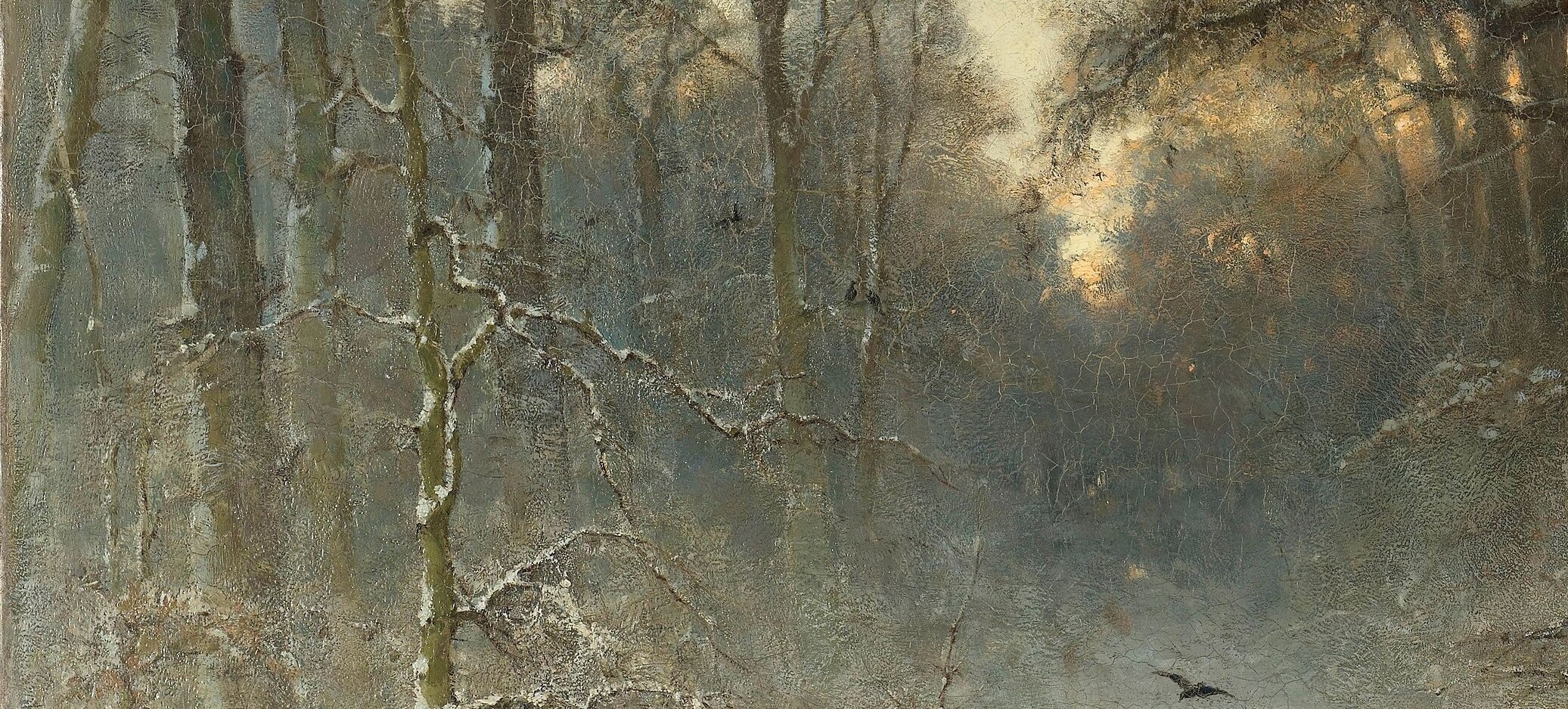
Apol, a prominent figure of the Hague School, specialized in winter landscapes, often depicting the woods near his home with minimal human presence. His devotion to observing nature directly allowed him to convincingly portray the atmospheric effects of a cold, clear evening, making the warm glow of the setting sun feel fleeting yet real. He used thin washes for the distant, hazy trees, creating a sense of depth and vastness.
What details in this winter scene draw your eye the most?
Details
Transcript
This painter was obsessed with winter, and how light worked in it. He layered paint to create realistic snowdrifts and bare branches. Even the texture of the tree bark is palpable, painted in detail. Notice how the setting sun glows, but the air still feels cold. He built the soft, hazy distance with thin, atmospheric washes. A Dutch master, he spent his life capturing these quiet moments.