Eugène Murer (Hyacinthe-Eugène Meunier, 1841–1906) by Pierre-Auguste Renoir
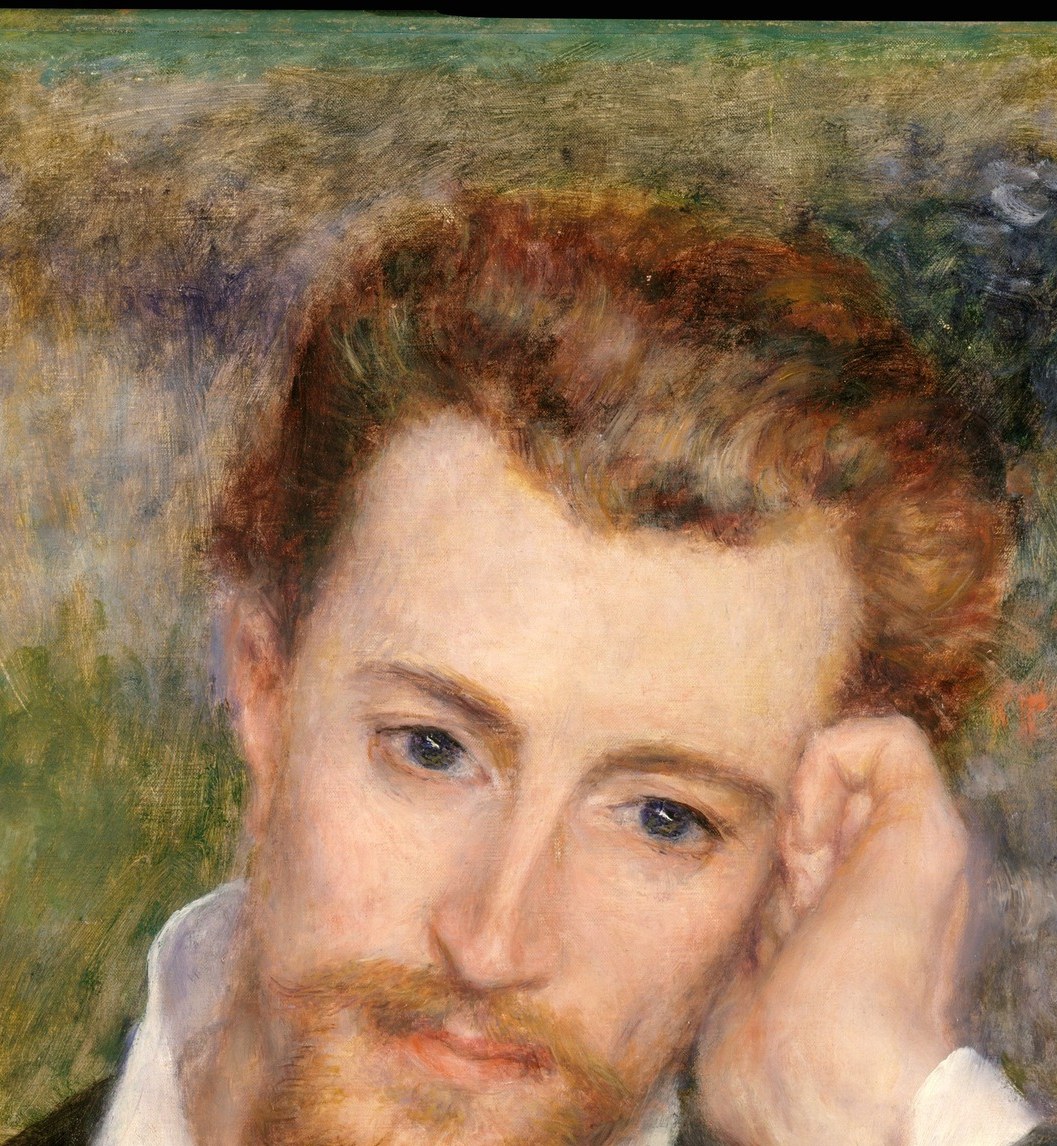
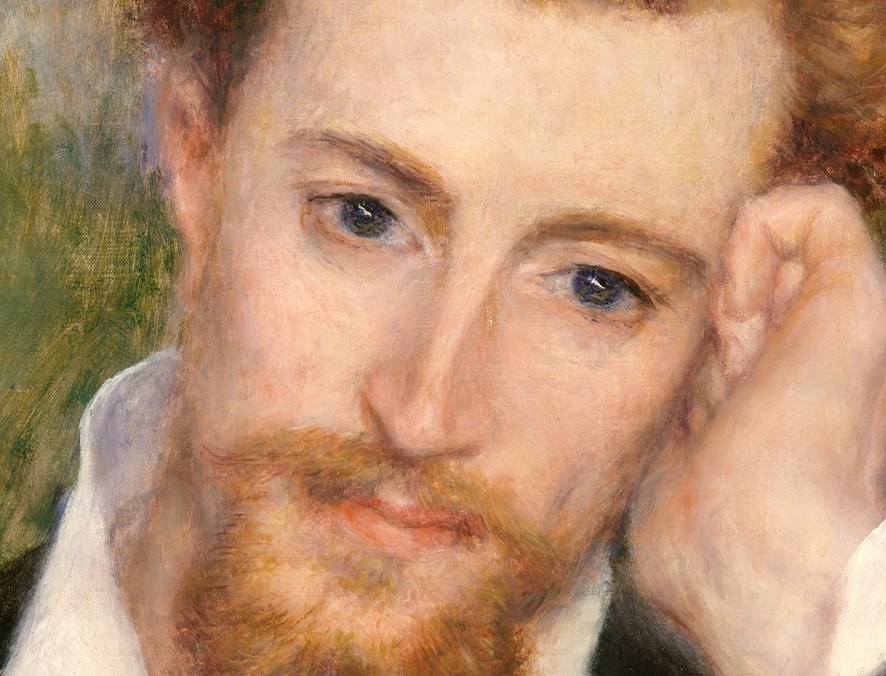
Renoir's 1877 portrait of Eugène Murer hangs in the Metropolitan Museum of Art. It looks like a straightforward bourgeois portrait: dark suit, pocket square, thoughtful pose. But the sitter was a pastry chef who baked in Montmartre.
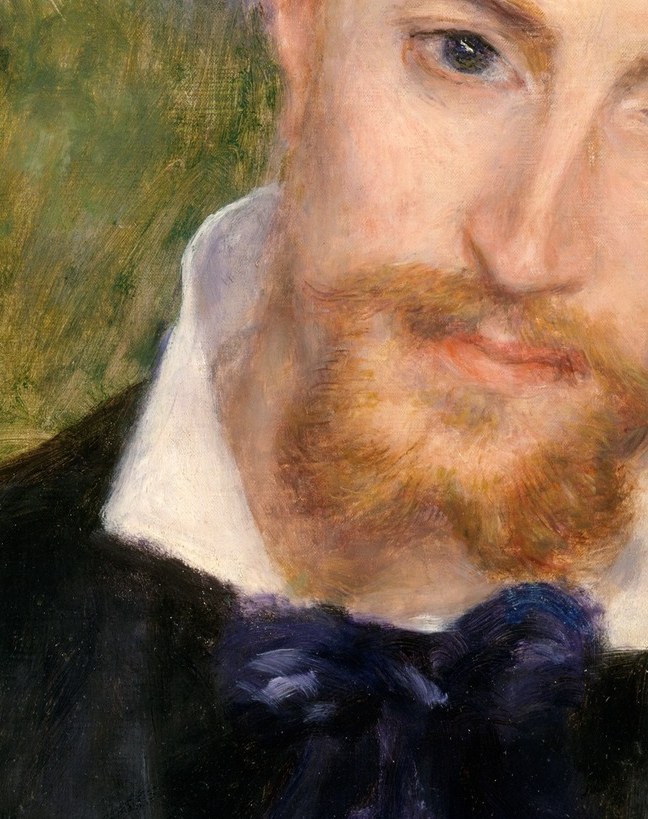
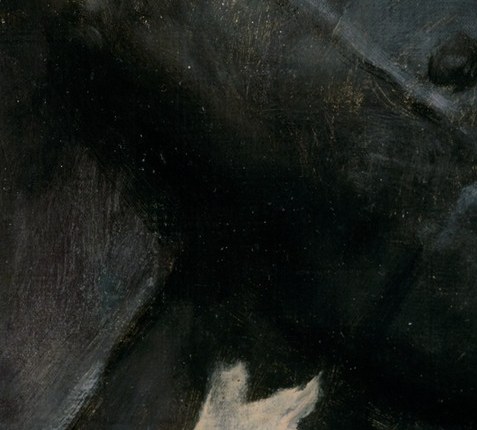
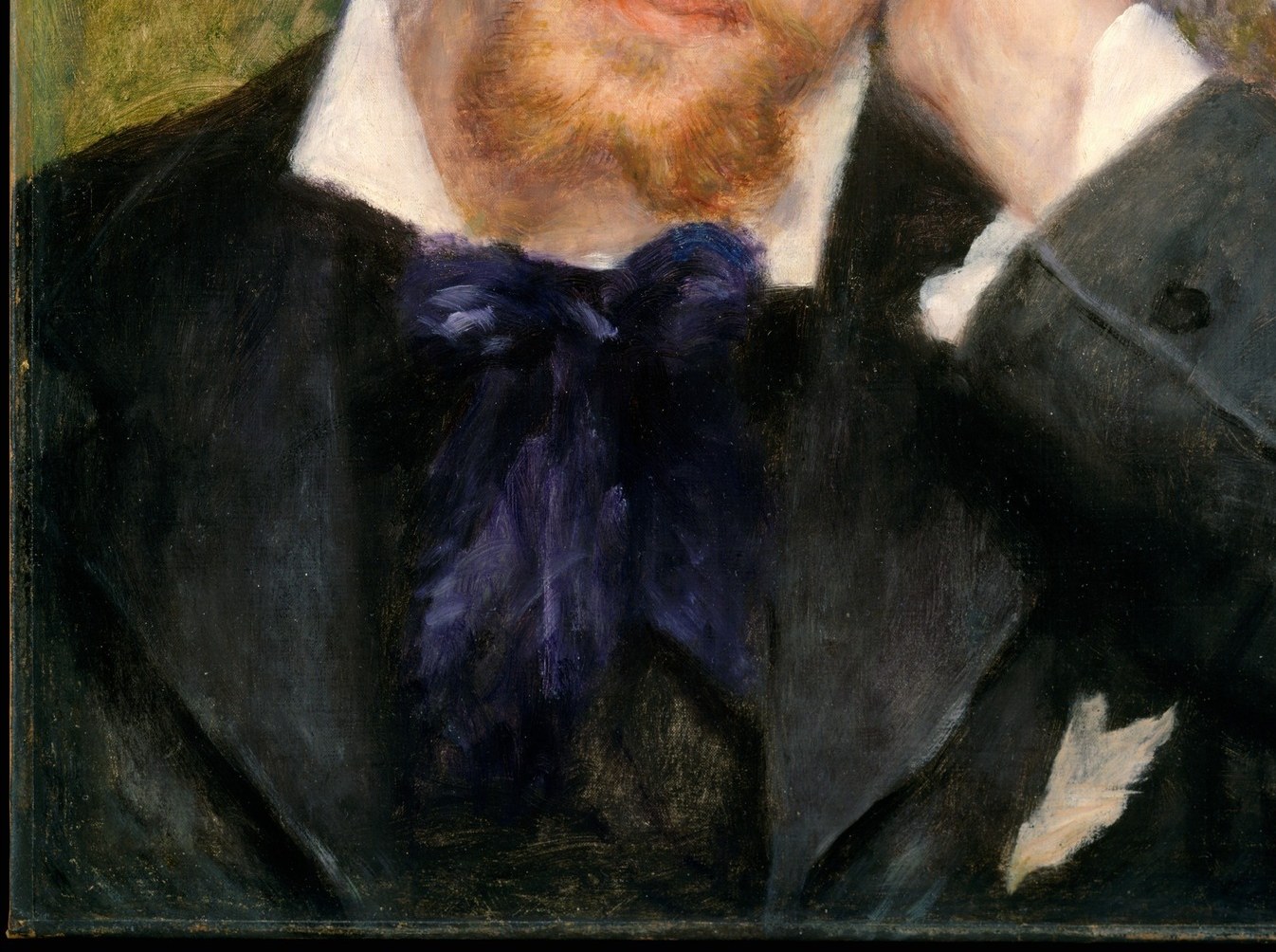
Look at the props. Murer's hand cradles his jaw in the classic pose of a man of intellect and leisure. The crisp white pocket square and the cobalt-blue cravat are small, bright signals of status. Renoir painted the jacket with loose, Impressionist strokes, but those two details are sharp. They are doing real work.
Murer was one of the most important early collectors of the Impressionists, but his support came cheap. He paid Renoir around 100 francs per portrait and commissioned four of his family in total. For context, a good meal at a fine Paris restaurant could cost a few francs. Murer bought paintings for the price of dinner parties.
The soft, unfinished edges of the background, the way Murer's left shoulder almost dissolves into ochre and green, are Renoir hallmarks from this period. But the face and the coded props remain precise. The portrait is not just a likeness. It is a quiet contract between two men, one trading pastry profits for the other's genius.
Details
Transcript
He looks like a banker or a minister. But Eugène Murer was a pastry chef. The hand on the cheek meant intellect. The white pocket square meant status. He paid Renoir 100 francs for this portrait. And bought three more of his family. The code adds up: this is a receipt.