Two Women at a Window by Murillo, Bartolomé Esteban

Bartolomé Esteban Murillo painted Two Women at a Window in Seville around 1655/1660, when he was the city’s leading painter. It now hangs in the National Gallery of Art.

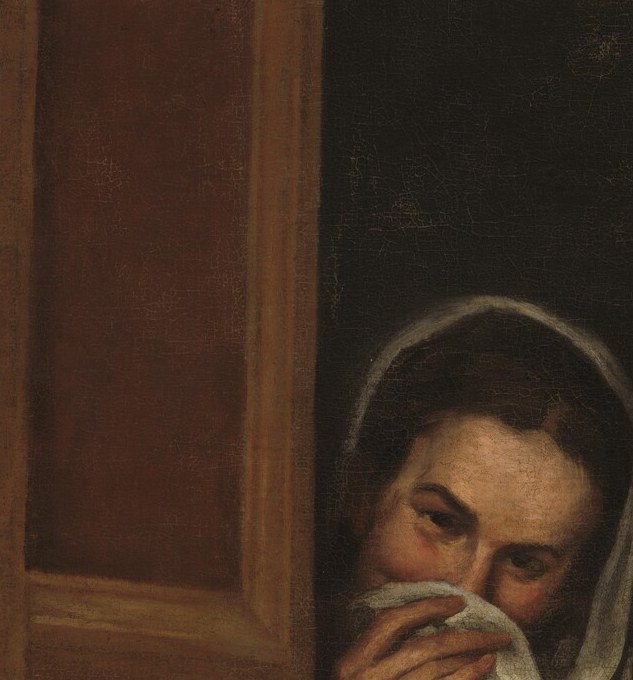
The younger woman grins directly at the viewer. An older companion stifles a laugh behind the shutter. The red bow sits at dead center. Each is a visual clue in a painting that borrows its trompe l’oeil trickery from Dutch models.

Originally titled A Girl and Her Duenna, the painting belonged to the Duque de Almodóvar del Rio, then passed to William A’Court in 1823 and later through the Widener Collection before entering the National Gallery in 1942.

The Spanish proverb la mujer ventanera, uva de la calle warned that a window woman was a street grape, someone on display. Was Murillo painting a chaperone and her charge, or a coded scene his Seville audience would have read differently?

#arthistory #murillo #spanishbaroque

Details
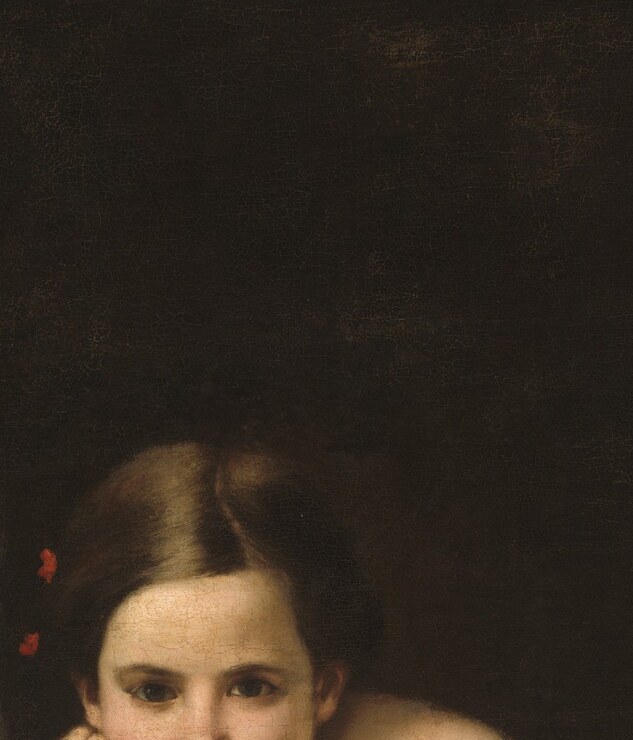
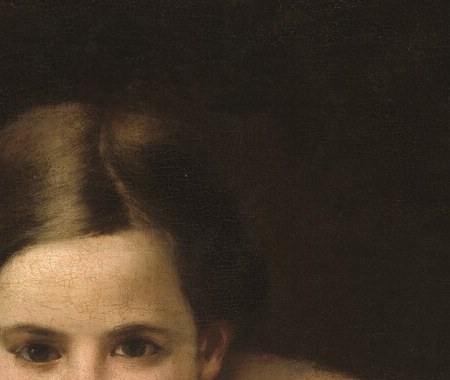
Direct eye contact and an openly amused smile break the fourth wall , unusually candid for 17th-century Spanish painting and the scene's primary emotional hook.
The gaze is the painting's central provocation: she knows you are looking and invites it, collapsing the distance between picture and spectator.
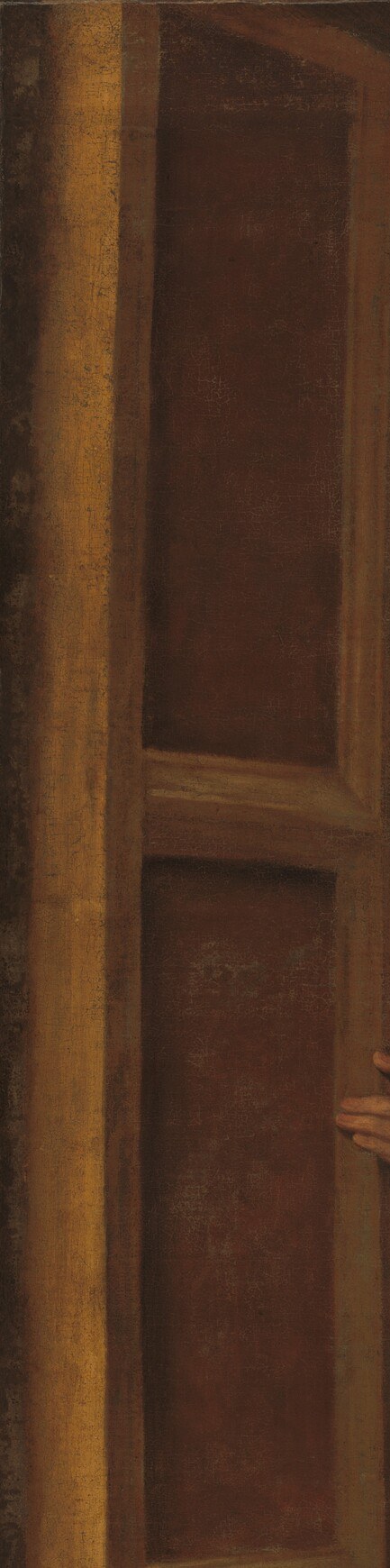
The shutter divides the scene into revelation and concealment: the younger woman is fully in the light; the older woman is literally halved by it.
Teeth parted, expression candid , not the demure closed-mouth ideal of period portraiture; the smile announces complicity and makes the viewer feel caught looking.
Compressed between shutter and darkness, she watches while hiding , the tension between seeing and being seen plays out literally in her position in the frame.
Transcript

From darkness, two faces emerge lit like a stage. The younger woman grins right back at you. Her companion's hand grips the shutter, eager to join. This is Dutch trompe l'oeil, painted by a Spaniard. And the red bow. Right at center. Deliberate. The Spanish had a name for this scene: mujer ventanera.