Artwork
Two Women at a Window
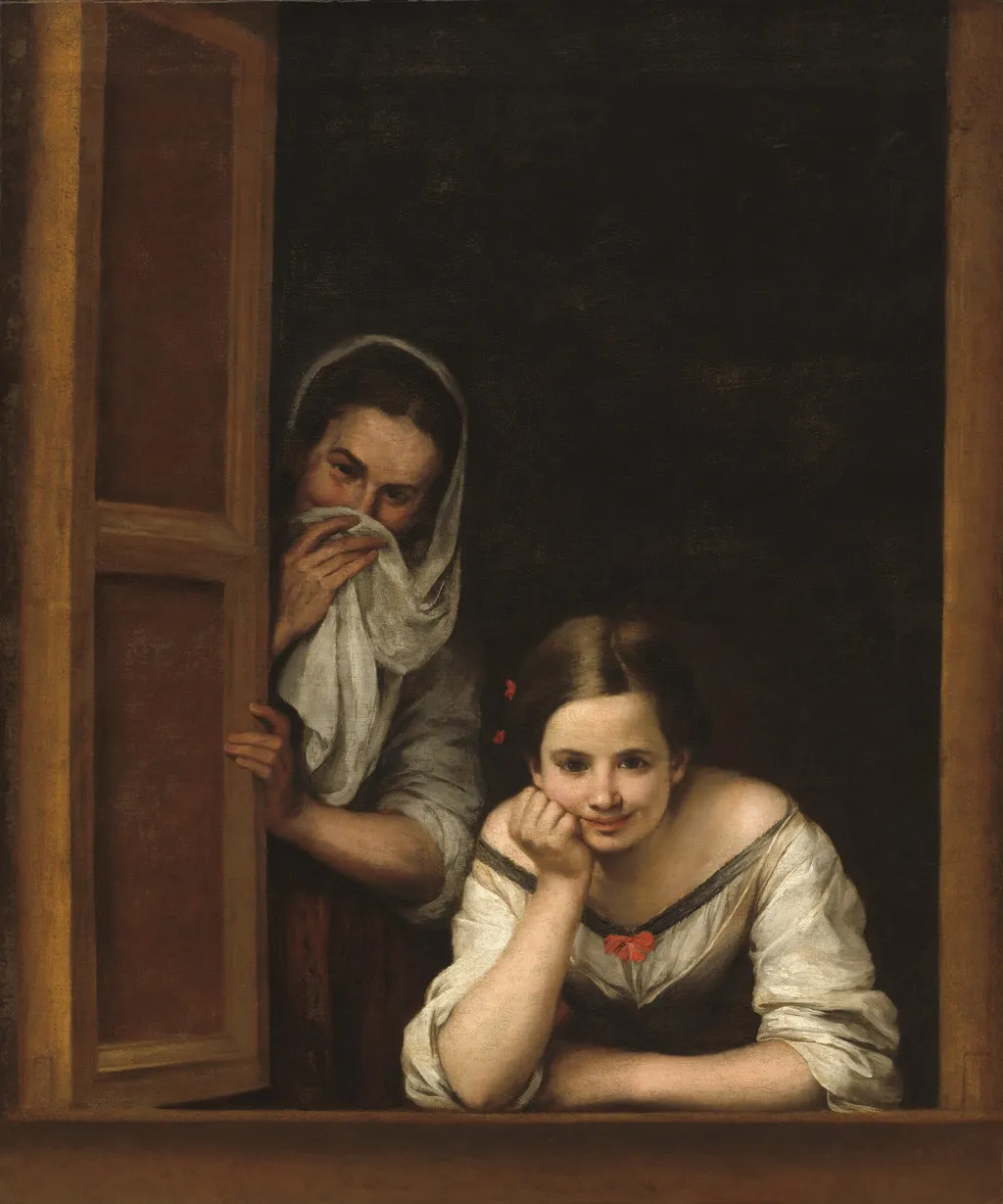
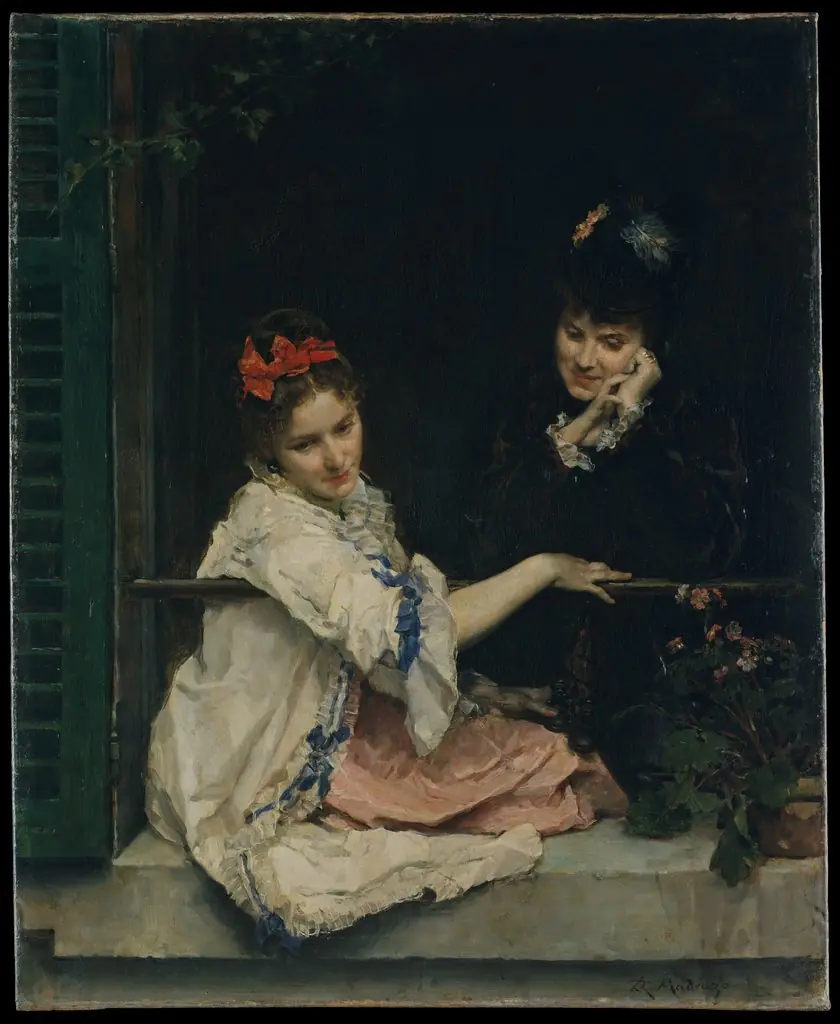
Two Women at a Window is an oil painting by the Baroque artist Bartolomé Esteban Murillo. It dates from 1658 and is held in the collection of the National Gallery of Art.
About this work
A young woman leans on a windowsill in Seville, grinning at the viewer while an older companion hides her laugh behind a wooden shutter and shawl. Bartolomé Esteban Murillo painted the life-size pair around 1655/1660, framed in an illusionistic window. Once known as A Girl and Her Duenna, it hangs in the National Gallery of Art's Widener Collection.
Subject & Meaning
The women gaze outward, apparently reacting to a person or event off-canvas, lending the image a narrative ambiguity that has fueled enduring critical debate.
The painting depicts two women at a window: a young woman smiling and an older woman who partially hides her mouth with a shawl. Interpretations vary, but scholars since the 19th century have often read the scene as a brothel encounter, with the younger figure as a prostitute and the older as her madam (alcahueta). This reading is supported by the historical context of Seville, where many impoverished women from Galicia migrated to work as prostitutes, a detail reflected in the painting's Spanish title "Mujeres en la ventana" and its Italian designation "Galiziane alla finestra" (Galician women at the window).
The work is considered one of Murillo’s most enigmatic genre scenes, capturing a moment of everyday life with an anecdotal, sympathetic tone. The women gaze outward, apparently reacting to a person or event off-canvas, lending the image a narrative ambiguity that has fueled enduring critical debate.
Technique & Style
Executed in oil on canvas, the painting measures approximately 125 × 104 cm. Murillo demonstrates a masterful handling of color and light, employing a strong chiaroscuro: the two women are illuminated by natural sunlight flooding the street, sharply contrasting with the dark, shadowy interior. This technique creates an immediate, intimate genre scene, typical of Murillo's informal depictions of everyday life. The composition, with the figures framed by the window and shutter, focuses attention on their expressions and gestures, rendered with a soft, naturalistic touch that animates the work.
History & Provenance
The painting's earliest recorded owner was Pedro Francisco Luján y Góngora, Duque de Almodóvar del Río (1728–1794), as documented by an undated print after the work. After his death, the painting passed to his heirs, who sold it in 1823 to William A'Court (later 1st Baron Heytesbury). It remained with the Heytesbury family for three generations until 1894, when the 3rd Baron sold it to the London dealer Stephen T. Gooden.
Later that year, on 3 December 1894, it was purchased by Peter A. B. Widener of Elkins Park, Pennsylvania. The painting was bequeathed to the National Gallery of Art in Washington, D.C., in 1915 through the estate of Peter A. B. Widener via a gift by power of appointment from his son Joseph E. Widener. The date of execution is uncertain; sources vary from 1657 to 1665–1675, with the National Gallery of Art listing a range of 1665–1675.
Context
Since the 19th century, the painting has been the subject of scholarly debate, often interpreted as a brothel scene, with the younger woman possibly a prostitute and the older woman a go-between. This reading is reinforced by the women's Galician origin, a region then associated with poverty and sex work. Art historians such as Jonathan Brown and Enrique Valdivieso have examined the erotic dimensions in Murillo's genre works, situating this canvas within a broader interest in everyday life and its hidden narratives.
Despite its humble subject, the painting is considered one of Murillo's most enigmatic, showcasing his mastery of natural light and color as the sunlit figures emerge from a dark interior. The work thus occupies a distinctive place in the artist's oeuvre, blending anecdotal charm with provocative social commentary.
Legacy
Since the 19th century, Two Women at a Window has been considered one of Murillo’s most enigmatic works, with interpretations often shifting from a straightforward genre scene to a reading as a brothel encounter, a view that has fueled ongoing art-historical debate. Its acquisition by Peter A. B. Widener in 1894 and subsequent bequest to the National Gallery of Art in 1915 secured its place in a major public collection, ensuring continued visibility and scholarly attention. The painting’s cryptic smile and ambiguous narrative have made it a touchstone for discussions of Murillo’s popular subjects, cementing its reputation as a masterwork of Spanish Baroque genre painting.
Overview
Bartolomé Esteban Murillo created Two Women at a Window in Seville around 1655/1660, a period when he was the city's leading painter. This oil on canvas genre scene features two women at an open window: a younger figure directly engaging the viewer with a smile, and an older companion discreetly concealing her amusement behind a shutter. The painting is recognized for its illusionistic qualities and its place within Spanish Baroque art, now residing in the National Gallery of Art.
Own this work as a print
Artist & collection
Artist
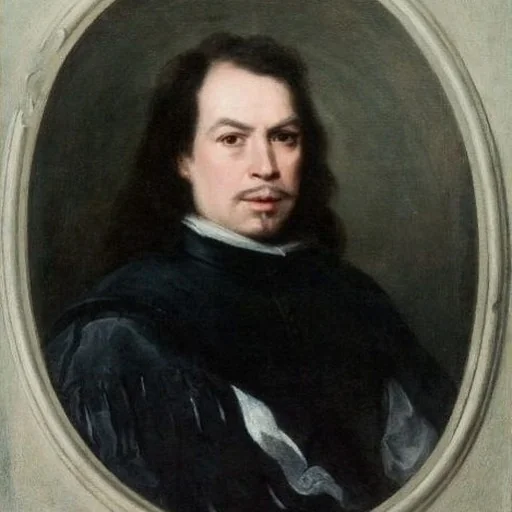
Bartolomé Esteban Murillo ( mure-IL-oh, m(y)uu-REE-oh, Spanish:; late December 1617, baptised 1 January 1618 – 3 April 1682) was a Spanish Baroque painter.