清 松年 山水 手卷|Landscape by Song Nian
Song Nian's *Landscape* (1898) is a handscroll that reads like a philosophical essay in ink. Painted on paper near the end of the Qing dynasty, it belongs to the literati tradition, where landscape was never just landscape, it was a coded system of moral and spiritual ideas shared among an educated elite.
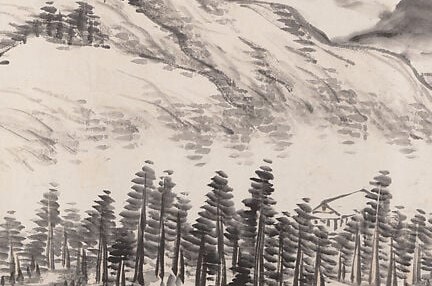
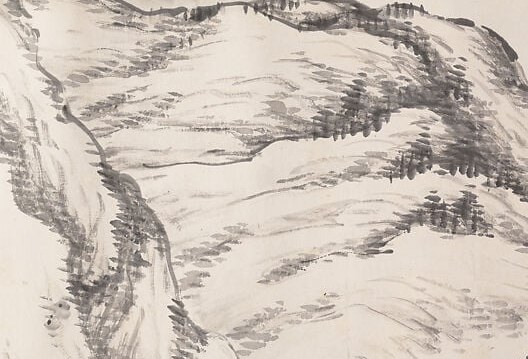
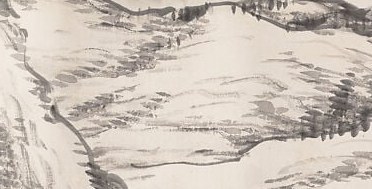
Look first at the pine grove on the central promontory. The brushwork is confident and crisp. In Chinese literati painting, the pine is shorthand for the upright, resilient character of the gentleman. Right beside it, the massive cliff on the left establishes permanence and moral weight. Then your eye hits the wide band of unpainted paper in the middle, this is liubai, 'leaving whiteness,' one of the most sophisticated devices in Chinese art. The paper itself becomes mist, water, and the philosophical concept of emptiness, all at once.
Song Nian was working in 1898, a moment of profound transition as the imperial system crumbled. By putting these ancient symbols, pine, mountain, void, onto a handscroll in that specific year, he was asserting continuity. The artist is telling you that even as dynasties fall, the mind can remain upright and the mountains endure.
A painting this quiet asks you to slow down. The message is hiding in the emptiness between the forms.
Details

Transcript
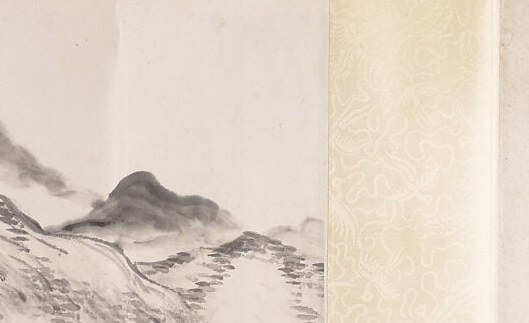
This is not just scenery. Every element is a message. Pine trees: the literati symbol of the upright, resilient mind. The mountain: permanence and moral weight in a changing world. And this blank paper? It is mist. It is water. It is emptiness. Liubai, 'leaving whiteness', the emptiness is the subject. The faintest peaks, almost gone. Impermanence and distance. Painted in 1898, as the Qing dynasty itself dissolved into history.