Flight into Egypt by Titian
Titian's "The Flight into Egypt," painted around 1508, is an early masterpiece from the Hermitage Museum, showcasing the Venetian Renaissance artist's groundbreaking approach to light and shadow.
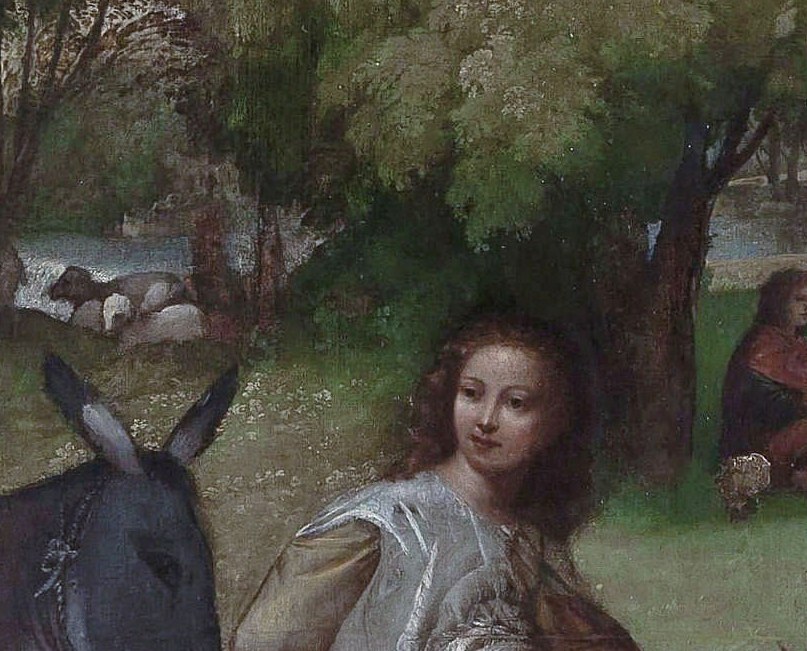
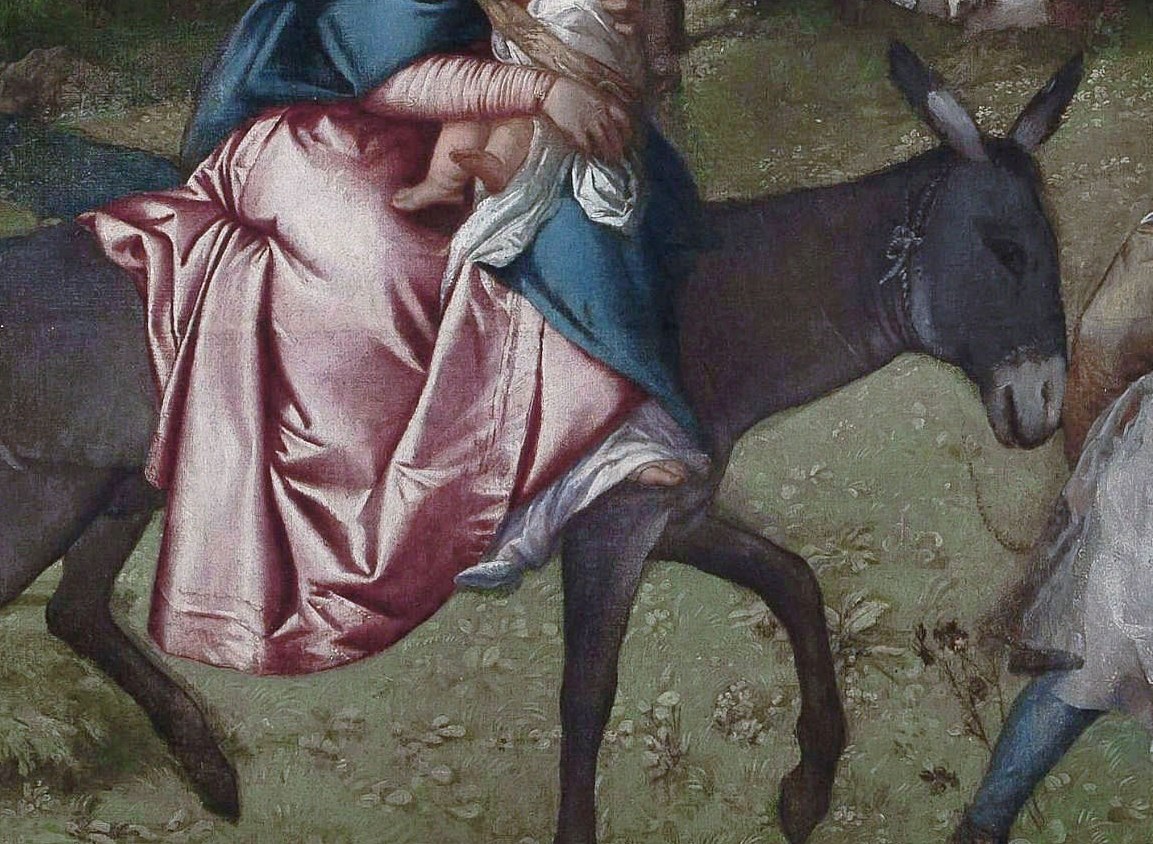
Look closely at how the Virgin Mary and Baby Jesus, along with Joseph, seem to emerge from the surrounding darkness. Titian's use of vibrant colors for their garments, especially Mary's blue and pink, makes them luminous against the deep forest background.
This dramatic interplay of light and shadow, known as chiaroscuro, creates a profound sense of depth and atmosphere. It's a testament to Titian's developing skill that this technique, which would influence generations of Western artists, is already so evident in one of his earliest works.
Even in this early piece, Titian’s mastery of color and composition hints at the greatness to come. What strikes you most about this scene?
Details
Transcript
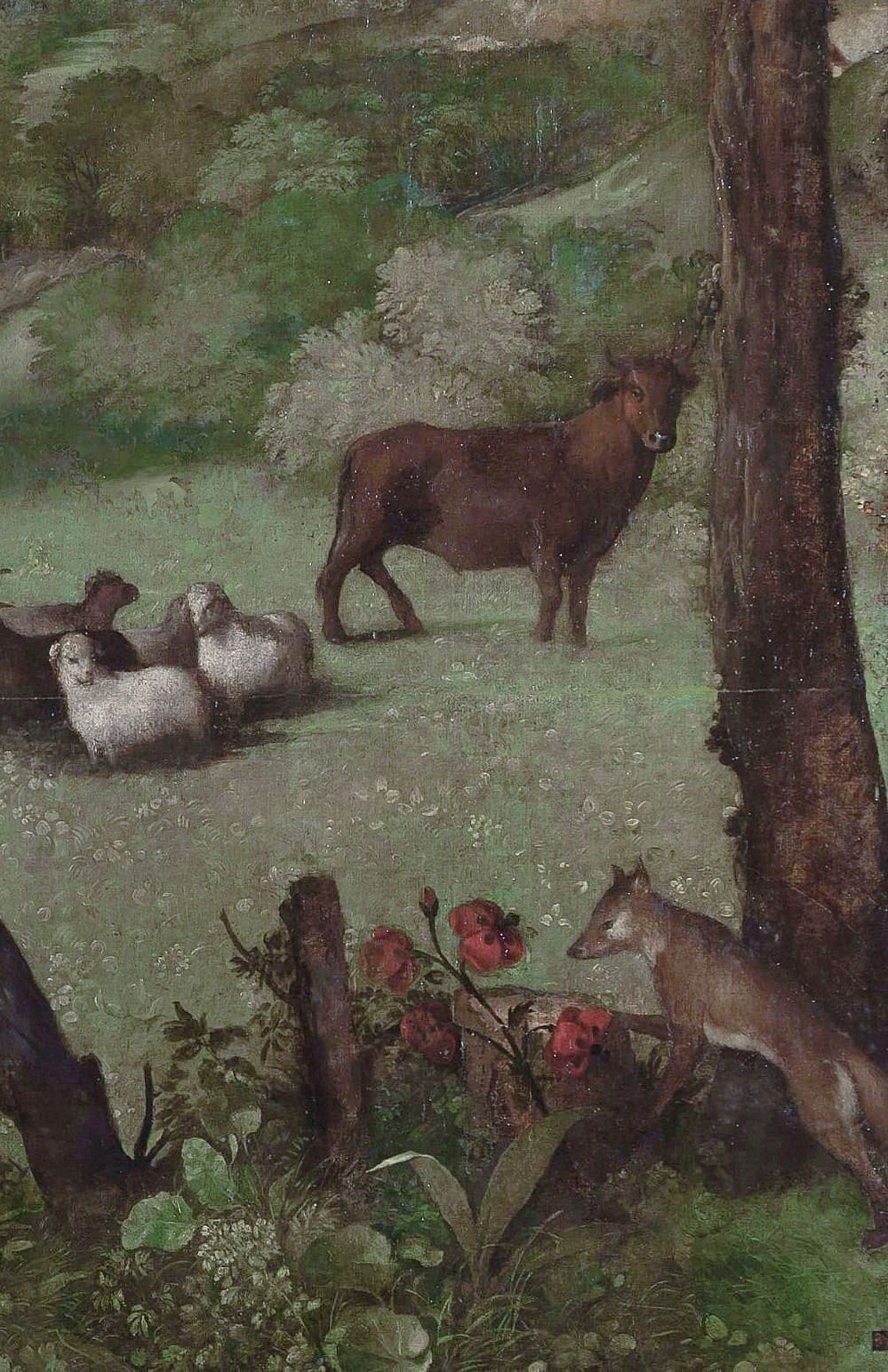
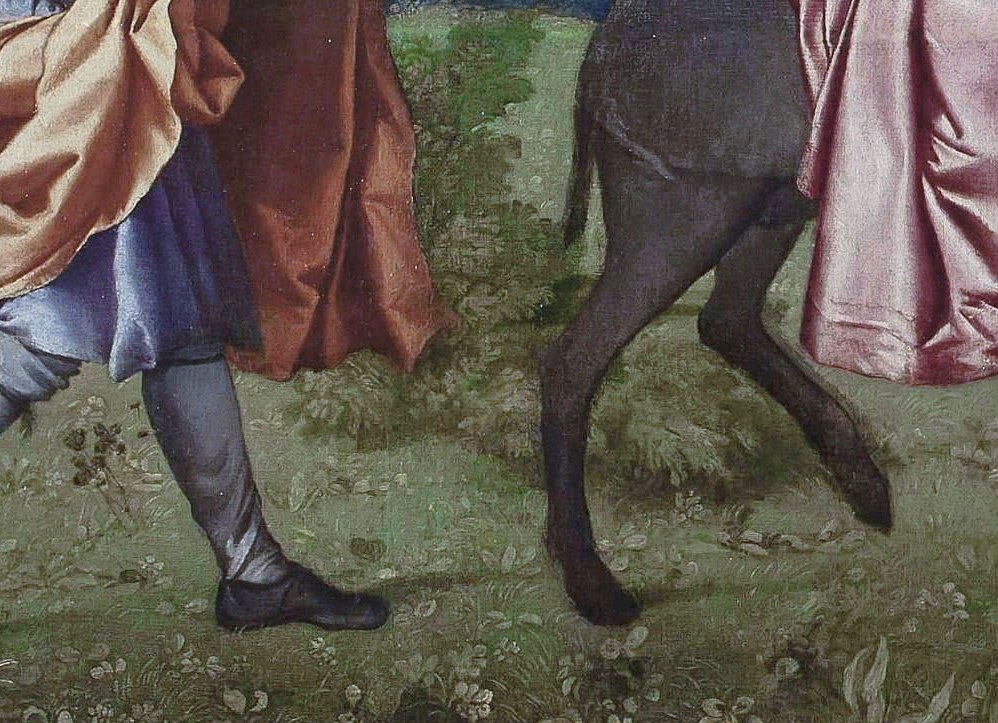
This early painting shows a bold use of light and shadow. Notice how the faces emerge from the darkness of the trees. The artist used vibrant colors to bring the figures forward. This dramatic contrast of light and dark defines the whole scene. It's an early example of his masterful atmospheric effects.