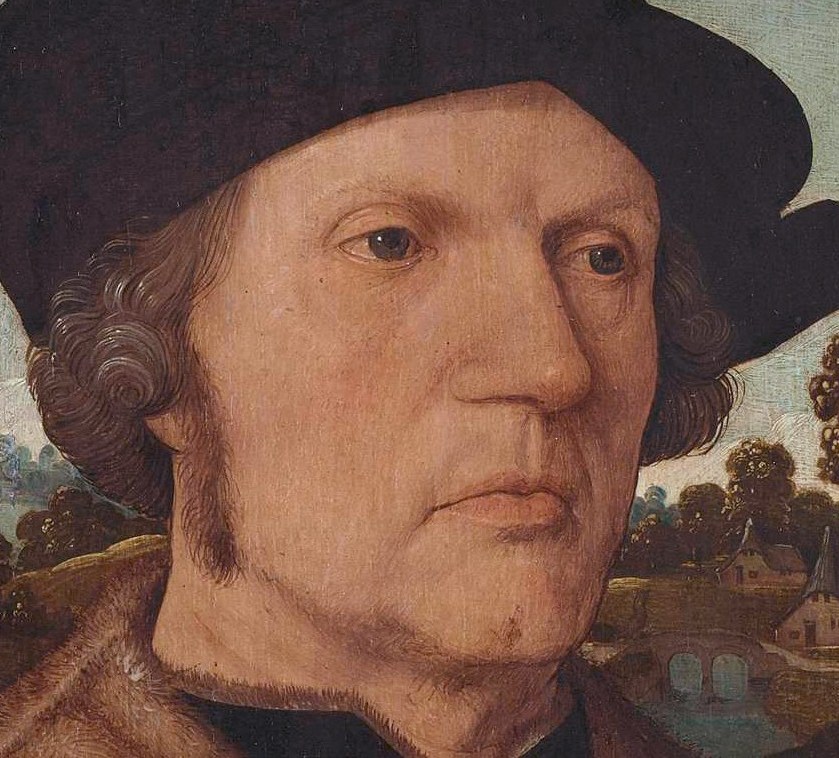
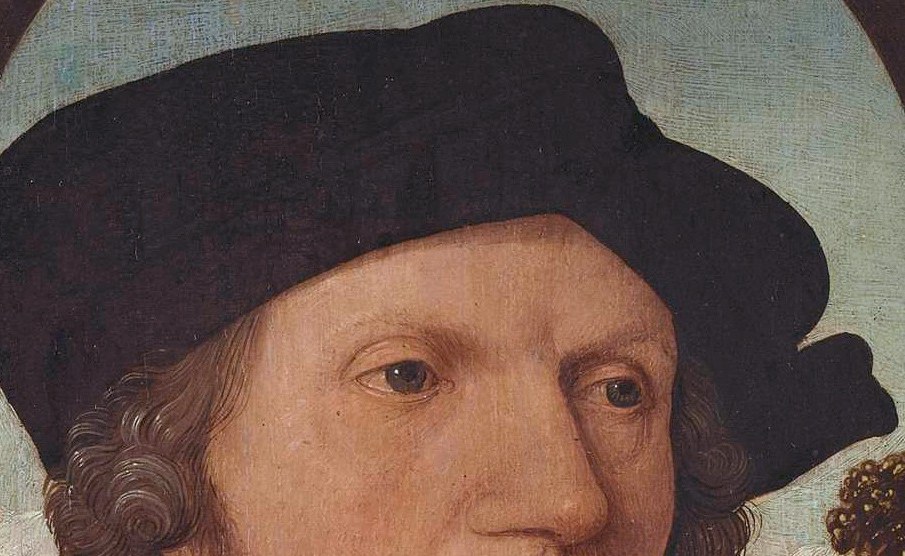
Portrait of Jan Gerritsz van Egmond van de Nijenburg (?-1523) by Jacob Cornelisz. van Oostsanen
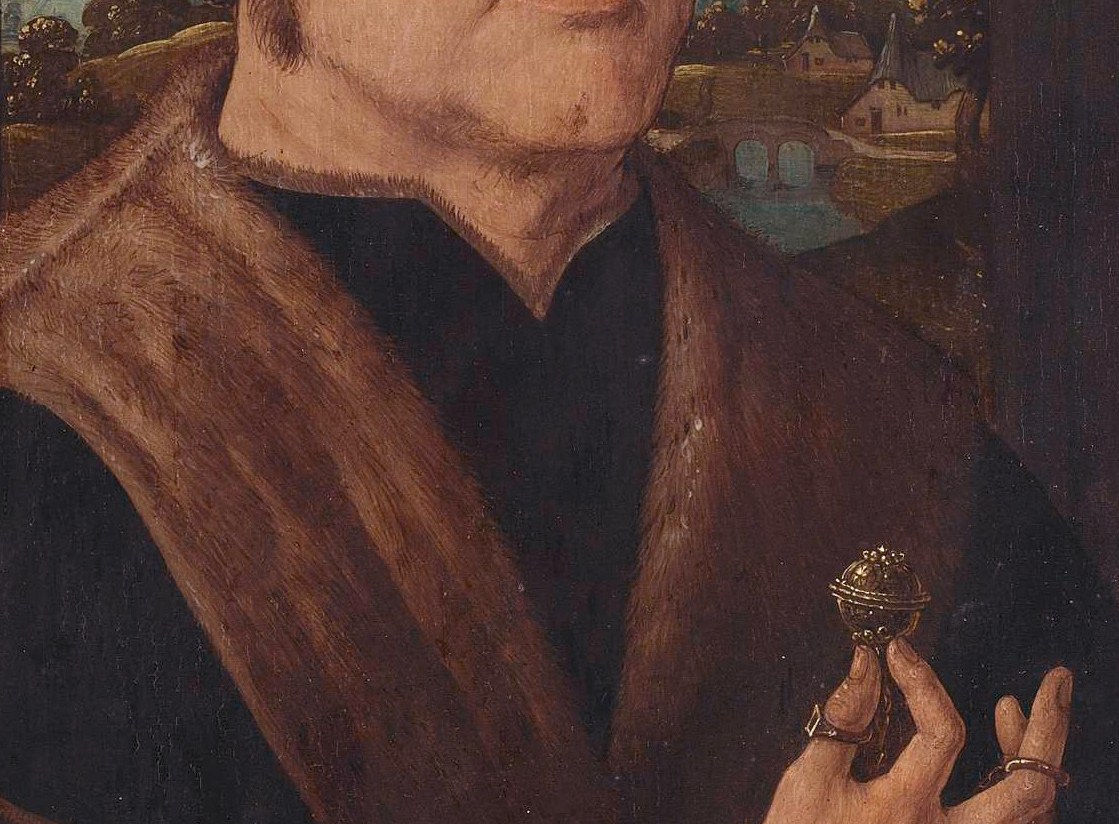
In Jacob Cornelisz. van Oostsanen's 1518 "Portrait of Jan Gerritsz van Egmond van de Nijenburg" at the Rijksmuseum, a small, intricate object in the sitter's hand holds significant meaning. This isn't just a decorative piece; it's a 'prayer nut,' a popular personal devotional object during the Northern Renaissance.
Look closely at the detail in his hand. These prayer nuts, often intricately carved with miniature biblical scenes, were a private aid for prayer. Their presence in portraits signaled both the sitter’s deep piety and their social standing.
Van Oostsanen, a leading artist in Amsterdam, skillfully blended local traditions with Renaissance influences. This portrait exemplifies the era's emerging interest in individualized representation and the use of such objects as status symbols.
What other hidden symbols do you think might be in Renaissance portraits?
Details
Transcript
This gentleman, painted in 1518, looks quite prosperous. He was Jan Gerritsz van Egmond van de Nijenburg. In his hand, he holds a tiny, intricate object. This is a prayer nut, a popular personal devotional aid. These often contained miniature carvings of biblical scenes. Its inclusion showed his piety and high social status.