The Judgment of Solomon by Leonaert Bramer
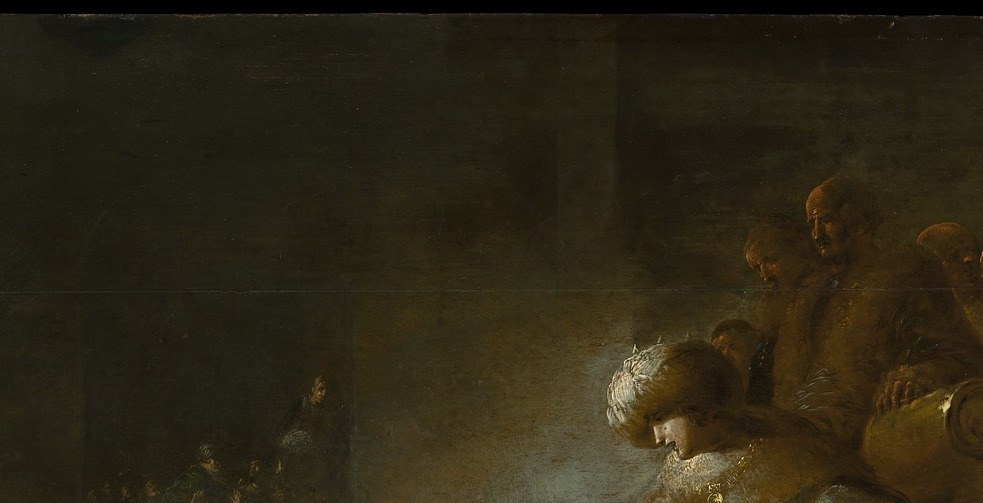
Leonaert Bramer's The Judgment of Solomon (1640) is a courtroom drama painted with the visual language of a crime scene, and it hangs today in The Metropolitan Museum of Art. The biblical story is ancient, but Bramer staged it with the tense, shadowed gravity of a 17th-century Dutch legal proceeding.
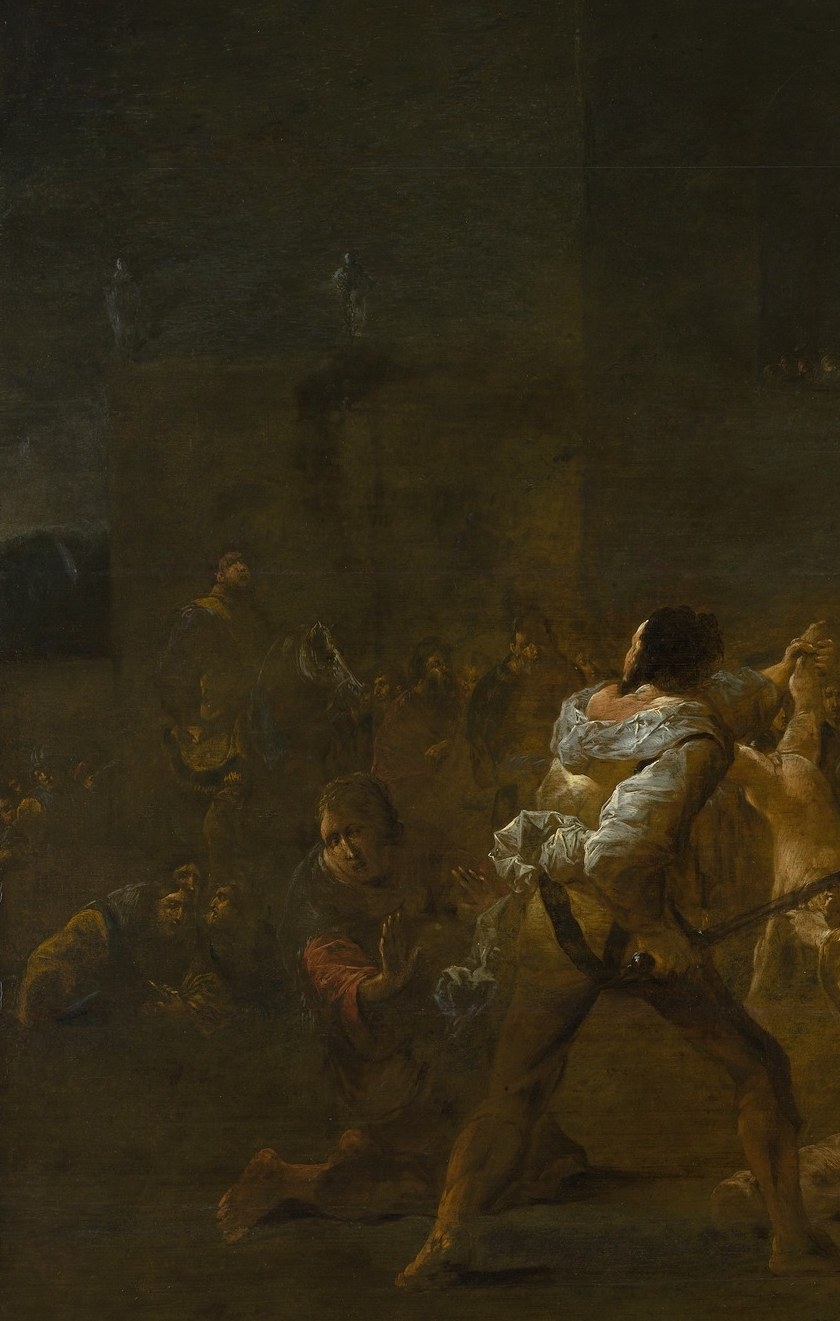
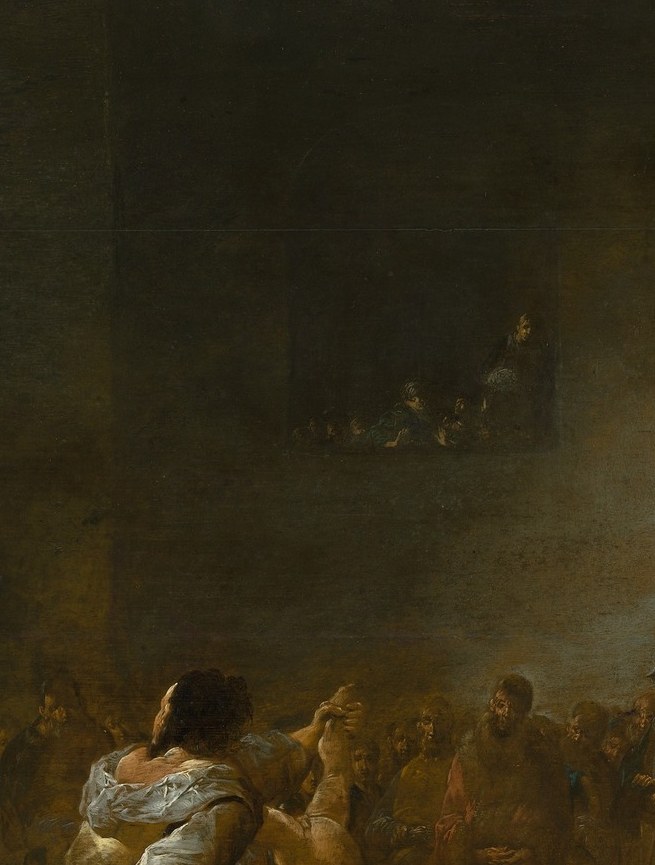
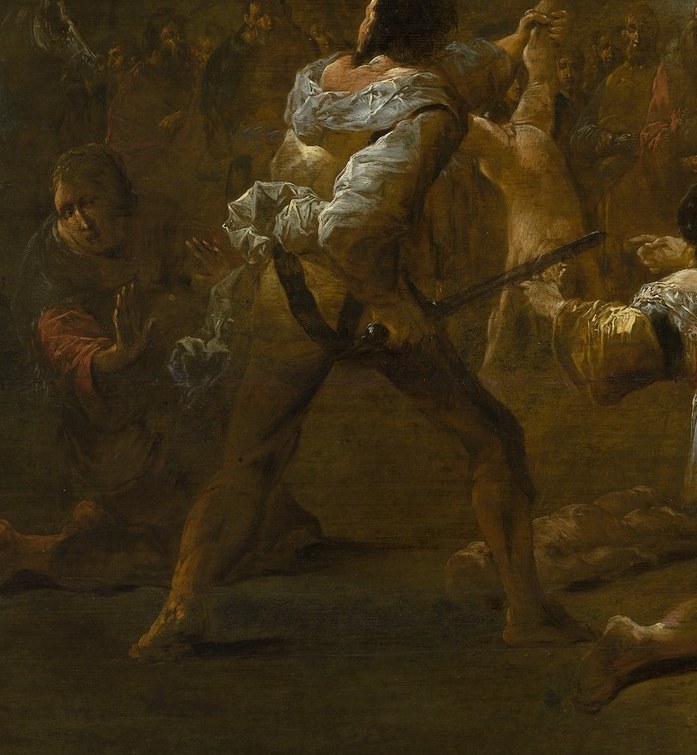
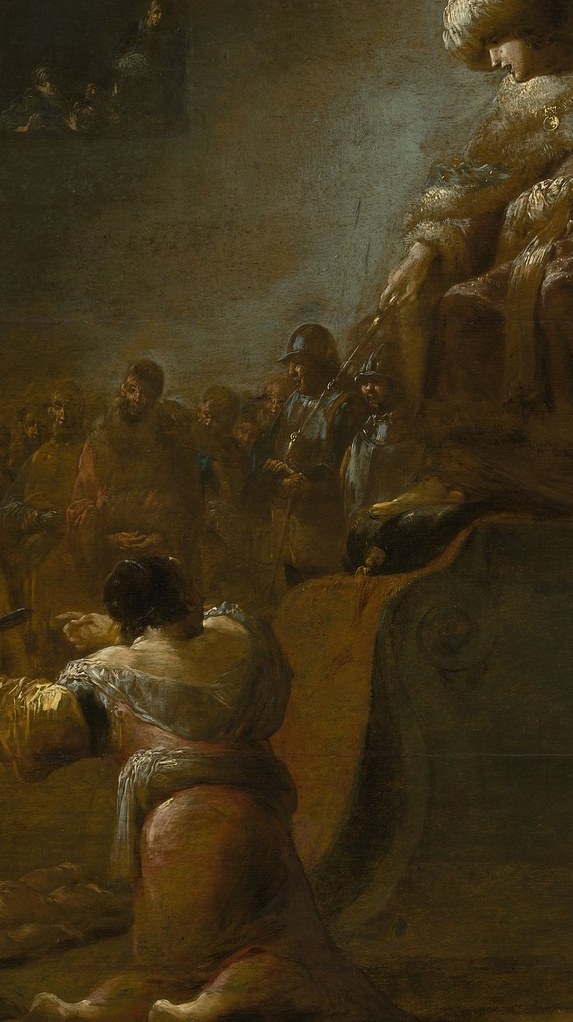
Look at how the light works. A single shaft from above strikes only the figures essential to the verdict: the soldier's raised sword, the kneeling woman's outstretched hands, and the king's commanding gesture. The false mother stands just outside its reach, her face harder to read from the shadows. That spotlight is Bramer's argument, not decoration.
The real mother is identified by surrender. She kneels, willing to lose the child rather than see it harmed. Bramer places her lower than anyone else in the room, and the light finds her anyway. The infant at the center is tiny, nearly lost in the composition, but every action in the frame orbits around it.
In 1640, Dutch law allowed women to bring custody disputes before magistrates, a practical reality in a republic built on contracts and civic order. Bramer was painting for a public that understood what a courtroom looked like, and he gave them a biblical precedent lit like a contemporary interrogation. The painting is unusually large and theatrical for a private commission, suggesting it was meant to be read, not just admired.
A room full of power, and the truth is on its knees.
Details
Transcript
This is a courtroom, but not one we know. The judge is a king. The case is a living child. Solomon has ordered a sword to divide the infant. One woman kneels, surrendering the baby to save it. The real mother. Solomon now knows. Bramer paints this in 1640, when Dutch courts let women sue for custody. The light is the verdict. It touches only what matters.